

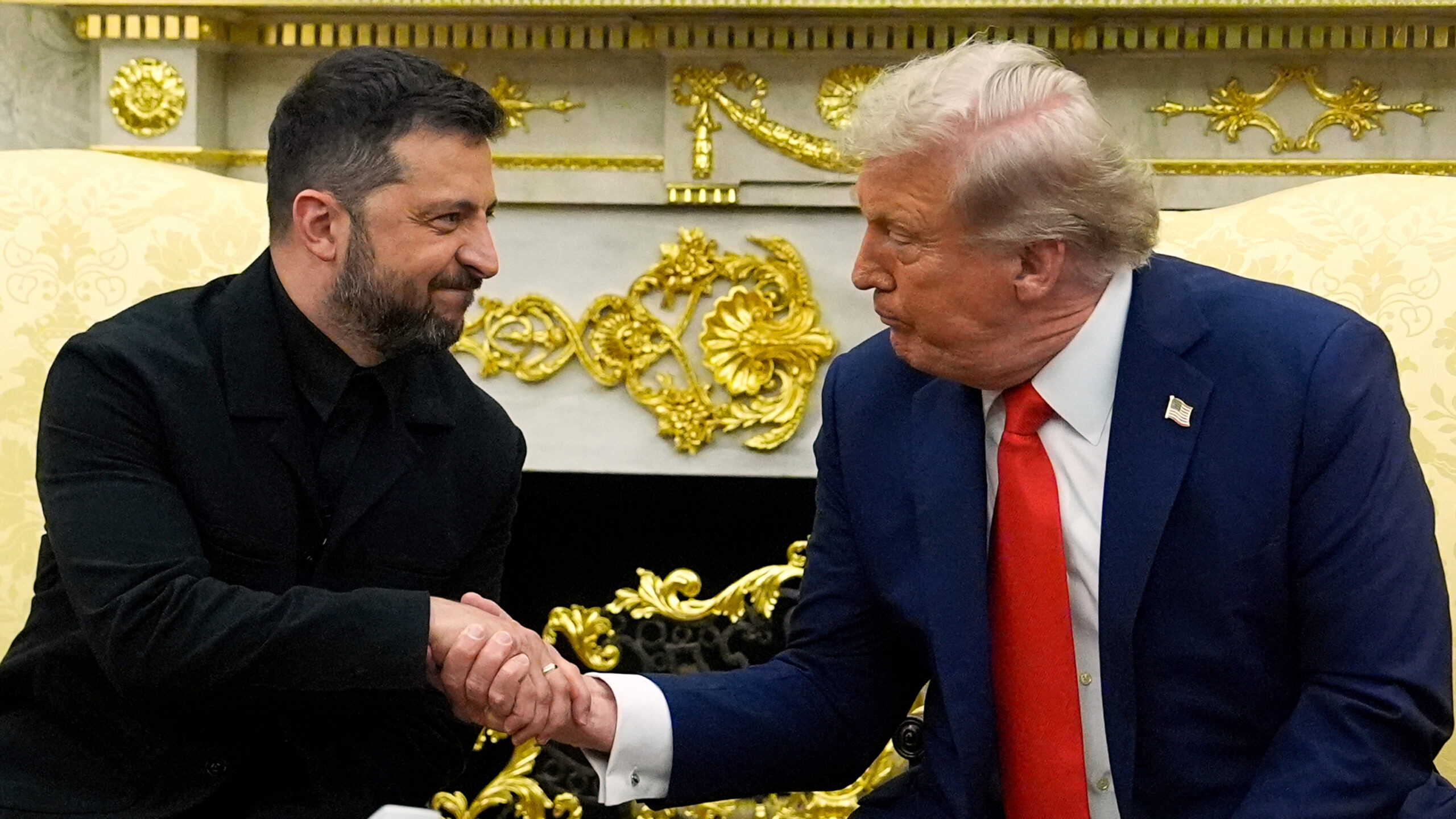
Ukrainian President Volodymyr Zelensky confirmed he expects to meet U.S. President Donald Trump in Florida on Sunday. The discussion will concentrate on a revised peace framework aimed at ending the Russia-Ukraine conflict, now approaching its fifth year. The meeting is expected to examine a U.S.-supported 20-point proposal, along with parallel discussions about security commitments and economic cooperation for the eastern Donbas region.
Zelensky stated that Ukraine’s senior negotiator Rustem Umerov had briefed him on the most recent technical-level talks. He emphasized that Kyiv is maintaining a fast diplomatic pace as the year concludes. In a public statement shared online, Zelensky said a high-level meeting with Trump had been agreed upon, adding that “many decisions could take shape before the new year begins.” He highlighted that talks would revolve around multiple documents, including possible security guarantees and economic arrangements.
The announcement followed a one-hour phone conversation on Christmas Day involving Trump’s special envoy Steve Witkoff and adviser Jared Kushner. Zelensky described the call as meaningful, noting that it generated “fresh ideas about meeting formats, timelines, and diplomatic sequencing that could accelerate progress toward stability.”
Earlier drafts of peace proposals sparked concern among Kyiv and European leaders, who felt the structure leaned too heavily toward Russian expectations. Zelensky said Ukraine had negotiated revisions to a previously discussed 28-point outline, reducing it to a 20-point format tied to measurable commitments. He did not publicly endorse territorial concessions, but proposed that any troop withdrawal from the east should be reciprocal if Moscow agrees to similar pullbacks.
Diplomacy Advances as Battlefield Pressure Persists
Russian officials have also continued engagement with U.S. diplomats. The Kremlin confirmed that President Vladimir Putin’s senior aide Yuri Ushakov held follow-up phone discussions with American representatives this week. Dmitry Peskov, the Kremlin spokesperson, said Russia remains committed to maintaining dialogue channels and would move forward once the president determines the next steps.
Russia has spoken cautiously about progress, describing developments as incremental, but avoided direct comment on Zelensky’s reciprocal withdrawal proposal. Instead, Moscow has repeated its broader position: any demilitarised zone or ceasefire arrangement must reflect security priorities in the region. Kyiv has suggested combining demilitarisation with economic reactivation in areas not captured by force, but stressed that administrative oversight of those areas should remain Ukrainian.
Policy uncertainty continues to shape market sentiment. Zelensky has repeatedly acknowledged that territorial questions and the status of the Zaporizhzhia nuclear power facility remain among the most difficult points to resolve. The plant—one of Europe’s largest—continues to operate under Russian military control. U.S. negotiators suggested a model for sharing the plant’s energy output, but no final consensus has been reached.
Despite diplomatic engagement, military pressure remains high. Ukrainian authorities reported casualties from recent air and drone attacks. Kyiv’s air force said it intercepted 73 drones overnight, while Russia reported intercepting incoming projectiles, including British-made Storm Shadow missiles. Ukraine also confirmed it carried out overnight strikes on energy-linked infrastructure in southern Russia, targeting oil and gas processing sites in Rostov and Krasnodar.
A Kyiv-based geopolitical analyst compared the situation to past conflict freezes in Eastern Europe, where ceasefires were achieved without final treaties. Multiple diplomatic paths have been discussed in Ukrainian policy circles, including a temporary conflict freeze, a conditional breakthrough tied to institutional reforms, or long-term international mediation. None are presented as absolute outcomes, but rather projections of how negotiations may evolve depending on battlefield developments, external support timing, and leadership decisions in Moscow and Washington.
Entrepreneurial activity in Ukraine has slowed due to conflict, but not stopped entirely. Business registrations continue, though commercial liquidity is thinner than usual during holiday-affected trading periods. Economists caution that a military-heavy conflict pause could stabilize institutions, but not replace the need for long-term reconstruction funding and enforceable security commitments.