

Ukrainian President Volodymyr Zelensky has accused several European allies of trying to pressure Kyiv into reopening a pipeline that carries Russian oil to Hungary and Slovakia. According to Zelensky, allowing the route to resume operations would amount to weakening the economic pressure imposed on Moscow through sanctions.
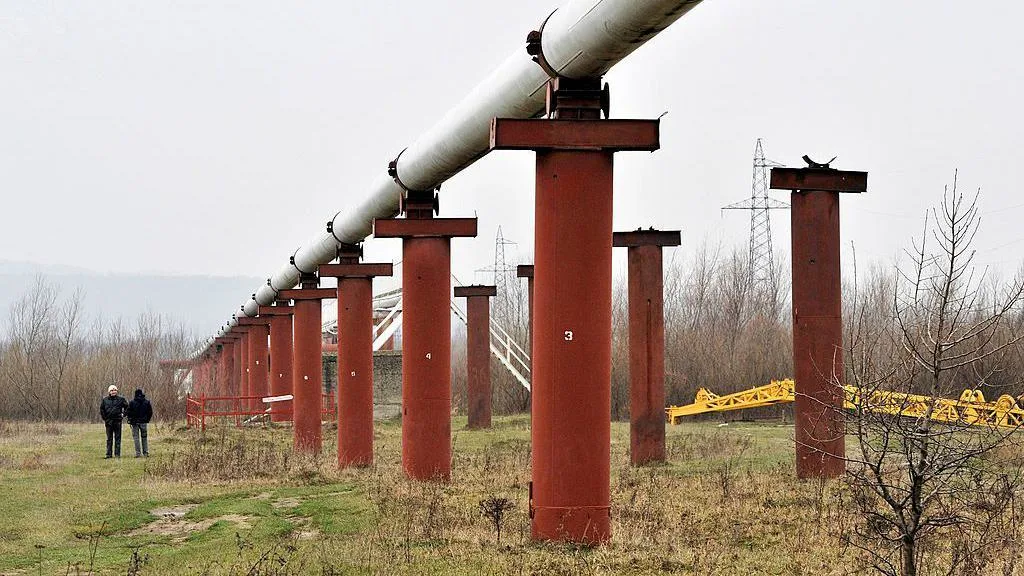
The dispute centres on the Soviet-era Druzhba pipeline, which Ukraine says was damaged in Russian air strikes in January and has not yet been repaired. The pipeline has long been an important route for Russian crude moving into parts of the European Union.
Zelensky argued that restoring the flow of oil through Ukrainian territory would send the wrong political message at a time when Russia remains under sanctions. In his view, reopening the pipeline would contradict the broader international effort to isolate Moscow economically.
Hungary’s Pressure Adds to Tensions
The issue has become more sensitive because Hungary, which remains heavily dependent on Russian energy, is blocking new EU sanctions against Moscow as well as a major €90bn loan package intended to support Ukraine. Budapest has reportedly tied its position to the reopening of the pipeline.
Hungarian Prime Minister Viktor Orban has also made criticism of Ukraine a central political theme ahead of April elections. With his party facing pressure in opinion polls, the pipeline row has taken on added political significance inside Hungary.
The European Union has called on Zelensky to move quickly to repair the damaged route and has asked Ukraine to allow inspectors access to assess the damage. Some EU officials are said to be concerned that Zelensky’s refusal to act faster could strengthen Orban’s political position ahead of the vote.
Zelensky Says Reopening the Pipeline Would Undermine Sanctions
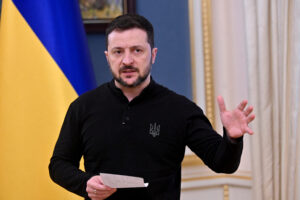
Speaking to reporters in Kyiv, including the BBC, Zelensky said he objected on principle to letting Russian oil pass through Ukraine into the EU while the bloc continues to sanction Russian sales elsewhere.
He questioned the logic behind asking Ukraine to restore the Druzhba route while European governments publicly defend sanctions on Moscow. Zelensky suggested that the policy was inconsistent and unfair, especially as Ukraine remains dependent on outside military support.
He said reopening the pipeline should not be portrayed as a technical matter alone, because it also carries major political and economic consequences. In his remarks, he stressed that he was not trying to obstruct anyone, but rather making his position clear: he does not support the return of Russian oil transit under present conditions.
Zelensky went further by saying that if Ukraine were told that military aid could be affected unless the pipeline reopened, such pressure would amount to blackmail.
US Sanctions Shift Adds to the Debate
The controversy comes at a time of wider debate over sanctions policy. The United States recently eased some sanctions that had prevented other countries from buying Russian oil, a step taken in response to global energy supply pressures linked to the US-Israel war with Iran.
That move has faced criticism from several European leaders. Zelensky also spoke against the US decision, arguing that easing sanctions on Russian oil would benefit Moscow rather than help stabilize the broader international situation.
He said Ukraine does not support any softening of sanctions policy and warned that such measures only give Russia greater economic space.
Middle East Conflict Raises New Concerns for Kyiv
Zelensky also addressed the impact of the expanding conflict in the Middle East, saying it poses fresh risks for Ukraine. He warned that Washington’s growing focus on the region could lead to delays in weapons deliveries or a reduction in key defensive supplies for Kyiv.
He said Ukraine wants to maintain strong ties with the United States and is concerned about any shift in American attention away from the war with Russia.
At the same time, Zelensky pointed to Ukraine’s growing expertise in drone warfare. He described the country’s interceptor drone industry as a form of “Ukrainian oil,” highlighting both its strategic value and its importance to national security.
Since the outbreak of war involving Iran, several countries, especially in the Gulf, have reportedly approached Ukraine for help defending against cheap Iranian-designed drones. Ukraine has become known for both producing relatively low-cost interceptor drones and for building practical experience in countering repeated aerial attacks.
Ukraine Open to Drone Deal With the US
Zelensky said Kyiv is ready to enter a $50bn joint drone production agreement with the United States. According to him, Washington has shown repeated interest in possible cooperation, and military-level contacts between both sides have continued.
He said Ukraine had already proposed a joint production arrangement last year, but it was never finalized. Even so, he stressed that Kyiv remains fully prepared to pursue such a deal now.
Zelensky added that Ukraine would expect both financial support and access to technology in return for any partnership. He presented the country’s drone production capacity and battlefield knowledge as valuable assets that could be shared in a broader defence arrangement.
Sanctions and Strategy Remain at the Core
The Ukrainian leader closed his remarks by reaffirming his opposition to any policy that eases pressure on Russia, including temporary sanctions waivers on oil shipments already at sea. He argued that relaxing sanctions does not help the wider world, but instead strengthens Russia’s position.
He also acknowledged that while Ukraine has no sympathy for the Iranian regime, the war in the Middle East is still harmful to Kyiv’s immediate interests. In his view, the conflict risks distracting allies, shifting resources, and complicating support for Ukraine at a critical time.
Overall, Zelensky’s comments underline the growing strain between Kyiv and some of its European partners over energy, sanctions, and wartime priorities. The dispute over the Druzhba pipeline has become more than an infrastructure issue — it now reflects broader disagreements over how far Europe should go in balancing energy needs, political unity, and continued support for Ukraine.