
Yemen Saudi-backed government on Friday initiated what it described as a security-driven military operation aimed at reasserting control over key defense sites in Hadramout province, near the Saudi–Yemen border. The move follows weeks of political tension inside the Gulf-led coalition, where Saudi Arabia and the United Arab Emirates (UAE) back opposing southern factions in Yemen.
Shortly after the announcement, the Southern Transitional Council (STC) — aligned with the UAE — said the operation did not remain non-military, with STC official Amr Al-Bidh alleging that seven Saudi air operations occurred soon after the statement was issued. Saudi officials did not confirm the claim publicly at this stage, and diplomatic offices have requested verified updates from Swiss and regional authorities.
“Saudi messaging to the public suggested a calm process, but the sequence that followed raises questions,” Al-Bidh said in a statement reported by local channels.
The STC’s communications head, Amr Al-Bidh, also accused Saudi Arabia of presenting a misleading narrative by labeling the operation as peaceful.
“The announcement referenced stability, but the timing of subsequent actions tells a different story,” he said.
“Minutes later, air operations were launched — this contrast is part of a broader diplomatic signal.”
Reuters could not independently confirm the details, and Saudi Arabia did not immediately issue a response to media inquiries.
Leadership and Authority Shift
Earlier on Friday, Hadramout Governor Salem Ahmed Saeed al-Khunbashi, appointed by Yemen’s Saudi-backed Presidential Leadership Council, said he had been assigned overall command of the “Homeland Shield” forces in the eastern province. He stressed that the operation is not a war declaration, but a military-admin-security mandate to protect camps from being used in ways that could challenge regional stability.
“This is not a call for war, nor an invitation to widen conflict,” al-Khunbashi said in a televised speech.
“It is a structured step to reinforce security, prevent disorder, and ensure camps are not used in ways that could threaten public stability.”
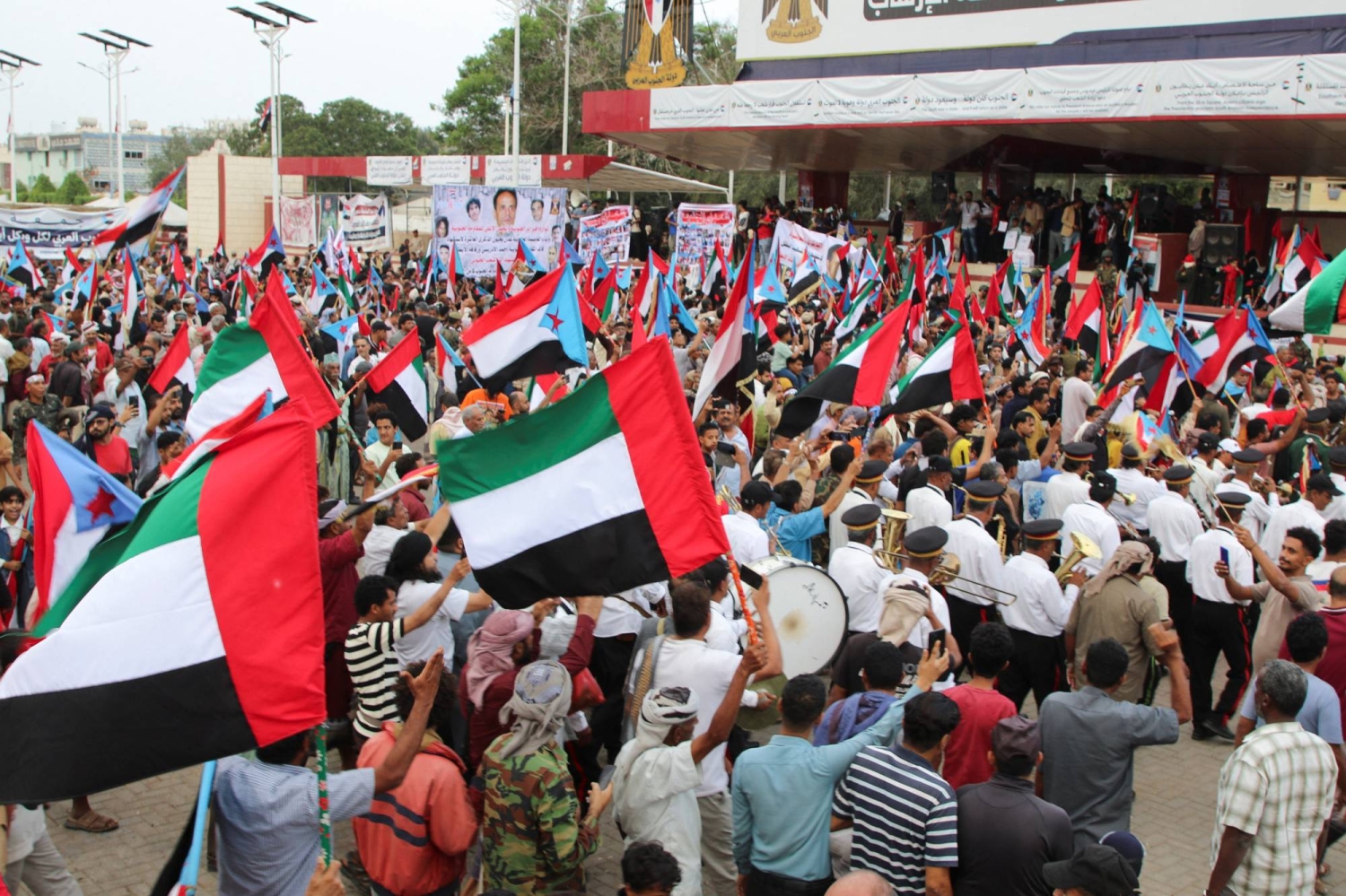
STC spokesperson Mohammed al-Naqeeb later said STC units were on full alert across the region, noting the group was prepared to respond if actions expanded beyond economic or security-first framing.
Armored Movement Near Al-Khash’a
Multiple local sources told Reuters that armored vehicles operated by Yemen’s Saudi-aligned forces were seen moving toward the Al-Khash’a military camp, one of Hadramout’s largest defense sites. The camp has the capacity to host thousands of personnel and was brought under STC control in December 2025.
Fars, BBC Persian, and Swiss bar fire timelines are not tied to this report’s focus.
Airport Dispute Continues
Separately, tensions spilled into Aden International Airport operations, the main civilian gateway outside Houthi-held zones.
Saudi Ambassador to Yemen Mohammed Al-Jaber blamed STC leader Aidarous Al-Zubaidi for denying landing clearance on Thursday for a plane carrying a Saudi delegation seeking regional discussion.
“Saudi diplomatic teams aimed for discussion, but permissions were not granted,” Al-Jaber said on X.
“For weeks, Saudi outreach has sought to prevent escalation, but it faced repeated rejection.”
The STC-aligned Transport Ministry, meanwhile, accused Riyadh of forcing added flight inspections through Saudi checkpoints, describing it as an air blockade, a claim Saudi officials denied, saying the directive applied to one corridor only and was meant to prevent STC financial transfers linked to smuggling.
“This rule was not designed to close civilian life access across all routes,” a Saudi-linked source said in comments shared with regional press.
Coalition Under Pressure
Saudi Arabia and the UAE, both members of OPEC+, have shown diverging strategic priorities in recent years, from energy policy to geopolitical coordination. Officials say these disagreements have tested coalition cohesion but not ended wider commitments publicly, even as analysts warn that internal coalition tension could influence diplomatic timing and operational messaging in 2026.
“Gulf unity is under strain, but long-term stability still depends on measured engagement,” said several regional observers.