
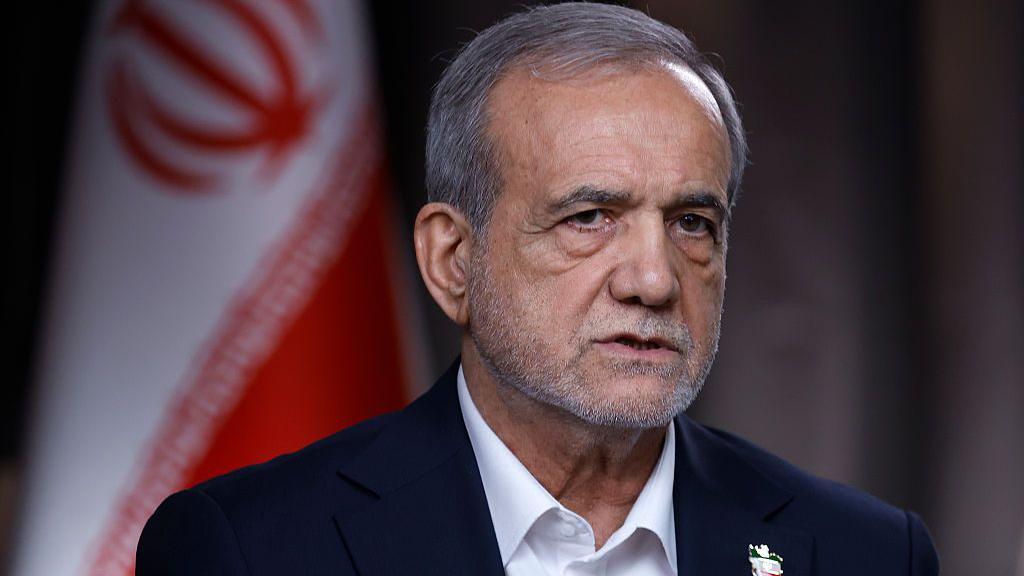
Iran President Masoud Pezeshkian drew attention on Saturday when he apologised to neighbouring countries for recent strikes, a rare statement during an active war. In his address, he said Iran no longer intended to hit nearby states unless attacks on Iran were launched from their territory. Reuters reported that he said he “personally” apologised to neighbours affected by Iran’s actions and that Iran’s interim leadership council had approved suspending such attacks unless those countries were the source of attacks on Iran.
The wording stood out because direct apologies between states are unusual in wartime. Leaders more often express regret or avoid accepting clear responsibility. Pezeshkian instead openly acknowledged that neighbouring countries had been struck and said Tehran did not intend to invade them.
A possible attempt to contain regional fallout
One likely reason for the apology is the growing fear that the conflict could spread further across the region. Since the war widened, Gulf states and other neighbouring countries have faced rising risks because of US military assets and regional alliances. Reuters reported that Saudi Arabia had warned Iran against further attacks and signaled possible retaliation if such strikes continued.
By apologising, Pezeshkian may have been trying to show that Tehran does not want a broader regional war. His message also suggested Iran was trying to avoid pushing more neighbouring governments into open alignment with Washington or Israel. That makes the apology look less like a simple diplomatic gesture and more like an effort to limit Iran’s isolation. This is an inference based on the timing of his remarks and the pressure Tehran is facing from regional governments.
Doubts remain over whether policy will really change
The bigger question is whether the apology reflects real control on the ground. Reports published after Pezeshkian’s statement said missiles and drones linked to Iran were still being detected over Gulf states, including Qatar and the UAE. AP coverage also noted that attacks appeared to continue even after the apology, raising doubts about whether Iran’s civilian leadership can fully control military action.
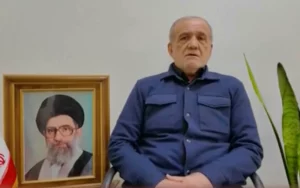
That uncertainty points to a deeper issue inside Iran’s leadership structure. Since the first wave of attacks killed top Iranian figures, decision-making has shifted to an interim leadership setup. But analysts say that in strategic and security matters, real influence often lies with the armed forces and especially the Revolutionary Guards, not elected politicians. The Financial Times reported that Iran’s military command continued issuing threats toward US and Israeli interests despite Pezeshkian’s softer tone.
Hardliners may see the apology as weakness
Inside Iran, the apology also carries political risk. Hardline factions have long argued that pressuring the region is one of Tehran’s strongest ways to deter the US and Israel. More confrontational figures may see any conciliatory language as a sign of weakness at a moment they consider a fight for survival. Iran International reported criticism from Iranian political and media figures who objected to Pezeshkian’s remarks and to his suggestion that earlier strikes happened under looser “fire at will” conditions after command structures were disrupted.
That means the statement may not only have been aimed at foreign governments. It may also reflect an internal struggle over who gets to define Iran’s response during the war. This is an inference, but it fits the split between Pezeshkian’s message of restraint and the tougher position voiced by military-linked figures.
Washington may read the message very differently
Outside Iran, the apology has been interpreted through a different lens. Reuters reported that Trump has continued demanding Iran’s “unconditional surrender,” while Pezeshkian rejected that as a fantasy.
That creates a diplomatic contradiction. Iran may have intended the apology as a signal of limited de-escalation toward neighbours, but Washington could frame it as proof that military pressure is working. In that sense, the same message can serve two very different political purposes at once.
A message with several possible meanings
For now, Pezeshkian’s apology can be read in several ways. It may have been a genuine effort to calm neighbouring countries. It may also have been a tactical move to stop the conflict from spreading while Iran’s interim leadership tries to stabilise itself. At the same time, continued attacks after the statement suggest that the apology may not fully reflect the decisions of the forces driving Iran’s military response.
In the end, the apology matters not only because of what was said, but because of what it revealed: Iran appears to be trying to reduce regional pressure while still struggling with internal divisions over how far this war should go.