
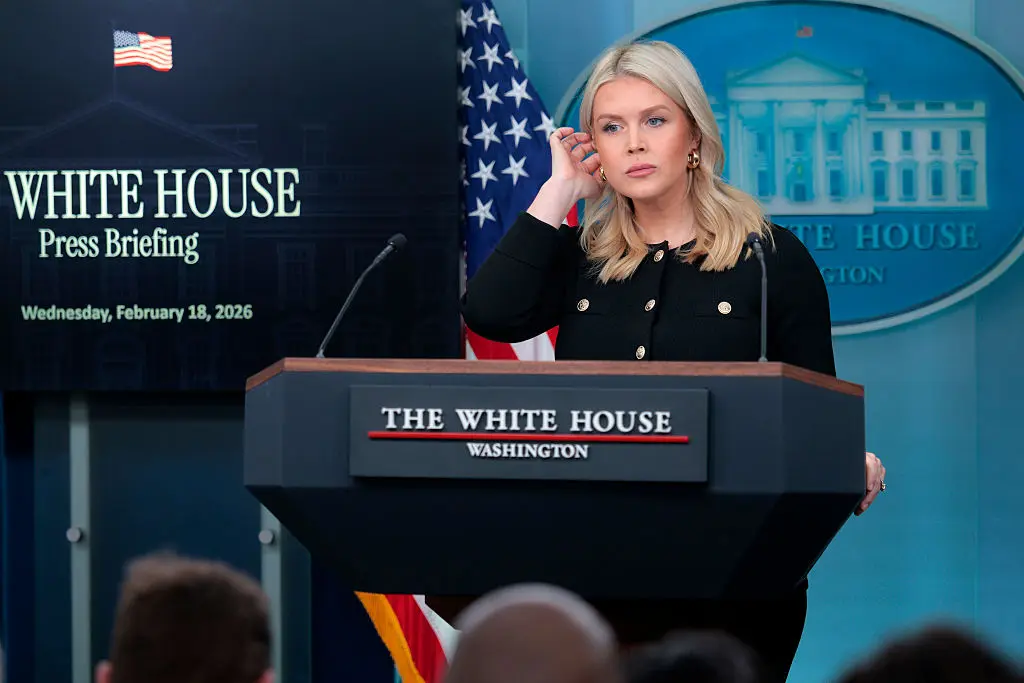
The White House has warned that Iran would be “very wise” to reach an agreement with the United States, as President Donald Trump continues to consider possible military action against Tehran while diplomatic talks remain ongoing.
Speaking at a press briefing, press secretary Karoline Leavitt said the administration still prefers a diplomatic solution to the dispute over Iran’s nuclear programme. However, she acknowledged that military options remain under discussion as tensions escalate in the region.
Her remarks came as the United States moves additional military assets closer to Iran, including the deployment of a second warship to the Middle East, and shortly after reports of limited progress in indirect US-Iran negotiations held in Switzerland.
Diplomatic Talks Continue Despite Pressure
According to US officials, President Trump has not yet made a final decision regarding any potential military strike, with discussions described as ongoing and fluid. Reports from US media indicate that the president has reviewed possible attack scenarios with advisers, though no immediate action has been confirmed.
Leavitt noted that while diplomacy remains the preferred path, there are arguments within the administration supporting the option of military action if negotiations fail. She referenced previous US strikes carried out in June against Iranian nuclear facilities and reiterated that Washington continues to push Tehran toward a negotiated settlement.
Indirect talks in Geneva, mediated by Oman, recently showed signs of modest progress, although no major breakthrough was announced. Iranian Foreign Minister Abbas Araghchi said both sides had reached an understanding on broad guiding principles that could shape future negotiations, while emphasizing that significant work still lies ahead.
The United States also acknowledged that discussions had moved in a positive direction, and Oman’s foreign minister described the talks as constructive, highlighting progress on shared objectives and technical matters.
Despite these developments, the White House indicated that major differences remain. Officials stated that Washington and Tehran are still far apart on several key issues and expect Iran to provide further details in the coming weeks as negotiations continue.
Disagreements Over Nuclear and Security Issues
Iran has consistently maintained that talks should focus on its nuclear programme and the potential lifting of economic sanctions imposed by the US. Washington, however, has previously suggested that Iran’s missile development and broader regional activities should also be included in any comprehensive agreement.
The US and its European allies have long expressed concerns that Iran could be moving closer to developing nuclear weapons, an allegation Tehran has repeatedly denied, insisting that its nuclear activities are for peaceful purposes.
Military Buildup Near Iran
Alongside diplomatic efforts, the US has significantly increased its military presence in the region. Satellite imagery has confirmed the positioning of the aircraft carrier USS Abraham Lincoln near Iranian waters, accompanied by guided missile destroyers and fighter jets.
Reports also indicate that the USS Gerald R. Ford, the largest warship in the world, has been dispatched to the Middle East and is expected to arrive within weeks. Officials told US media that American forces in the region are expected to be fully positioned by mid-March.
Iran has responded to the military buildup by strengthening defenses at sensitive sites and conducting maritime exercises in the Strait of Hormuz, a critical global shipping route for oil exports.
Escalating Rhetoric and Regional Tensions
Iran’s Supreme Leader Ayatollah Ali Khamenei has criticized the US military deployment, accusing Washington of attempting to predetermine the outcome of negotiations. In public statements, he warned against coercive diplomacy and emphasized Iran’s capability to respond to military threats.
The Islamic Revolutionary Guard Corps has also launched naval drills in the Strait of Hormuz, signaling readiness amid heightened tensions. The strategic waterway remains one of the world’s most important energy transit routes, making any escalation in the area a matter of global concern.
While both sides continue to engage in indirect negotiations, the parallel increase in military activity and political rhetoric underscores the fragile balance between diplomacy and confrontation as the dispute over Iran’s nuclear programme remains unresolved.