

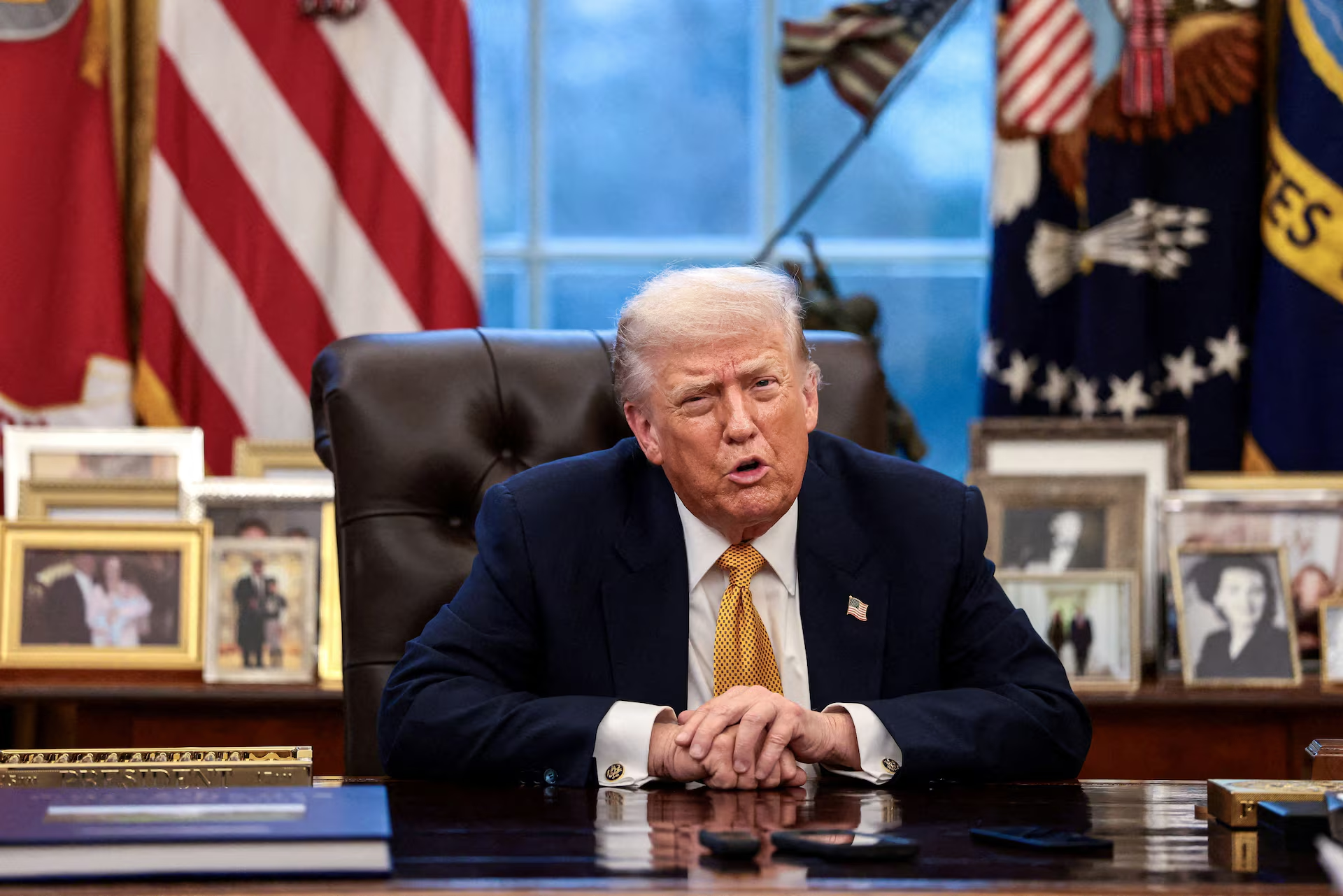
The reopening of Gaza Rafah crossing with Egypt on Monday has given fresh momentum to Donald Trump’s plan to end the war in Gaza. But major obstacles remain, particularly over whether Hamas will disarm and how Gaza will be governed once fighting fully ends.
Trump’s proposal, now entering its second phase, has been repeatedly tested by ongoing Israeli strikes that have killed hundreds of Palestinians since the ceasefire took effect, as well as Hamas’s continued resistance to giving up its weapons. Israeli officials have warned that preparations are under way for a return to war if disarmament talks collapse.
Below is an overview of the plan and the unresolved issues that continue to cast doubt over its implementation.
What Is Trump’s Gaza Plan?
In September, Trump unveiled a 20-point framework aimed at halting the Gaza war and establishing a long-term political arrangement.
The plan calls for:
-
A permanent ceasefire
-
Hamas relinquishing power and disarming
-
A full Israeli military withdrawal
-
Large-scale reconstruction of Gaza under international supervision
The proposal received broad international backing, though key elements were left vague.
On October 9, Israel and Hamas agreed to a ceasefire covering the first phase of the plan. That phase included a halt in major fighting, the exchange of remaining captives in Gaza for thousands of Palestinian prisoners held by Israel, partial Israeli troop withdrawals, increased humanitarian aid and the reopening of the Rafah crossing.
The plan was later endorsed by a United Nations Security Council resolution, which authorised the creation of a transitional governing body and an international stabilisation force for Gaza.
What Is the Situation on the Ground?
The ceasefire, which began on October 10, brought an end to large-scale combat but did not stop violence entirely.
Gaza health authorities say at least 488 Palestinians have been killed by Israeli fire since the truce began, while Israel’s military reports that four of its soldiers have been killed by Palestinian fighters.
Israeli ground forces have largely withdrawn but still control more than half of Gaza, including heavily damaged areas along the Israeli and Egyptian borders where remaining structures have been demolished and residents ordered to leave.
As a result, nearly all of Gaza’s more than two million residents are now confined to a narrow coastal area. Hamas has reasserted control there, while most civilians live in damaged buildings or temporary shelters.
Aid groups and Palestinian officials say Israel is not allowing humanitarian supplies to enter at the levels agreed under the ceasefire, a claim Israel denies.
What Happens in the Second Phase?
Despite sharp disagreements between Israel and Hamas, Washington moved ahead with phase two of the plan early this year.
It announced the creation of a committee of Palestinian technocrats to manage Gaza’s civil affairs. Oversight would come from a proposed “Board of Peace” made up of international figures and chaired by Trump — a body he has said could later address other global conflicts.
The second phase envisions:
-
Hamas disarming and Gaza being demilitarised
-
A complete Israeli military withdrawal
-
The deployment of international peacekeepers
Diplomats estimate Hamas still possesses hundreds of rockets and thousands of light weapons. While Hamas has reportedly agreed to discuss disarmament with other Palestinian factions and mediators, its officials say no detailed or formal proposal has been presented by the United States or intermediaries.
Two senior Israeli officials told Reuters that the military does not expect Hamas to disarm voluntarily and is preparing for renewed fighting if necessary.
Hamas is also seeking to integrate roughly 10,000 of its police officers into the new technocrat-led administration — a demand Israel has rejected.
What Issues Remain Unresolved?
Several critical questions remain unanswered:
-
International force: The size, mandate and composition of the proposed stabilisation force have yet to be agreed.
-
Palestinian Authority role: The internationally recognised Palestinian Authority is expected to reform and eventually play a role in Gaza, but no details have been finalised.
-
Reconstruction: Funding, oversight and timelines for rebuilding Gaza remain unclear.
Trump’s son-in-law, Jared Kushner, recently outlined a vision for a rebuilt “New Gaza,” featuring modern residential towers, data centres and industrial zones. However, the proposal did not address property rights, compensation for destroyed homes or where displaced Palestinians would live during reconstruction.
An Uncertain Path Forward
Many Israelis and Palestinians doubt that Trump’s plan will be fully implemented. With deep mistrust between the parties and key provisions still unresolved, analysts warn the conflict could settle into a prolonged stalemate rather than reaching a lasting settlement.
For now, Rafah’s reopening has offered a symbolic boost to diplomacy — but the hardest decisions still lie ahead.