

Venezuela is stepping into a new chapter marked by deep uncertainty after the abrupt removal of Nicolás Maduro, who had served as president for the past 12 years. The announcement of his detention by U.S. President Donald Trump has reshaped the political landscape, leaving Venezuelans questioning what direction their country will take next.
Across Caracas and several other major cities, public activity has remained limited. Security forces are on heightened alert, though there has been little visible presence of the colectivos, government-aligned paramilitary groups previously known for operating in urban areas during political flashpoints.
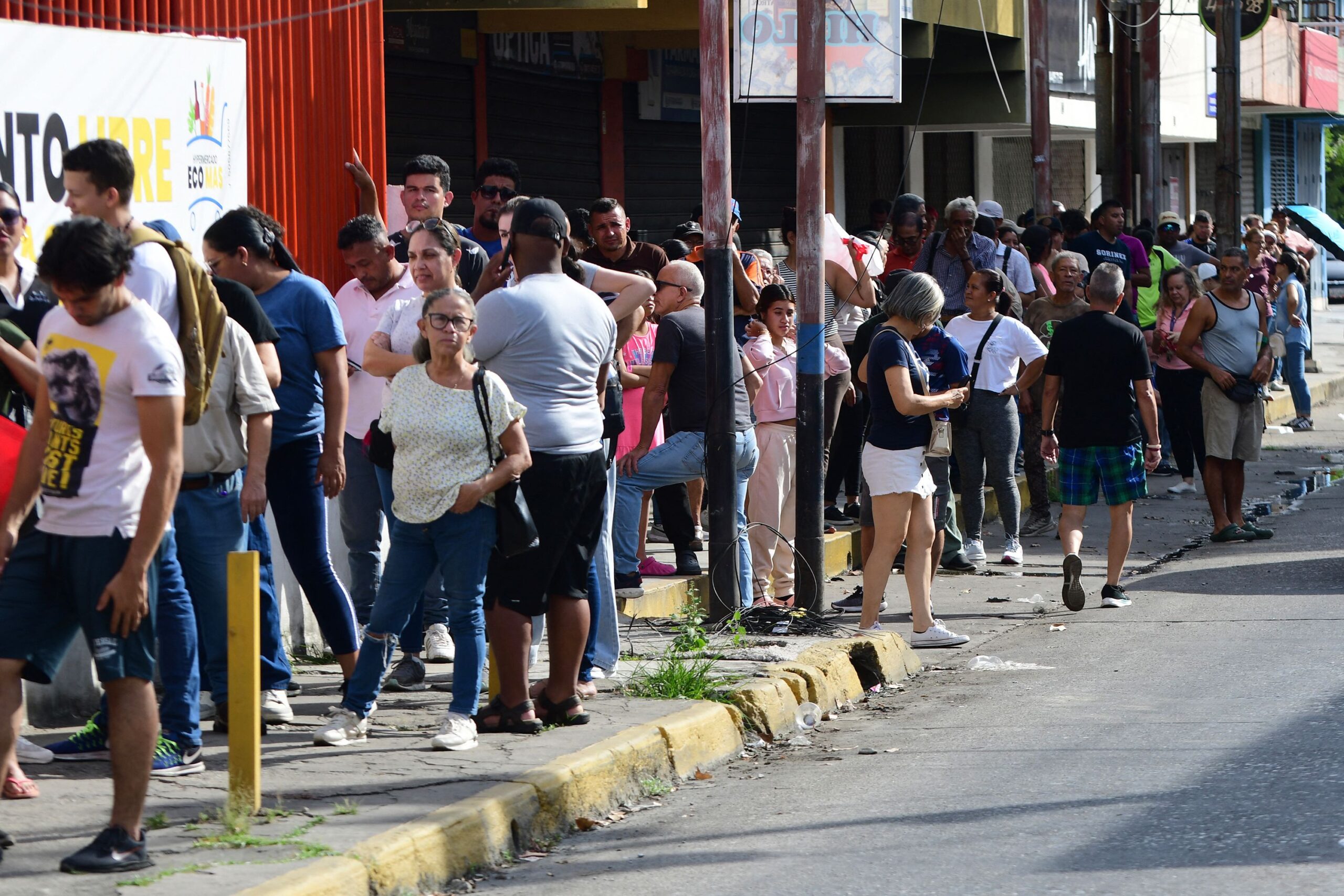
Most residents who left their homes over the weekend did so to secure essential goods. Lines formed outside supermarkets, pharmacies, and local shops, not out of panic but out of habit—Venezuelans have long prepared for instability by keeping extra supplies on hand during moments of national crisis.
Footage gathered by international media on Saturday showed quiet streets with minimal vehicle and pedestrian movement, contrasted by long queues at retail stores. Journalist Mary Mena described the scene Sunday, saying that the city felt unusually still.
“There’s no noise outside—only birds can be heard,” Mena reported.
Citizens Monitor Military Alignment as Key Factor
While some opposition supporters expressed private relief at Maduro’s removal, there have been no major public rallies backing U.S. intervention or supporting Trump’s claims of U.S. oversight. According to Mena, public political action may remain subdued unless senior Venezuelan opposition figures can show direct institutional or military support.
Little verified information has emerged from cities outside the capital. In Maracaibo, a major oil-producing hub, workshop owner Jairo Chacín, 39, said he briefly left home to monitor his business, fearing potential looting. He described the streets as empty, and fuel stations closed.
“I wanted to check my business and refill my gas, but everything is shut. I used the moment to buy food because we still don’t know what comes next,” Chacín said. “I feel both worried and hopeful at the same time.”
Psychologist Alejandra Palencia, 35, in Maracay, echoed similar sentiments, describing the city as unusually quiet.
“People are staying indoors. There is fear and uncertainty,” Palencia said.
Concerns Grow Over US Influence on Venezuela’s Future
Some Venezuelans have openly questioned the idea of U.S. oversight, particularly when it comes to oil infrastructure and political control. Trump said Saturday that the U.S. would manage Venezuela’s governance until a stable leadership transition is possible, including reopening the energy sector for American firms.
Merchant Carolina Pimentel, 37, from Maracay, said she felt surprised by the claims, adding that the situation felt unreal at first.
Meanwhile, bakery customer Nancy Pérez, 74, from Valencia, expressed concern over foreign influence, saying she wanted more clarity on the next phase of national leadership.
“I want to understand what happens next,” Pérez said while visiting a bakery near her home in Valencia.
Jenny Salazar, shopping for groceries in Caracas, said she disagreed with the idea of a foreign president taking charge of Venezuelan institutions.
“I don’t support someone outside Venezuela deciding for us,” Salazar told international media.
Legal Experts and GOP Lawmakers Debate Authority
Legal experts outside Venezuela have questioned whether the U.S. has constitutional authority to detain a foreign head of state without congressional military authorization.
Republican lawmakers have mostly praised Trump’s decision, though a small number—including Senator Mike Lee and Congressman Tomas Massie—have raised constitutional concerns. Lee later said that Secretary of State Marco Rubio told him the operation was tied to a legal arrest warrant.
A Venezuelan doctor, speaking anonymously, said the role and political alignment of the national military will be the most critical factor in determining Venezuela’s stability.
“The Venezuelan Armed Forces must define their position. Their stance will shape what happens next,” he said.
Constitutional Leadership and Election Expectations
Under Venezuelan law, interim president Delcy Rodríguez is expected to call new elections within 60 days, as outlined by the national constitution.
Rodríguez has not made public comments Sunday, though state institutions appear to be operating under a continuity strategy. The main airport remains open, and the National Assembly is still scheduled to convene Monday.
Trump’s suggestion that the U.S. may work with Rodríguez in the interim period has deepened uncertainty among Venezuelans, many of whom remain cautious and divided about the country’s next phase of governance.