

The United States is preparing to significantly reduce its military presence in Syria over the coming months, according to a senior White House official, marking a shift in Washington’s regional strategy as tensions with Iran continue to increase.
The official stated that the Syrian government has agreed to assume primary responsibility for counterterrorism operations within its territory, reducing the need for a large-scale US military deployment. Around 1,000 American troops are currently stationed in Syria, where they have been operating since 2015 as part of efforts to combat the Islamic State (IS) group.
Officials indicated that the planned withdrawal would follow a conditions-based approach rather than an immediate exit, with the United States maintaining the ability to respond to emerging threats in the region if necessary.
Strategic Shift Amid Regional Tensions
The move comes as President Donald Trump expands the US military footprint in other parts of the Middle East, particularly in areas close to Iran, reflecting heightened regional tensions. While troop numbers in Syria may decline, US forces and assets are being repositioned across the broader region.
Satellite verification has confirmed the presence of the aircraft carrier USS Abraham Lincoln near Iranian waters, accompanied by guided missile destroyers and multiple fighter jets. Reports also indicate that the USS Gerald R. Ford, the world’s largest aircraft carrier, is being deployed to the Middle East and is expected to arrive within weeks.
Senior national security officials told US media that the president has signaled readiness for potential military action against Iran if required, although no final decision on such steps has been announced.
Background of US Presence in Syria
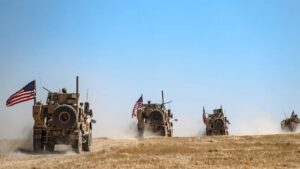
US troops first entered Syria in 2015 as part of an international campaign aimed at weakening and defeating IS. Over the years, American forces supported local partners and conducted operations targeting extremist groups across the country.
Earlier this year, US forces had already withdrawn from two key installations: the al-Tanf garrison in southern Syria and the al-Shaddadi base in the northeast. These movements are part of a broader recalibration of US military involvement following notable political and security changes in Syria.
The withdrawal plans also follow the collapse of the Assad government in 2024 and reports of improved security conditions in several areas, alongside a weakened Islamic State presence.
Evolving Diplomatic and Security Landscape
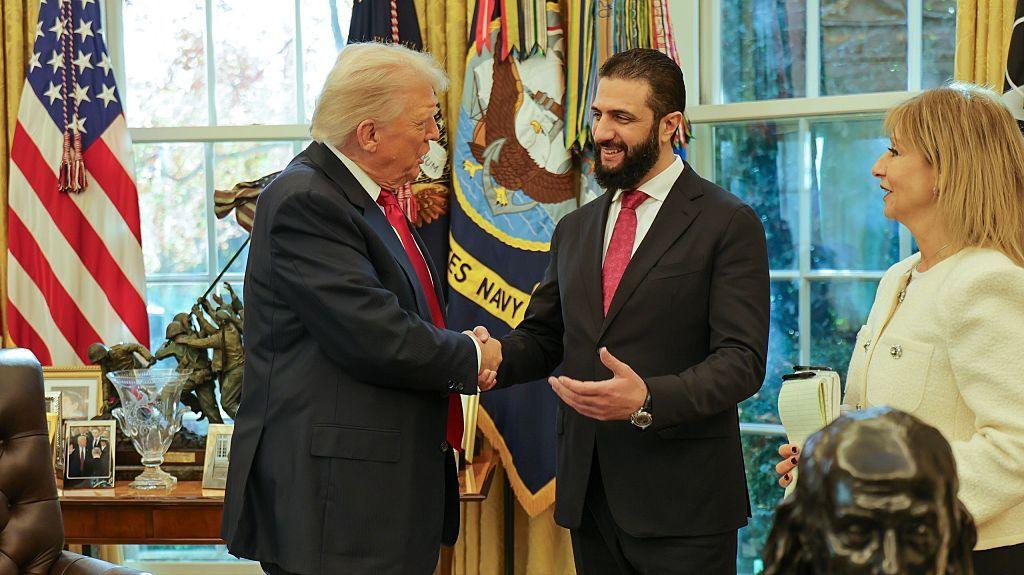
Since the political transition in Damascus, the US administration has moved to strengthen diplomatic engagement with Syria’s leadership under President Ahmed al-Sharaa. In a historic development, Sharaa visited the White House in November, marking the first visit by a Syrian leader to the United States.
Despite ongoing internal tensions within Syria, the government has reached agreements with various armed groups. A January deal aimed at integrating the Kurdish-led Syrian Democratic Forces into the national military structure is seen as a key step toward consolidating security control.
US Secretary of State Marco Rubio recently met Syrian Foreign Minister Asaad al-Shaibani to discuss maintaining a ceasefire and ensuring continued efforts against extremist threats. American officials have repeatedly emphasized that counterterrorism remains a central priority even as troop levels are adjusted.
Continued Concerns Over Extremist Threats
Although IS has been significantly weakened, security risks persist. In December, a translator and two members of the Iowa National Guard were killed in an ambush carried out by an IS gunman in Palmyra, according to the Pentagon. In response, US forces launched retaliatory operations known as Operation Hawkeye Strike, targeting remaining militant networks.
Officials maintain that while the military footprint in Syria may be reduced, the United States will continue monitoring extremist activity and supporting regional stability. The planned withdrawal is therefore being framed not as a full disengagement, but as a strategic transition aligned with evolving security conditions and geopolitical priorities in the Middle East.