

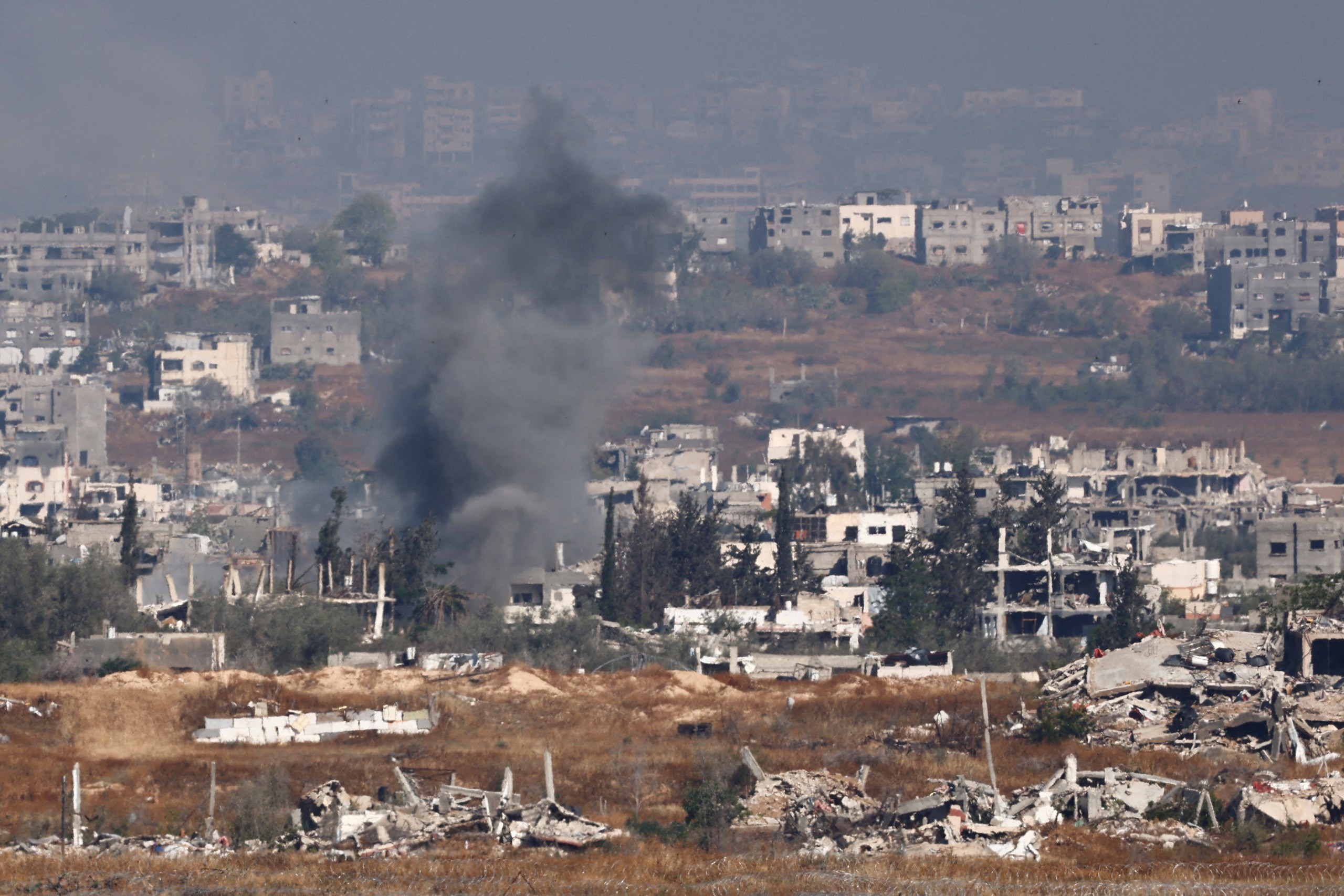
After more than two years of war, Gaza lies in ruins. Large swathes of housing and infrastructure have been destroyed, tens of thousands of Palestinians have been killed, and those who remain face winter conditions with limited access to food, medicine and shelter. Against this backdrop, Israel Prime Minister Benjamin Netanyahu has joined US President Donald Trump’s newly formed “Board of Peace”, a body tasked with overseeing Gaza’s reconstruction and governance.
The move has intensified debate over what Israel ultimately wants for Gaza: a rebuilt territory with a new political future, or a continuation of a fractured and tightly controlled status quo.
Netanyahu Balances US Pressure and Domestic Politics
Netanyahu’s decision comes as he faces competing pressures at home and abroad. With Israeli elections expected later this year, analysts say he must demonstrate cooperation with Washington while preserving the support of his governing coalition.
That coalition includes figures such as Finance Minister Bezalel Smotrich, who has openly opposed both Gaza’s reconstruction and the ceasefire. Smotrich and his allies, rooted in religious Zionism, view Gaza as territory they believe Jews are divinely entitled to settle.
Observers say this internal tension has limited Netanyahu’s room for manoeuvre — and so far, several of his objections appear to have been overridden by the United States.
Setbacks for Netanyahu on Ceasefire and Crossings
Despite Israeli opposition, the transition to the second phase of Trump’s three-stage ceasefire plan has moved forward, even though Hamas has not disarmed.
In another development opposed by Netanyahu, the Rafah crossing between Gaza and Egypt is expected to reopen in both directions next week, allowing movement in and out of the enclave. US decisions to include Türkiye and Qatar in the Board of Peace — and potentially in an international stabilisation force — have also gone ahead despite Israeli objections.
Security Versus Settlement Inside Israel
Within Israel, the debate over Gaza remains deeply polarised. Smotrich has criticised US proposals as damaging to Israeli interests and has called for the dismantling of a US base in southern Israel overseeing the ceasefire.
Other lawmakers appear focused primarily on electoral positioning, analysts say, seeking to mobilise political bases rather than outline a long-term strategy.
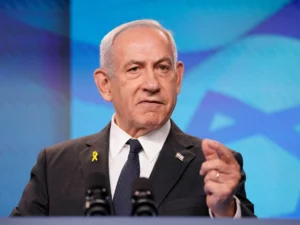
Netanyahu continues to insist that Hamas will ultimately be disarmed. Meanwhile, Israeli forces are expanding a buffer zone along Gaza’s border, pushing Palestinians further inland — a move that officials frame as necessary for security.
While Hamas has been weakened, analysts say Israel’s approach also serves to project an image of control and safety to a war-weary Israeli public.
Public Opinion: War Fatigue and Limited Visibility
After years of conflict, much of Israeli society appears exhausted. Pollsters say Gaza has faded from daily attention, with the humanitarian impact on Palestinians largely absent from mainstream media coverage.
American-Israeli political analyst Dahlia Scheindlin said Israeli public opinion remains fragmented.
“There’s a small bloc that supports resettling Gaza, but most of society is divided,” she said. “People see Gaza through fear and security concerns shaped by October 2023. Many want Israel to stay involved and don’t trust outside actors, even as they hope US involvement might succeed where war did not.”
Scheindlin added that a broad consensus still exists on one point: avoiding a return to full-scale war.
Critics See Absence of Strategy
Peace activist Gershon Baskin described Israel’s political leadership as directionless.
“They’re in election mode and speaking only to their base,” he said, recounting scenes of chaos in parliament. “There is no strategy.”
Baskin said Palestinians are largely invisible to much of the Israeli public. “Most Israelis don’t know — or don’t want to know — what’s happening on the other side of the border,” he said, noting that images of Gaza rarely appear on national television.
No Consensus on Gaza’s Political Future
While Israeli leaders broadly agree that a Palestinian state will not be established, analysts say there is no shared vision for what should replace it — or how Gaza fits into Israel’s long-term regional reality.
Even Israel’s commitment to US-backed plans remains uncertain. Netanyahu has reportedly downplayed the importance of the ceasefire’s second phase in private, calling it a symbolic step rather than meaningful progress.
Israeli lawmaker Ofer Cassif accused the government of pursuing a policy of delay.
“The killing hasn’t stopped — it has just changed form,” Cassif said, arguing that restrictions on aid and basic services amount to deliberate government policy.
Short-Term Politics, Long-Term Uncertainty
Political economist Shir Hever said Israeli decision-making has increasingly been driven by short-term political calculations rather than long-term planning.
He cited recent military actions and diplomatic confrontations as examples of moves shaped by domestic pressures, including Netanyahu’s ongoing corruption trial.
“There is no long-term plan,” Hever said. “Some factions want settlement and expulsion, but in practice, everything is reactive and short-term.”
Cautious Hope, Deep Skepticism
Baskin said US pressure may represent a rare opportunity for change. “For the first time, Israel is facing a US president it can’t easily say no to,” he said, pointing to Washington’s role in advancing the ceasefire and opening Gaza’s borders.
Cassif, however, remained pessimistic, questioning whether the Board of Peace would lead to meaningful change.
“I believe the policy is to delay and obstruct until people simply disappear from view,” he said. “It’s painful — not only as a human being, but as a Jew.”
As Gaza’s future remains uncertain, analysts say Israel’s actions — and inaction — will continue to shape not only the enclave’s fate, but Israel’s standing on the global stage.