

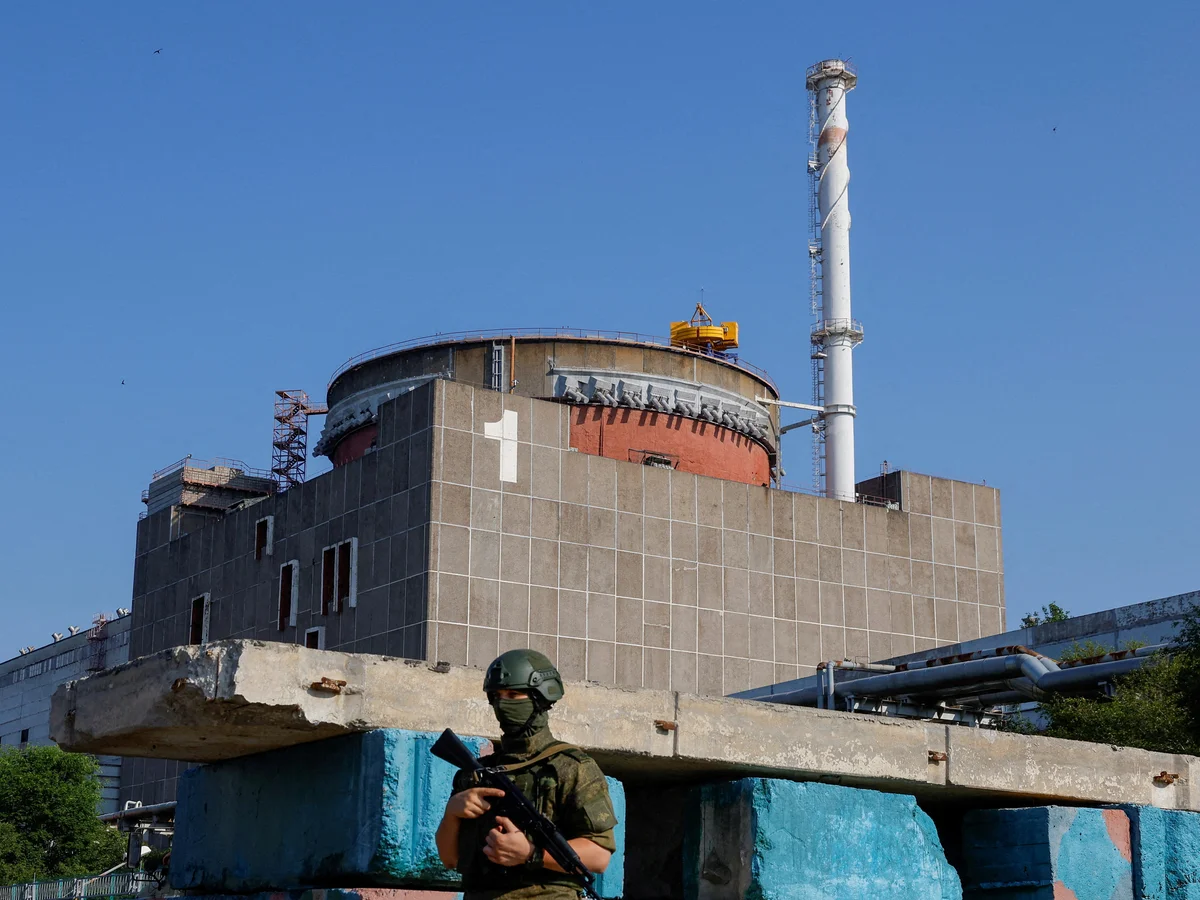
The Zaporizhzhia Nuclear Power Plant (ZNPP), the largest nuclear facility in Europe, has emerged as one of the most complex issues in diplomatic discussions to end the war between Ukraine and Russia. The site remains close to active front-line zones and has become a focal point in international peace talks involving both nations and global partners.
Ukrainian President Volodymyr Zelensky included the facility in a 20-point peace framework discussed with U.S. President Donald Trump in Florida on Sunday. While no final agreement was reached, both leaders signaled cautious optimism and confirmed that negotiation teams will continue working in the coming weeks.
Competing Energy Plans Under Review
The nuclear plant was seized by Russian forces in March 2022, after which Moscow announced intentions to connect it to Russia’s southern power grid. Most countries and international organizations maintain that the plant remains part of Ukraine’s sovereign infrastructure, though Russia claims ownership and currently manages the facility through Rosatom, its state-run nuclear energy company.
Earlier in December, Zelensky revealed that Washington had proposed a three-way operational model involving Ukraine, the United States, and Russia. Under Ukraine’s version of the proposal, Ukrainian-American teams would jointly oversee the plant, with 50% of generated energy allocated for bilateral use and strategic distribution decisions shared equally.
Russia has also considered a Russia–U.S. energy-sharing model, according to reports from Kommersant. President Trump, following his Sunday discussions with Zelensky, stated that progress had been made regarding the facility’s future.
“Negotiators are closer to alignment than before, but more discussion is needed,” Trump said, adding that the plant could “resume operations quickly once conditions allow.”
Facility Status and Infrastructure Challenges
ZNPP is located in Enerhodar, near the Dnipro River and the Kakhovka Reservoir. The plant consists of six Soviet-era nuclear reactors with a combined capacity of 5.7 gigawatts, according to the IAEA nuclear database. Currently, the plant is not producing electricity, but continues operating key cooling systems through external power sources supplied from Ukraine.
Power lines feeding the plant have reportedly been disrupted at least 11 times in the past four years due to damaged infrastructure, forcing reliance on diesel-based emergency generators to maintain stable cooling and reactor support systems.
Both Ukraine and Russia have accused each other of targeting the plant’s power supply lines, while the IAEA has repeatedly expressed concern about the danger of military operations near nuclear sites.
IAEA Director General Rafael Grossi said that “war activity around nuclear facilities places long-term safety at risk and demands international oversight.”
Why Russia Wants the Plant
Rosatom chief Alexei Likhachev has previously suggested that any electricity generated by the plant could also be redirected to parts of Ukraine, though no commitments have been made. Analysts believe Moscow views the facility as a way to support energy needs in Russia’s southern regions, where shortages have increased during the conflict period.
In December, Russia’s nuclear supervision agency granted a reactor operation license for Unit 1, a procedural step that Moscow says could lead to a future restart — though timelines remain unclear.
Why Ukraine Needs It Back
Ukraine’s energy ministry has opposed Rosatom’s licensing decision, calling it invalid under international law. Kyiv says that regaining the plant is critical to supporting its national electricity capacity, especially as Ukraine continues rebuilding energy infrastructure damaged during the war.
Energy expert Oleksandr Kharchenko, director of Ukraine’s Energy Research Center, said that Ukraine faces an energy generation shortfall of around 4 gigawatts, nearly equal to the output of four Zaporizhzhia reactors.
Kharchenko added that even if Kyiv regained control, it could take 2–3 years to assess the plant’s condition, followed by up to 3 more years to restore systems for full operation. Ukraine has also stated that the plant’s current technical condition remains largely unknown to Kyiv.
Cooling and Water Supply Concerns Persist
A major long-term concern involves water availability for reactor cooling, especially after the Kakhovka hydroelectric dam collapse in 2023, which reduced reservoir water supply to the region.
ZNPP operates cooling ponds and spent fuel pools at each reactor site. Without stable water access, reactor cooling could become more difficult over time. Ukraine previously stated that available water reserves might only support the cooling needs of 1 or at most 2 reactors if operations restart soon.
The cooling pond water level has dropped by more than 15% (around 3 meters) since the dam collapse, according to Energoatom.