

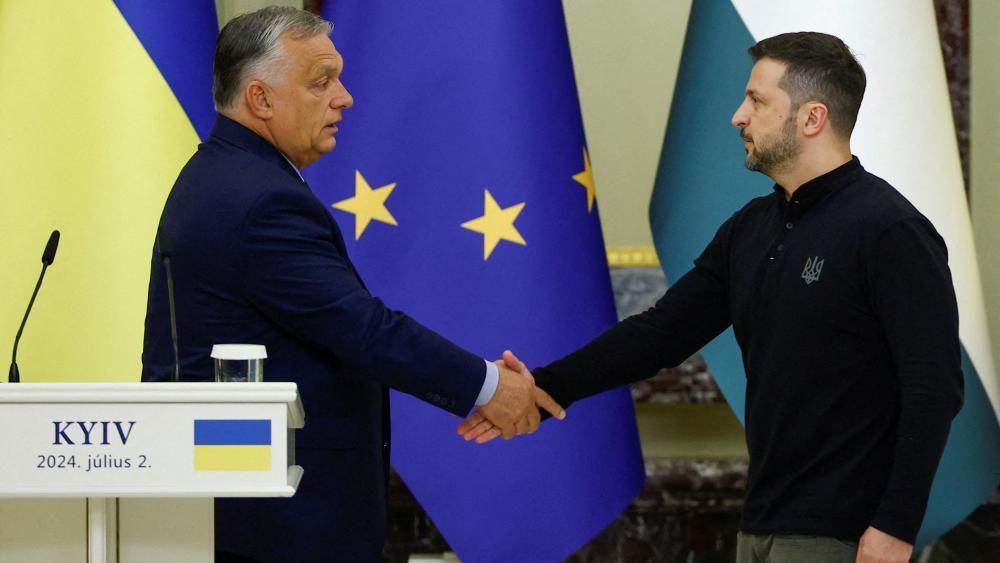
With Hungary’s parliamentary election just a month away, the war in Ukraine has become a central issue in the country’s political fight. Prime Minister Viktor Orbán’s government claims Ukraine is prepared to do everything possible to stop him and his Fidesz party from winning another term, including alleged plans involving sabotage and threats to key infrastructure.
Ukraine, however, rejects those accusations and says the Hungarian government is fueling hostility for political gain. According to Kyiv, Orbán’s administration is trying to stir fear among voters and use anti-Ukraine messaging to secure support at the ballot box.
The increasingly bitter exchange has added a new international dimension to Hungary’s election campaign, with Russia also looming in the background.
Report Points to Possible Russian Disinformation Role
The latest controversy deepened after a report said a Kremlin-linked media consultancy, the Social Design Agency, was preparing a large-scale disinformation effort in Hungary. The reported aim was to strengthen support for Orbán while weakening the opposition Tisza Party and its leader, Péter Magyar.
The claim has sharpened concerns that foreign influence, propaganda and fear-based messaging may shape the final weeks of the campaign. With only 30 days left before the vote on 12 April, political tensions are rising fast.
Some analysts believe Orbán’s strong anti-Ukraine rhetoric shows anxiety over the possibility of losing power. Recent polling suggests Fidesz is trailing Tisza, with support standing at 39% against 50% for the opposition. Others argue Orbán still knows how to mobilize his base and may benefit if voters believe the country is facing a serious external threat.
Oil Pipeline Dispute Adds Fuel to Political Conflict
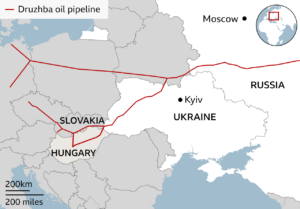
At the center of the dispute is the Druzhba pipeline, a major route used to deliver Russian oil to refineries in Hungary and Slovakia. Deliveries stopped on 27 January after a Russian drone strike sparked a fire at the Brody oil hub in western Ukraine. Since then, Hungary has not received oil through the pipeline.
Orbán has pointed to satellite images that he says prove the pipeline itself remains undamaged. He and members of his government accuse Ukraine of delaying repairs on purpose in order to hurt his chances of re-election by creating the risk of fuel shortages inside Hungary.
But that version has been challenged. Security analyst András Rácz said the picture is more complicated. According to him, a large oil tank at Brody holding 75 million litres of crude was damaged during the Russian strike. To avoid a larger environmental disaster, the oil had to be pumped into the pipeline for temporary storage. He said that, along with damage from multiple attacks, has made it impossible to restart normal flows immediately.
Ukraine says repairs could take about six weeks.
Anti-Ukraine Messaging Dominates Campaign Landscape
The issue has become highly visible across Hungary. Billboards and posters have appeared nationwide, many carrying harsh anti-Ukraine messages. Some show Ukrainian President Volodymyr Zelensky appealing to European leaders for financial support. Others place Zelensky beside opposition leader Péter Magyar, accusing his Tisza Party of wanting to drag Hungary into the war by siding with what government allies describe as a “pro-war lobby” in Brussels.
Magyar has strongly denied that charge. At campaign events across the country, he has insisted that Tisza is the true peace party and has rejected claims that it would involve Hungary in the conflict.
At the same time, Orbán and his ministers have held events they describe as anti-war gatherings, presenting Fidesz as the force that can keep Hungary out of the fighting.
Controversial Campaign Tactics Stir Debate
One of the most widely discussed campaign materials has been an AI-generated video linked to Fidesz. It shows a young girl asking when her father will return home, followed by a scene suggesting he is about to be executed by a firing squad. The message implies that Hungarians could face that kind of fate if Tisza wins the election.
Critics have called the video extreme and manipulative, but complaints that it violated Facebook’s rules on political advertising and violent content were rejected.
The government has also taken the unusual step of deploying the army to patrol key energy sites. Fidesz says the move is meant to reassure the public, while opponents argue it is designed to frighten voters and reinforce the image of a country under threat.
In Debrecen, Defence Minister Kristóf Szalay-Bobrovniczky warned that the city could face hybrid attacks such as sabotage. Pro-government media have echoed those warnings, helping spread the broader campaign message.
Financial and Diplomatic Pressure Intensify
The political clash has also affected wider European policy. On 21 February, Orbán vetoed the release of an EU loan until oil deliveries through the Druzhba pipeline resumed. In response to the delay, Ukraine turned to a €1.5bn loan from the International Monetary Fund for temporary support.
The standoff worsened further after remarks made by Zelensky on 4 March. He said he hoped no one in the European Union would block €90bn in aid for Ukraine, warning that otherwise such a person’s address could be given to Ukrainian armed forces so they could “speak to him in their own language.” He did not mention Orbán by name, but the comment caused outrage in Hungary.
Orbán responded angrily, saying his government was being targeted through threats and blackmail because persuasion had failed.
Seizure Incident Deepens Suspicion
Another episode added to the already tense atmosphere when two vehicles belonging to Ukraine’s state savings bank, Oschadbank, were seized while crossing into Hungary. The case quickly became political. Independent media portrayed the anti-terror unit involved as serving Orbán’s political interests, while pro-government outlets focused on alleged links between people involved in the bank’s legal representation and the Tisza Party.
The government then ordered prosecutors to investigate whether any criminal, terrorist or political organizations in Hungary may have benefited from the transported assets.
Hungarian Mission to Ukraine Meets Cold Response
On Wednesday, members of a Hungarian government-backed fact-finding group entered Ukraine by car to inspect the Druzhba pipeline and report on conditions for restarting oil deliveries. Deputy Energy Minister Gábor Czepek said the team’s task was to assess the pipeline’s status and help create conditions for supply to resume.
Ukraine, however, downplayed the visit. Its foreign ministry said the group had no official standing and no scheduled meetings, and insisted it should not be described as an official delegation.
Election Nears as Conflict Shapes Voter Mood
As election day approaches, the war in Ukraine is no longer just a foreign policy issue in Hungary. It has become a defining theme of the domestic campaign, influencing debates over security, energy, sovereignty and political trust.
With Fidesz and Tisza locked in a heated contest, the final weeks before the vote are likely to bring even more accusations, sharper rhetoric and continued efforts by both sides to shape public opinion. Whether Orbán’s strategy will secure another victory or drive more voters toward the opposition remains one of the biggest questions in Hungarian politics today.