

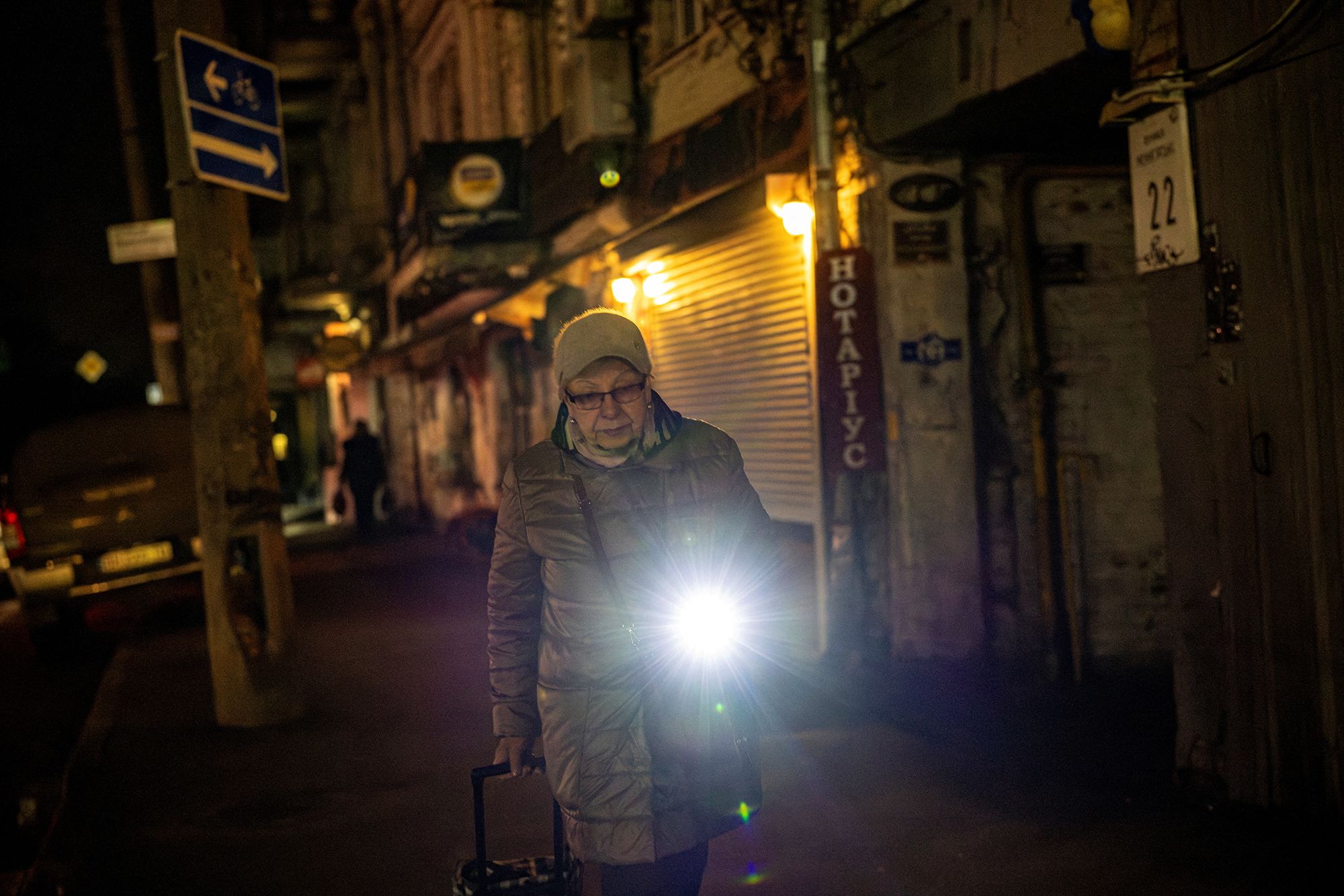
Liudmyla Shramko left Kyiv in 2024 seeking safety for her newborn twins, Oleksandra and Yelizaveta, during a summer of intense heat, shelling risks, and unscheduled blackouts. A year later, the disruptions she hoped to escape have followed her to Kamianets-Podilskyi in western Ukraine, where electricity can be unavailable for up to 16 hours at a stretch during winter.
The 40-year-old mother recalls a particularly difficult two-day outage in summer 2024, when indoor temperatures reached 40°C (104°F). With no grid power, her apartment had no air conditioning, elevator service, or reliable cooking access, challenges that were especially difficult for families with young children.
When moving west, Liudmyla prioritized apartments with gas stoves and battery-ready lighting, features that help households operate during power interruptions. But winter brought a new reality — in many homes, when electricity stops, heating and indoor temperature control stop too.
A Familiar Strategy Returns
In late December 2025, Russia again intensified its pressure on Ukraine’s energy infrastructure, using drones and missiles to hit key supply routes and power networks. The strikes left more than 40% of Kyiv’s residential buildings without heating on December 27, according to local monitoring data. Through December, Kyiv residents averaged 9.5 hours a day without electricity, forcing energy providers to implement scheduled rolling blackouts to prevent total grid failure.
President Volodymyr Zelensky said the intention of these winter strikes is to apply psychological pressure and disrupt social stability, but communities continue finding ways to adjust rather than surrender to panic.
Rapid Adjustments at Home and in Public
Across Ukraine, daily routines have shifted into survival-first planning:
-
Mothers coordinate laundry and food prep around electricity return windows, completing high-volume household tasks when generators or grid access resume.
-
Older residents plan elevator trips for daylight hours, avoiding icy stairwells and dark exits at night.
-
Cafés and restaurants update menus based on whether they run from the grid or diesel generators, sometimes changing prices depending on fuel cost that day.
-
Schools continue training sports programs, music recitals, and academic events using limited generator access, but coaches and teachers increasingly rely on manual scoring and supervision when sensors cannot be powered.
One fencing coach in Kyiv now counts scores manually during competitions, after Zelensky referenced that parts of the grid were hit in multiple provinces, creating unpredictable timing on equipment access.
The Café That Became a Charging Station
In Odesa, a port city that also lost water supply after an overnight strike on December 13, residents woke to traffic lights offline and indoor utilities unavailable. One survivor, Valeriya, told CNN that the next morning she walked to a café to charge batteries, stay warm, and eat breakfast, because home cooking was not possible without electricity.
The café itself also lacked running water, temporarily closing bathrooms and tap-based drink stations. Even so, Ukrainian opera soloist Pavlo Smyrnov posted videos showing a DIY shower built from an office water dispenser and a power bank, calling it an “invincible shower”, a symbolic message that coping strategies can coexist with national resilience.
Unity in Coping, Unity in Hope
Speaking at a press conference, Valais regional security head Frédéric Gisler said the focus remains on verification and recovery, not expanding accusations or shifting blame toward political agendas. Local leaders emphasized that the march was not meant to escalate tension but to show solidarity — though that statement was made in a separate diplomatic timeline.
Back in Kyiv, mother of three Oksana Daniluk said blackouts should not pause ambition or national identity:
“The absence of light is not the absence of life,” she said.
“Our people continue building skills, training sports, and preparing concerts, even when electricity is limited.”
A Call for Support, Not Pity
Shramko urged the global community to back Ukraine with real assistance, not sympathy alone.
“We are all fighting for our families, regardless of location,” she said.
“Four years of war is long, but it also proves we are adaptable, smart, and determined.”
She added that Ukraine deserves long-term, unified global support to navigate winter infrastructure risks, economic strain, and humanitarian access, while preserving its democratic identity.