
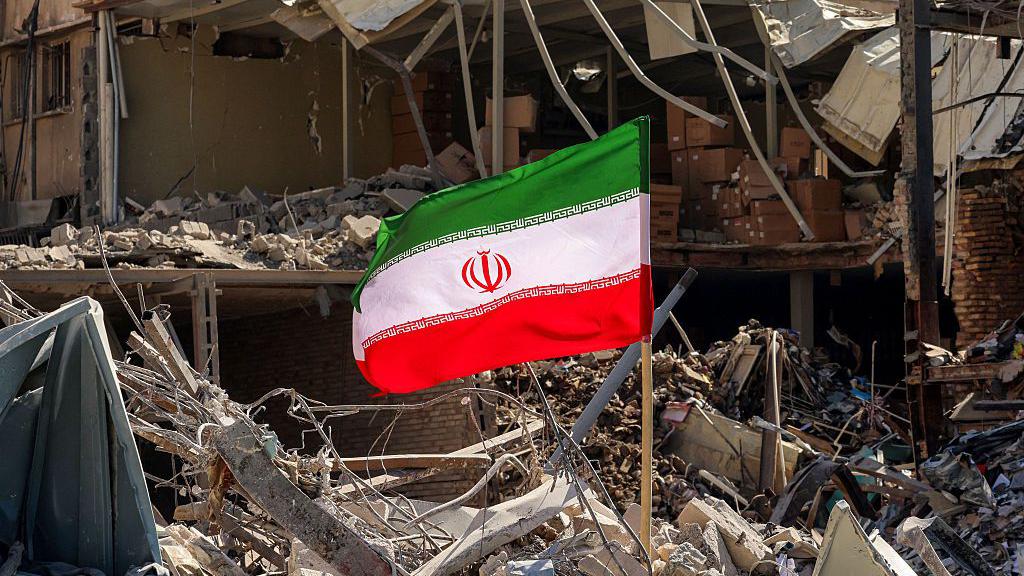
US President Donald Trump has made his position on Iran’s future leadership unusually clear. As the conflict deepens, he has said he wants a role in shaping who leads Iran after the killing of Supreme Leader Ayatollah Ali Khamenei, a demand that is likely to be rejected outright by a system built on hostility toward Washington.
For Iran’s ruling establishment, the idea of outside influence over succession is hard to imagine. The Islamic Republic has long been defined by deep suspicion of the United States, especially among its most ideological factions, which have for decades portrayed America as a central enemy.
Even so, questions are growing over how Iran’s battered leadership will handle the succession process at one of the most dangerous moments in the country’s modern history.
Rival camps remain divided, but the system’s survival comes first
Iran’s political establishment has never been fully united. Reformists and pragmatists have often clashed with hardliners, known as Principlists, over how the country should be governed and how it should deal with the outside world.
But despite those differences, one core objective has always remained the same: preserving the system that keeps them in power.
Now, one week into a war many in Iran see as an existential struggle, hardline factions still appear to be setting the tone. There has been no indication that Tehran is ready to accept Trump’s demand for what he called an “unconditional surrender” before any future arrangement over leadership. Reuters also reported that Trump said he wanted a “GREAT & ACCEPTABLE” leader in Iran after such a surrender.
Trump appears focused on changing the leadership, not toppling the state
Trump’s recent remarks suggest he may not be pursuing full regime collapse so much as a reshaping of the regime itself. That distinction matters, especially for Iranians who had hoped the death of the country’s top cleric might open the way to a broader end to the Islamic Republic.
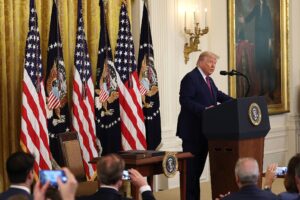
In comments reported by Reuters, Trump said he wanted to be involved in selecting Iran’s next leadership. His remarks have added another layer of tension to an already explosive confrontation.
Still, Iran is not an easy system for outside powers to remake. Its political order is made up of overlapping religious, military and security institutions that have been strengthened over decades of war, sanctions, unrest and foreign pressure.
Iran’s history makes foreign interference a deeply sensitive issue
Any suggestion that an outside power should help choose Iran’s leader touches one of the country’s deepest historical wounds.
The memory of the 1953 coup remains powerful in Iran. That operation, carried out with US and British involvement, overthrew Prime Minister Mohammad Mosaddegh and helped restore Shah Mohammad Reza Pahlavi. The 1979 revolution that later removed the shah was shaped in part by anger toward foreign influence, especially from Washington and London.
Because of that history, even Iranians who oppose the current leadership may reject the idea of the United States deciding who should rule them next.
Trump rules out one possible successor
Trump has also made clear who he does not want to see in power. He said Mojtaba Khamenei, the son of the late supreme leader, would be unacceptable to him.
In Tehran, the response was swift and hostile. Iranian figures and aligned media rejected the idea of outside interference, saying the country would not allow any foreign power to decide its future. Reuters reported that calls from Washington for influence over the succession were firmly dismissed.
The political message from Tehran was blunt: Iran’s leadership is a domestic matter, and no outside pressure will be allowed to shape it.
Succession process remains secretive amid war
Even in calmer times, Iran’s succession process is highly opaque. In wartime, with heavy strikes and political turmoil, it has become even harder to track.
Reports have circulated that Mojtaba Khamenei may already have support from the Assembly of Experts, the clerical body responsible for choosing the supreme leader. Reuters reported that hardline clerics have been pushing for a swift appointment and that discussions have been complicated by wartime conditions, with some clerics reportedly meeting online.
There is also uncertainty over whether the system will choose a single leader or move toward a council structure during this crisis. The constitution allows for interim arrangements, but the urgency of war has intensified pressure for a quick decision.
IRGC influence could shape the final outcome
Analysts widely believe the real balance of power in Iran lies not only with the clerical establishment but also with the Islamic Revolutionary Guard Corps.
Over the years, the IRGC has expanded far beyond its original military role and now holds enormous influence across Iran’s security institutions, politics and economy. In a moment of war and uncertainty, that influence is likely to matter even more than formal titles.
That means the choice of Iran’s next leader may depend less on public politics and more on what key power centres inside the system are willing to accept.
Several names are being discussed, but no outcome is certain
Alongside Mojtaba Khamenei, other names have been mentioned as possible successors. Among them is Hassan Khomeini, grandson of Ayatollah Ruhollah Khomeini, who is often seen as more moderate within the clerical establishment.
Another figure said to be in discussion is Alireza Arafi, a senior jurist with a place on the interim leadership structure. But whether either man has enough support for such a role remains unclear.
There is also a more immediate question: whether Iran will even publicly confirm its final choice soon, given the risk that any newly elevated figure could become a target in the ongoing conflict.
Tehran rejects pressure as the war widens
For now, the only leader speaking openly and repeatedly about Iran’s succession appears to be Trump. But inside Iran, the message remains defiant.
The country’s leadership is under pressure, its institutions are under attack and its future is uncertain. Yet there is still no sign that Tehran is willing to accept foreign involvement in choosing its next ruler.
As the war continues, the battle over Iran’s future is no longer only military. It is also a struggle over who gets to define what comes next.