

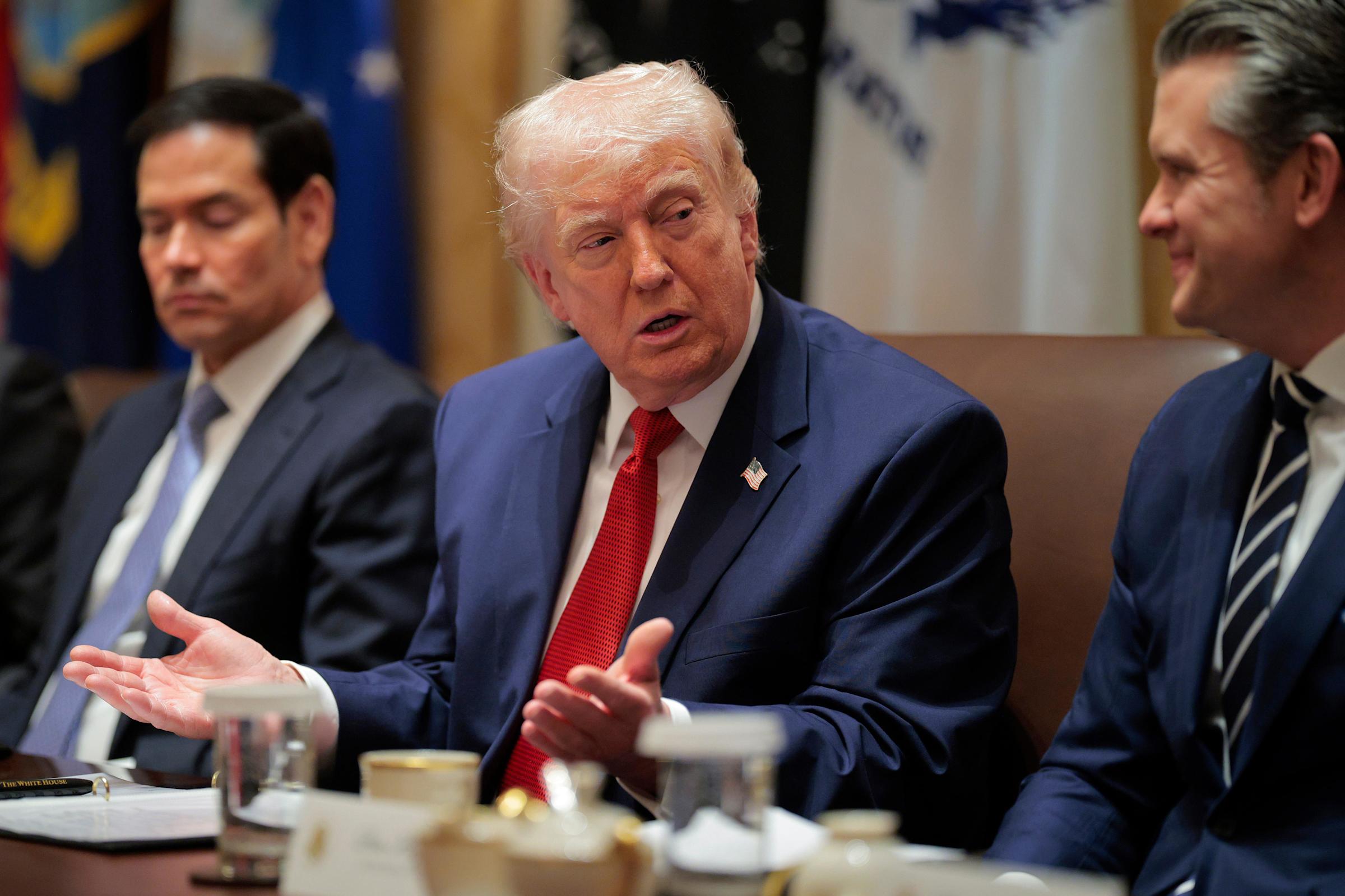
US President Donald Trump has accused Iran of doing a “very poor job” in managing the flow of oil through the Strait of Hormuz, saying Tehran’s actions do not match the agreement reached under the fragile ceasefire arrangement.
His remarks have highlighted how unstable the truce remains, with conflicting accounts continuing to emerge over what was actually included in the deal and whether all parties are working from the same understanding.
The latest dispute came as Israeli Prime Minister Benjamin Netanyahu announced that his government would begin direct talks with Lebanon. According to him, the discussions will focus on the disarmament of Hezbollah, the Iran-backed armed group, as well as the possibility of establishing peaceful relations.
A US State Department official confirmed that Washington will host a meeting next week to discuss the ongoing ceasefire negotiations involving Israel and Lebanon. However, uncertainty remains high, especially as Lebanese officials had already called for a ceasefire before any talks take place.
Netanyahu, though, made Israel’s stance clear in a message to residents in northern Israel, saying there is no ceasefire in Lebanon. That statement reinforced the gap between diplomatic messaging and the reality on the ground.
Israeli Strikes Continue Despite Diplomatic Push
Israeli attacks in Lebanon continued throughout Thursday, with strikes targeting what Israel described as Hezbollah rocket launch sites in the south. Although the pace of attacks appeared to ease overnight, the violence once again cast doubt on the possibility of immediate calm.
Trump later said Israel would begin scaling back its military operations in Lebanon in support of the upcoming talks. In an interview with NBC News, he said he had spoken with Netanyahu and urged him to keep the response more restrained.
According to Trump, the Israeli prime minister agreed to lower the intensity of the strikes. Even so, the situation remained tense, especially after fresh evacuation warnings were issued for people living in Beirut’s southern suburbs.
The warnings added to the pressure on civilians and medical services already struggling under the weight of earlier attacks. For many in Lebanon, the prospect of talks offered little reassurance while bombardment continued and no formal ceasefire had been secured.
Hospitals Face Growing Strain in Beirut
The renewed threat in Beirut has raised serious humanitarian concerns. World Health Organization chief Tedros Adhanom Ghebreyesus said evacuation orders had affected the Jnah area, where two major hospitals are located.
He warned that no alternative medical facilities were available to absorb about 450 patients currently being treated there, including 40 in intensive care. That made any evacuation extremely difficult to carry out in practical terms.
Among the patients in those hospitals are some of the more than 1,150 people wounded during Wednesday’s major wave of Israeli strikes. Lebanese health authorities said at least 303 people were killed in that assault.
Tedros also pointed out that the headquarters of Lebanon’s Ministry of Public Health sits within the evacuation zone. The site is also hosting five shelters with more than 5,000 displaced people, adding another layer of risk to an already worsening humanitarian crisis.
Strait of Hormuz Becomes New Flashpoint
At the heart of Trump’s criticism is the Strait of Hormuz, one of the world’s most important maritime routes for oil and liquefied natural gas. The waterway usually carries around 20 percent of global oil and LNG shipments, making any disruption there a matter of international concern.
Confusion over the ceasefire quickly spread after different sides gave different interpretations of whether Lebanon was part of the deal. Iranian officials and Pakistani mediators said it was included. US and Israeli officials, however, insisted that it was not.
Following Israel’s heavy strikes on Lebanon, Iran accused Israel of violating the ceasefire terms. Tehran then moved again to halt shipping passage through the Strait of Hormuz and issued threats of retaliation.
Trump responded sharply on Truth Social, saying there were reports Iran was charging fees to tankers passing through the strait. He warned that if those reports were true, Iran must stop immediately.
His statement underscored the fragile nature of the ceasefire and the risk that disputes over one front of the conflict could quickly trigger wider economic and military fallout.
Peace Talks Face Serious Obstacles
Even with talks scheduled, major questions remain about whether diplomacy can produce real progress. Israeli forces continue to occupy large parts of southern Lebanon, where villages have been destroyed in recent days. Without even a temporary halt in fighting, it remains unclear how meaningful negotiations can be.
There is also uncertainty over how much control the Lebanese government has over Hezbollah. While the group is represented in Lebanon’s political system, it remains a separate force backed by Iran and does not operate simply as an arm of the state.
The Lebanese government banned Hezbollah’s military activities in early March, shortly after the war with Israel began. But that move has not stopped the group from continuing its military operations.
As a result, next week’s discussions in Washington are beginning under a cloud of mistrust, confusion and continued violence. While diplomatic channels are opening, the reality on the ground suggests that any path to peace remains uncertain and highly fragile.