
President Donald Trump second term is quickly taking shape around an assertive foreign policy agenda, marked by bold rhetoric and renewed focus on areas considered vital to U.S. influence and security.
Only days after escalating pressure on Venezuela, Trump referenced the Monroe Doctrine of 1823, the long-standing declaration of U.S. primacy in the Western Hemisphere. In typical Trump fashion, the doctrine was reintroduced with a modern twist, renamed by the president as the “Donroe Doctrine.”
The doctrine’s revival came on the heels of a high-profile raid in Caracas, where Venezuelan President and his wife were taken from a fortified government residence during a late-night security operation. Trump later pointed to the doctrine when describing the broader intent behind his foreign policy direction.
In recent press briefings and interviews, Trump has issued a string of warnings and claims involving several nations and territories within or adjacent to Washington’s strategic sphere.
Greenland: Security and Resources in the Arctic
Trump has renewed calls for greater control over Greenland, despite the U.S. already maintaining Pituffik Space Base, a military installation on the island.
“We need Greenland for national security,” Trump told reporters, citing increased activity of Russian and Chinese vessels in Arctic waters. The president also underscored Greenland’s resource value, noting its rare earth mineral deposits, key components in electronics, energy systems, and defense equipment — industries where China currently leads production.
Greenland’s Prime Minister Jens Frederik Nielsen rejected the idea, describing it publicly as unrealistic, while reiterating that dialogue must remain rooted in international law and mutual respect.
Colombia: Rising Tensions After Sanctions
Trump also targeted Colombia, claiming the nation is being used as a center of illegal trade routes. The U.S. imposed sanctions on President Gustavo Petro in late 2023, accusing his administration of enabling criminal networks, a claim Petro has denied.
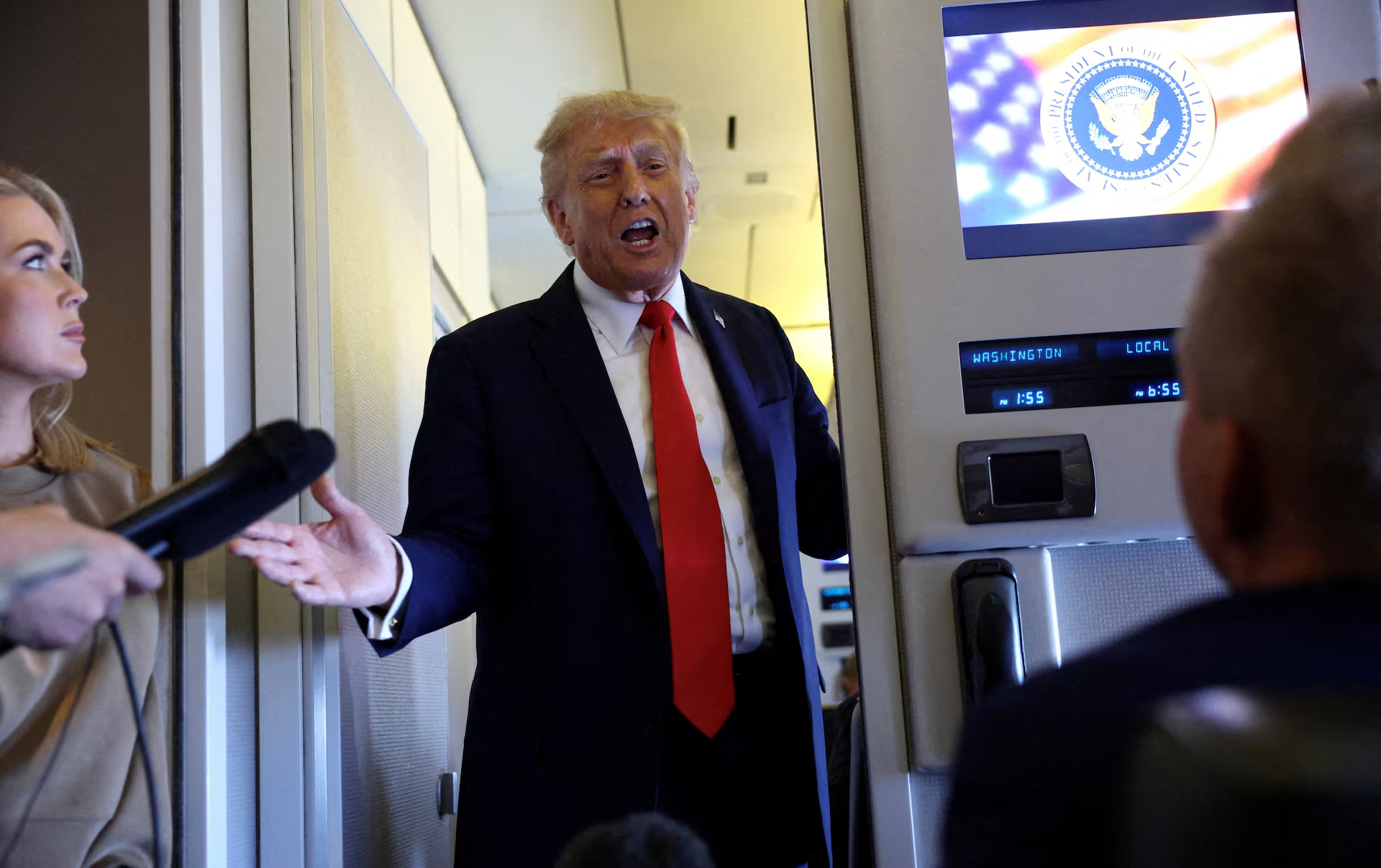
Aboard Air Force One, Trump called Colombia “mismanaged,” adding that the U.S. is monitoring the situation closely.
Asked about the possibility of intervention, Trump responded, “It sounds fine to me,” a remark that has raised concern among analysts given Colombia’s long history as a U.S. partner in anti-drug initiatives.
Iran: Protests, Casualties, and a Warning
Trump also addressed Iran, where nationwide protests have intensified. He warned that the Iranian government would face consequences if civilian deaths continue.
“If they repeat what happened before, there will be a strong response,” Trump said, referring to previous periods of unrest. Though not tied to the Donroe Doctrine, Iran remains a key foreign policy topic, especially after strikes on its nuclear sites in 2025.
Israeli Prime Minister Benjamin Netanyahu reportedly discussed further actions in 2026 during a meeting at Mar-a-Lago, according to U.S. media sources.
Mexico and Cuba: Long-Standing Flashpoints
On Sunday, Trump again raised concerns over Mexico, pointing to the strength of cartels and the flow of contraband across borders. He stated that the U.S. is considering ways to increase pressure, though Mexico’s President Claudia Sheinbaum has firmly rejected foreign military involvement.
Meanwhile, Cuba, heavily reliant on Venezuelan oil trade agreements, is facing mounting economic instability. Trump described the country as nearing a tipping point without requiring direct intervention.
“It’s already declining on its own,” he said, referencing the loss of Venezuela as a financial lifeline.
U.S. Secretary of State Marco Rubio, who has family roots connected to Cuba, echoed Trump’s remarks, urging observers to take presidential statements seriously.
“When the president talks about regional stability, it’s not just commentary,” Rubio added.