

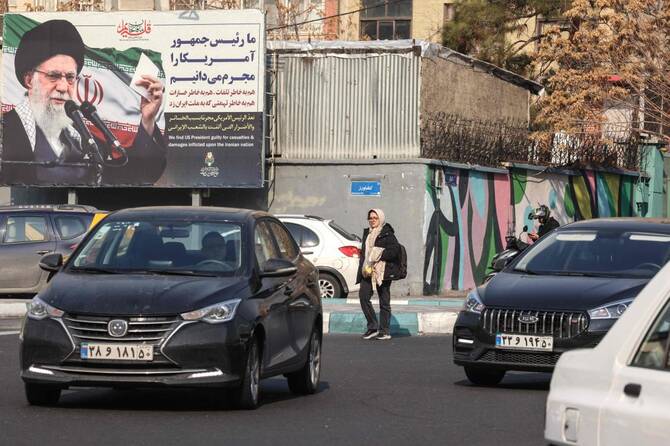
U.S. President Donald Trump is reviewing a range of possible actions against Iran, including limited military strikes targeting senior security figures and institutions, according to multiple sources familiar with internal discussions. The goal, sources said, would be to encourage renewed protests following a deadly government crackdown earlier this month.
Two U.S. sources said Trump believes Iran’s leadership is vulnerable after nationwide demonstrations were violently suppressed, leaving thousands dead. He is seeking ways to create conditions that could revive public unrest and weaken the ruling establishment.
Targeted Operations and Broader Military Options Discussed
According to those briefed on the talks, Trump has examined plans to strike commanders and organizations blamed by Washington for the bloodshed. The intention would be to signal weakness within the state apparatus and give protesters confidence to challenge security forces and seize government facilities.
No final decision has been made, including whether to pursue military action, a U.S. official and one source said.
Another source said advisers have also discussed a far broader strike designed to have long-term impact. Potential targets include Iran’s ballistic missile infrastructure — capable of reaching U.S. allies in the Middle East — as well as nuclear enrichment facilities. Iran has consistently refused to negotiate limits on its missile program, which it views as a core deterrent against Israel.
U.S. Military Deployment Raises Stakes
The arrival of a U.S. aircraft carrier and supporting warships in the Middle East this week has significantly expanded Trump’s military options. The deployment followed repeated warnings from the White House over Iran’s handling of protests.
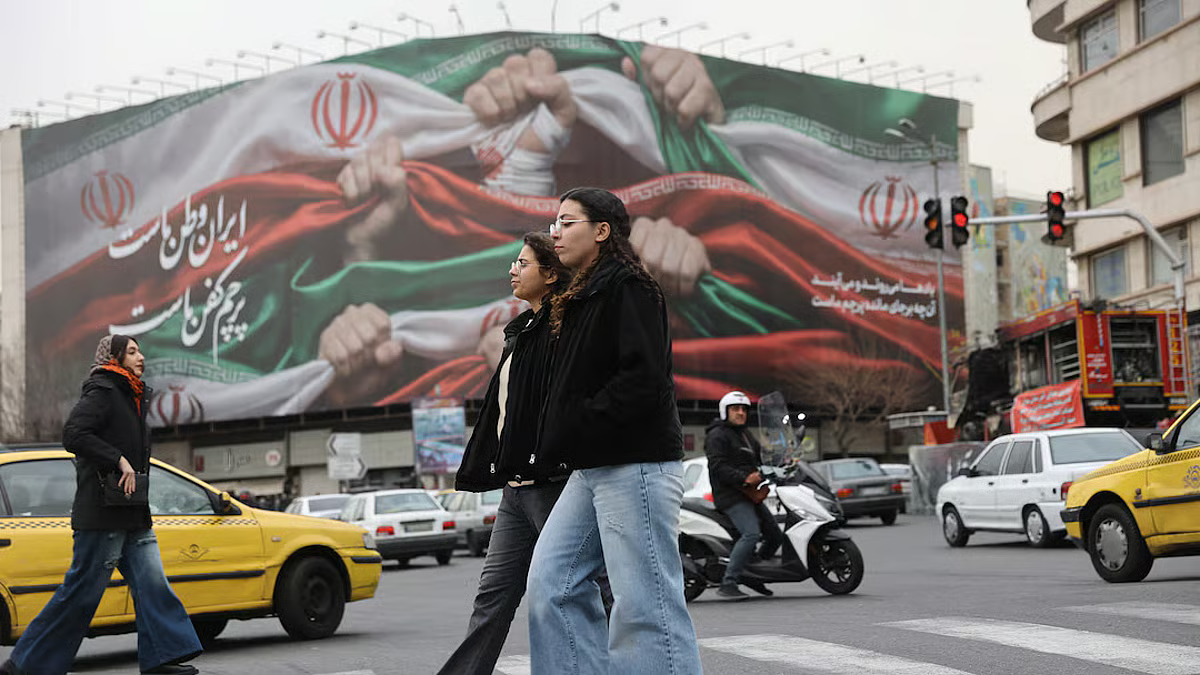
Reuters spoke with more than a dozen officials and diplomats for this account, including Arab officials, Western diplomats and a senior Western source whose governments were briefed on the discussions. Several expressed concern that military strikes could further destabilize Iran without reviving street protests.
Allies Warn Air Power Alone May Not Bring Change
Israeli and Arab officials cautioned that airstrikes alone are unlikely to bring down Iran’s clerical leadership. One senior Israeli official with direct knowledge of joint planning said that even killing Supreme Leader Ayatollah Ali Khamenei would not guarantee political transformation.
“If you want to topple the regime, you need boots on the ground,” the official said, warning that Iran’s system would likely replace Khamenei rather than collapse.
Western intelligence assessments echoed that view, concluding that while Iran’s leadership has been weakened, it remains firmly in control without major internal fractures.
Diplomacy, Threats and Nuclear Pressure
Trump on Wednesday urged Tehran to return to negotiations over its nuclear program, warning that any future U.S. military action would be “far worse” than a June bombing campaign against three nuclear sites. He described the U.S. naval presence in the region as an “armada.”
Iranian officials said the country was preparing for possible military confrontation while still engaging diplomatic channels. Tehran maintains its nuclear program is civilian and said it remains open to talks based on mutual respect, while warning it would defend itself forcefully if attacked.
Leadership Uncertainty and Risk of Regional Fallout
At 86, Khamenei has reduced public appearances and is believed to be operating from secure locations after last year’s Israeli strikes eliminated several senior Iranian commanders. Day-to-day governance has increasingly shifted to figures aligned with the Islamic Revolutionary Guard Corps (IRGC), which dominates Iran’s security apparatus and large sectors of its economy.
Despite this shift, Khamenei retains ultimate authority over war decisions, succession and nuclear policy, making meaningful political change difficult without his departure.
Arab officials and Western diplomats warned that instability in Iran could trigger wider regional consequences, including missile retaliation against Gulf states, refugee flows, and disruptions to global energy supplies through the Strait of Hormuz.
“The United States may initiate action,” one Arab source said, “but it is the region that would bear the consequences.”
Fears of Fragmentation Outweigh Calls for Collapse
Across the Middle East, officials said they favor containing Iran rather than risking state collapse. Analysts warned that a fractured Iran could descend into prolonged internal conflict, similar to post-2003 Iraq or early-stage Syria, fueling militancy and regional chaos.
Alex Vatanka of the Middle East Institute said the most likely scenario is not sudden collapse but gradual erosion — through elite defections, economic strain and contested succession — that could eventually strain the system beyond repair.