

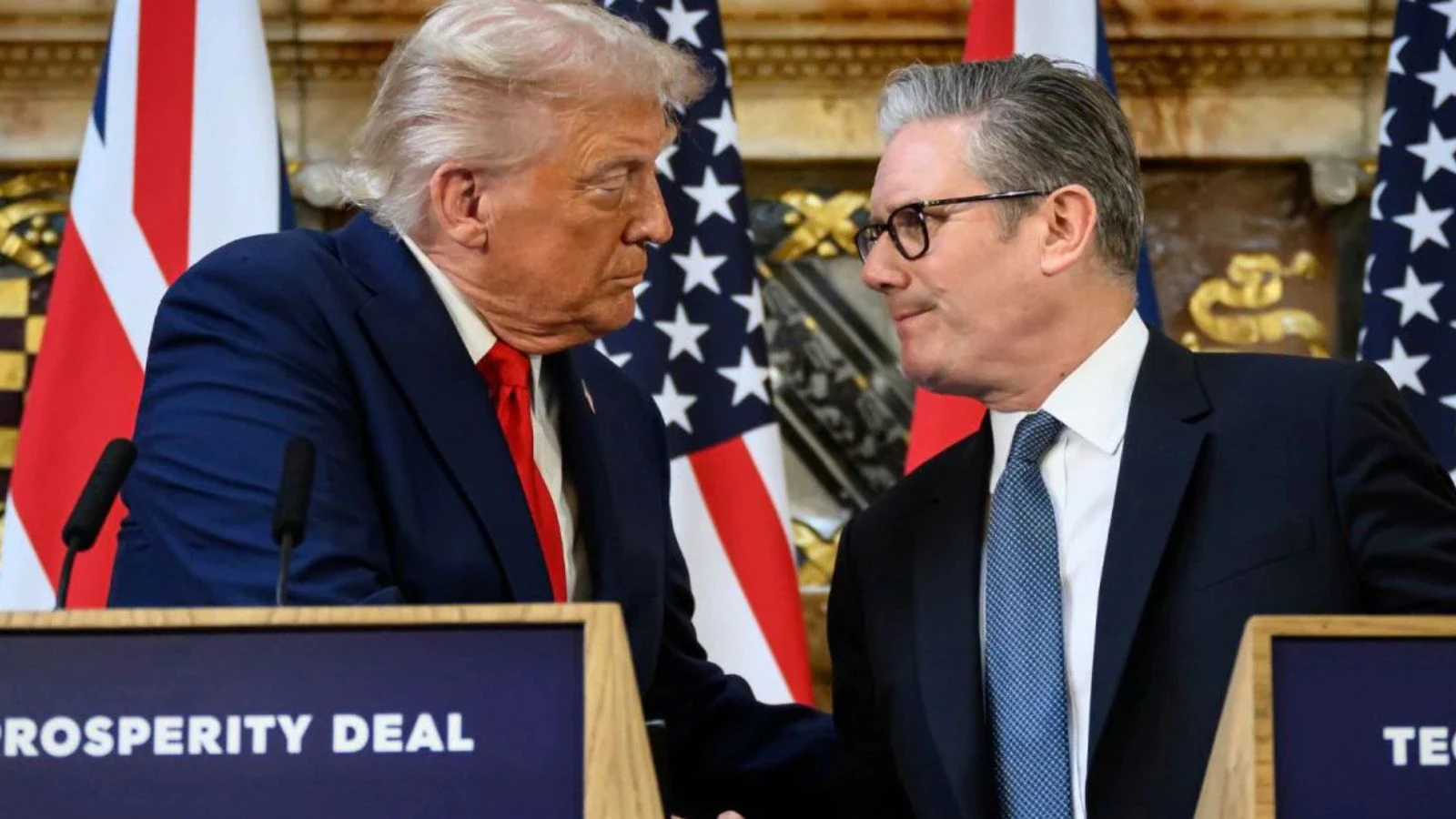
US President Donald Trump has publicly criticised British Prime Minister Keir Starmer, saying the United States no longer needs UK aircraft carriers and accusing Britain of trying to join the conflict only after the hard part was already over. His remarks add to growing strain between Washington and London as the US and Israel continue military operations against Iran.
In a post on Truth Social, Trump said Britain was considering sending two aircraft carriers to the Middle East, but added that such support was no longer needed. He said the US would remember the delay and mocked Starmer for trying to join a war after it had already been won. Reuters reported that Trump also repeated the same message when speaking to reporters aboard Air Force One.
Dispute follows Britain’s refusal to back the initial strikes
The sharp exchange comes after the UK refused at first to let the US use British bases for the opening phase of the campaign against Iran. That decision frustrated Trump, who later approved only limited British involvement tied to defensive operations. Reuters previously reported that Starmer allowed US use of British bases for defensive strikes against Iranian missile depots and launchers, while keeping Britain out of the wider offensive campaign.
Starmer has defended that approach by saying he must act in Britain’s national interest and avoid being drawn into a broader war without a clear and lawful plan. He has also said the UK does not support regime change carried out from the air.
UK military movements fuel speculation
Trump’s comments came as questions grew over possible British military deployments. Britain’s Ministry of Defence confirmed that one aircraft carrier had been placed on advanced readiness, though Reuters reported there was no final decision to send it into the conflict zone. At the same time, Britain announced additional defensive steps in the region, including the deployment of HMS Dragon and extra military support around British interests.
The latest tension was heightened further after US bomber aircraft were seen landing at RAF Fairford in Gloucestershire, underlining Britain’s continued role in support operations even while it tries to avoid joining the main offensive. Reuters reported that British bases were being used for specific defensive operations after Starmer changed course following Iranian retaliation in the region.
Trump steps up personal criticism of Starmer
This is not the first time Trump has attacked the British prime minister over Iran. Earlier in the week, Reuters reported that Trump said Starmer was “no Winston Churchill” and openly complained that Britain’s hesitation had forced US aircraft to fly longer routes during early strikes.
Starmer has responded by insisting that the UK-US special relationship remains intact. He said intelligence sharing and military coordination between the two countries continue around the clock, even as public disagreements have become harder to ignore. Reuters reported on March 5 that Starmer said the special relationship was still operating normally despite Trump’s repeated criticism.
Political pressure grows on both sides
The clash has also fed domestic political arguments in Britain. Starmer has faced criticism from opponents who say he reacted too cautiously, while his allies argue he is trying to keep Britain from being dragged into another major Middle East war. Reuters noted that the UK government has tried to frame its decisions as measured and responsible, even as Trump and some British critics portray them as weak or indecisive.
For Trump, the criticism fits a broader pattern of publicly pressuring allies to offer faster and stronger support. For Starmer, it shows how difficult it has become to maintain close ties with Washington while still presenting Britain as an independent actor with its own limits and priorities. That tension is now playing out in public as the Iran conflict deepens.
Rift highlights pressure on the US-UK alliance
For months, Starmer had pointed to his relationship with Trump as one of the strengths of his leadership. But the current dispute shows how quickly that relationship can come under strain when military decisions and political messaging stop lining up.
As the war continues, Trump’s latest remarks make clear that he sees Britain’s support as arriving too late to matter. For Downing Street, the bigger challenge may be proving that caution in a dangerous conflict is not the same thing as weakness.