

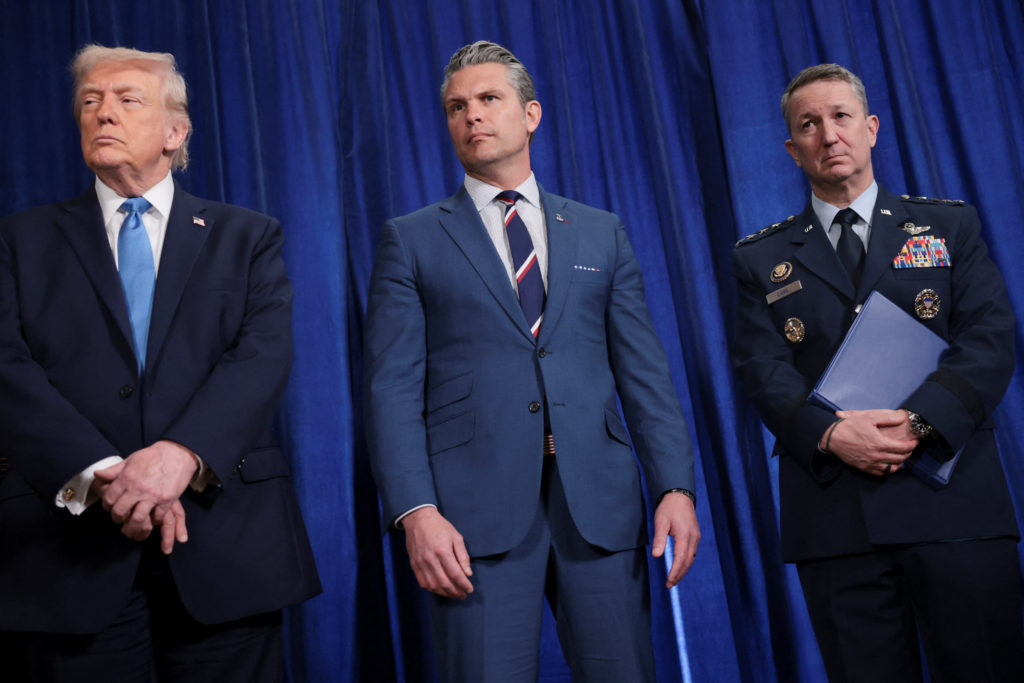
Venezuelan President Nicolás Maduro was being held in a federal detention facility near New York on Sunday, following what President Donald Trump described as a daring U.S. operation to seize the South American leader and assume temporary oversight of Venezuela, including its strategic oil assets.
The overnight operation began early Saturday, temporarily disrupting electricity in parts of Caracas and involving targeted strikes on Venezuelan defense infrastructure. According to U.S. officials, Special Forces units detained Maduro and his wife, Cilia Flores, extracting them by helicopter to a U.S. Navy vessel stationed offshore, before both were flown to the United States.
At a press briefing held at Mar-a-Lago, Florida, Trump said the United States would guide Venezuela’s administration only until a secure political transition is possible.
“The U.S. will oversee national operations until conditions allow a careful, lawful, and stable handover of leadership,” he stated.
For months, the Trump administration had applied diplomatic and military pressure on Maduro, accusing his government of involvement in narcotics transport across the Caribbean and Pacific. The U.S. had increased naval deployments in the region and launched missile strikes on vessels it claimed were linked to drug trafficking activities.
Fears of a Political Vacuum and Oil Interests Take Center Stage
Trump’s announcement revived comparisons to previous U.S.-led leadership removals in Latin America and the Middle East, despite his long-standing criticism of such interventions. Some members of his own political base, particularly those supporting the “America First” doctrine, have questioned the shift toward direct foreign involvement in Venezuela.
Trump also confirmed that major U.S. energy firms would return to Venezuela to rebuild oil infrastructure, citing the country’s status as the holder of the world’s largest proven oil reserves. Analysts say restoring Venezuela’s energy sector could take years.
He also did not rule out deploying additional U.S. military units if needed.
“A ground presence is an option if conditions demand it,” Trump added.
U.S. Justice Proceedings Begin, Maduro to Face Federal Charges
A government aircraft believed to be transporting Maduro landed near New York on Saturday night, after which he was escorted by helicopter and convoy to a federal holding center in Brooklyn under law enforcement supervision.
U.S. authorities later confirmed that Maduro is facing federal criminal charges, including alleged narco-terrorism conspiracy, and is scheduled to appear before a Manhattan federal court on Monday, according to a Justice Department spokesperson.
Trump also repeated that the U.S. expects to fund its involvement using revenue drawn from Venezuela’s oil sector.
“Resources beneath the ground will reimburse the process,” Trump said, referencing oil income multiple times during the briefing.
Venezuela Condemns Extraction, Court Appoints Interim Leader
On Venezuelan state television Saturday, Vice President Delcy Rodríguez called the operation a kidnapping and demanded Maduro’s immediate release. A Venezuelan court later issued a ruling appointing Rodríguez as interim national leader, reinforcing that the current government remains in operational control of the country.
Despite Trump’s claims, U.S. personnel currently hold no direct command over Venezuelan institutions, and Maduro’s administration has shown no indication of cooperating with Washington’s political directives.
Global Reactions, UN Security Council Convenes
The U.N. Security Council scheduled an emergency session for Monday to discuss the escalation. Secretary-General Antonio Guterres described the situation as “a risky precedent with global implications.”
Russia and China, both political partners of Maduro’s government, criticized the U.S. for violating sovereignty.
China’s foreign ministry said, “This represents unilateral conduct that conflicts with international law and destabilizes Latin America and the Caribbean.”
Calm at Home, Celebrations Abroad
Inside Venezuela, residents described the streets as mostly calm following a short surge in demand for household supplies and fuel. Soldiers increased patrols around key zones in the capital, where small pro-government gatherings appeared in support of Maduro.
In Maracay, merchant Carolina Pimentel, 37, said she was shocked but relieved:
“It felt unreal at first. It was like watching a film.”
Abroad, Venezuelan diaspora communities erupted in celebration, particularly among the 7.7 million citizens living outside the country, including large migrant groups in Chile and Chile’s capital, Santiago.
“We finally have hope for a free Venezuela,” said migrant Khaty Yanez in Santiago.
Political Risks Ahead of U.S. Midterms
Democrats have used Trump’s foreign policy shift as new political ammunition ahead of the November midterm elections, where Republicans currently maintain slim control of both chambers of Congress.
Opinion polling in the U.S. shows that voters remain far more focused on domestic economic pressures, including rising costs of living, rather than foreign military campaigns.
Trump may also face growing criticism from his own base, as many supporters oppose sustained military involvement abroad, even in politically opposed nations.