

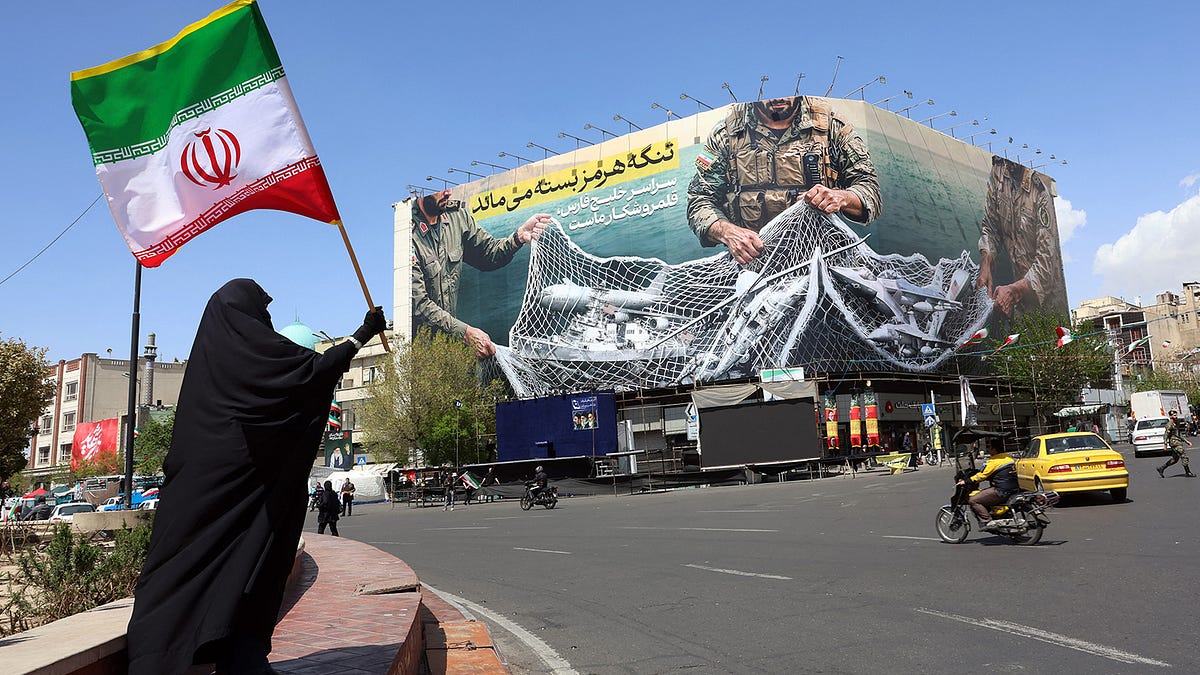
After US Vice President JD Vance and his diplomatic team failed to secure an agreement with Iran during lengthy negotiations in Islamabad, President Donald Trump moved quickly to announce a tougher new step.
In a series of Truth Social posts on Sunday morning, Trump said the United States would impose a naval blockade on Iran. He warned that no ship paying what he called an illegal toll would enjoy safe passage at sea. He also said American forces would continue mine-clearing operations in the Strait of Hormuz and that the US military remained ready to resume attacks on Iran when the time was right.
The move came with a forceful message, but it also introduced fresh uncertainty. Trump said progress had been made during the 20-hour talks in Pakistan, yet insisted Iran still would not accept the main US demand of abandoning its nuclear ambitions.
That account was only partly supported by other US officials. According to one official familiar with the talks, the disagreements were broader, stretching beyond Iran’s nuclear programme to include Tehran’s control over the Strait of Hormuz and its backing of regional allies such as Hezbollah in Lebanon and the Houthis in Yemen.
Blockade Plan Creates More Questions Than Answers
Trump’s latest threat may not have carried the same dramatic tone as some of his earlier statements, but it immediately raised a series of serious questions for Washington.
There is uncertainty over whether US mine-clearing missions could expose American naval forces to Iranian attacks. There are also doubts over how the United States would identify which ships have paid tolls to Iran, whether force would be used against foreign-flagged vessels, and how major countries dependent on Iranian oil, especially China, might respond.
Another major concern is the effect on global energy markets. Any attempt to restrict shipping linked to Iran could send oil prices even higher, adding economic strain at a time when the US is already dealing with political pressure at home.
Confusion deepened later on Sunday when US Central Command announced that the blockade would target all ships travelling to or from Iranian ports. That wording appeared narrower than Trump’s earlier remarks, which suggested a wider crackdown connected to the Strait of Hormuz itself.
The mismatch in messages has made the US strategy appear unsettled. Instead of projecting clarity, the announcement has added to uncertainty over what Washington is actually prepared to do and how far it is willing to go.
Critics and Allies Offer Different Views
The proposed blockade has already drawn conflicting reactions in the United States. Senator Mark Warner, the top Democrat on the Senate Intelligence Committee, publicly questioned how blockading the strait would force Iran to reopen it. His remarks reflected broader skepticism over whether the measure can actually achieve its stated purpose.
Republican Congressman Mike Turner, on the other hand, defended the move as a way to pressure all sides into addressing the standoff in Hormuz. He argued that by refusing to let Iran decide who can pass, Trump is forcing allies and other stakeholders to confront the issue directly.
These different responses highlight the deeper uncertainty surrounding the policy. While some see it as leverage, others view it as a dangerous escalation that may do little to solve the central problem.
That tension mirrors the broader challenge facing the White House: how to look forceful without deepening a conflict that already carries serious military, diplomatic and economic risks.
Trump Faces the Same Hard Choices as Before
Before the temporary ceasefire and direct talks with Iran, Trump was already stuck between two difficult options. He could intensify military action, risking greater damage to Iran’s civilian infrastructure, worsening humanitarian conditions and causing more instability in the global economy.
Or he could pull back from a conflict that has never been especially popular with the American public and is starting to frustrate some of his own supporters, many of whom backed his promises to avoid prolonged wars and deeper involvement in the Middle East.
According to a new CBS poll cited in the article, 59 percent of Americans believe the war is going somewhat or very badly for the United States. At the same time, large bipartisan majorities still believe it is important for Washington to achieve core goals such as keeping the Strait of Hormuz open, increasing freedom for the Iranian people and permanently ending Iran’s nuclear programme.
That creates a political bind. The public wants results, but confidence in the direction of the war is weakening. Nearly a week after claims of American success, the main dilemmas confronting the president remain largely unchanged.
Political Stakes Rise as the Conflict Drags On
Trump said in a Sunday interview that Iran would eventually give the United States everything it wants. He also argued that even if oil prices remain high, the American economy will be able to withstand the pressure.
That is a risky calculation. If energy prices rise further or the conflict drags on without clear results, the political cost could be high, especially with the November midterm elections approaching.
The article contrasts this uncertainty with Trump’s public appearance in Miami on Saturday night, where he watched UFC fights while his vice president was still negotiating in Pakistan. The scene was described as strange and theatrical, with the president watching violent matches, speaking with celebrities and holding visible discussions with senior advisers in front of a live crowd.
The comparison was hard to miss. Unlike a cage fight, which has clear rules, time limits and a definite outcome, the Iran conflict offers no such certainty. As it moves into its second month and the temporary ceasefire appears increasingly fragile, the war has become a test of endurance.
In that contest, the article suggests the question is no longer just whether Iran can withstand continued US and Israeli pressure, but also whether Trump can endure the growing economic and political consequences of the war.
For now, the blockade threat may have raised the stakes, but it has not changed the deeper reality. The risks are growing, the path forward remains unclear, and every side in the conflict could end up weakened by what comes next.