

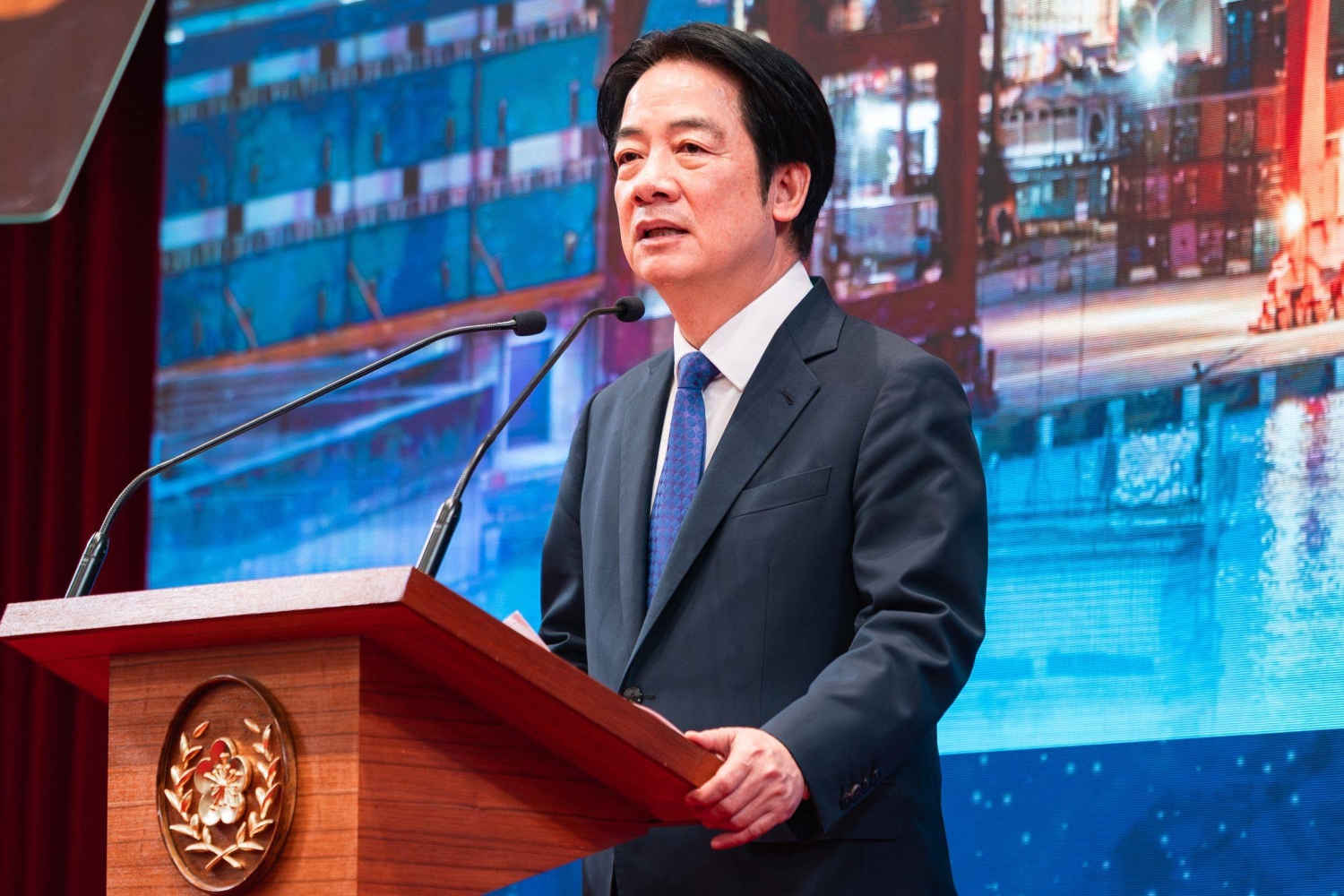
Taiwan President Lai Ching-te delivered a resolute national address on Thursday, emphasizing the island’s readiness to protect its territorial authority and accelerate military modernization. His statement followed China’s recent drills, which included launching multiple rockets in Taiwan’s direction as part of a large-scale show of military presence across the region.
Broadcast live from the Presidential Office in Taipei during a New Year’s speech, Lai said global observers are closely watching Taiwan’s response to rising geopolitical pressure.
“My position has never shifted — defending our national authority is non-negotiable, and strengthening defense is an urgent mission,” Lai stated.
Defense Spending Proposal Faces Political Gridlock
Lai pointed to China’s drills this week, which reportedly simulated Taiwan as a potential opponent, including spotlighting the island’s newest combat assets. He argued that this underscores the importance of increasing arms procurement and budget allocation.
The president urged rival political parties to back his $40 billion defense budget increase, a plan currently stalled due to broader legislative disputes in the opposition-majority parliament.
When asked about a U.S. report predicting China could be combat-ready for a Taiwan conflict by 2027, Lai responded cautiously but firmly:
“Their timeline is one question. Our preparedness is the priority.”
He added that 2026 will be a pivotal year for Taiwan, encouraging the public to stay alert while maintaining optimism.
“We must prepare for the toughest outcomes, but keep our eyes on peace,” he said.
Taiwan Open to Talks if Mutual Respect Is Recognized
Despite the tensions, Lai expressed openness to communication with China, but only under conditions that uphold Taiwan’s democratic values and mutual recognition.
“We are ready for dialogue and cooperation across the strait, but only if it is rooted in equality and respect,” Lai explained.
“This requires acknowledgment of the Republic of China and respect for Taiwan’s democratic identity.”
Taiwan continues to reject China’s territorial claims, reaffirming that its governance and political future remain self-determined.
Beijing Pushes Back on Lai’s Address
Following Lai’s speech, China criticized the president, calling his message misleading. Statements from China’s Taiwan Affairs Office, aired on state TV, accused him of spreading disinformation and stirring tension.
Beijing also repeated its stance that Taiwan is part of its territory and has not ruled out using force for control — a claim Taiwan rejects.
China’s own president, Xi Jinping, echoed a familiar message in his New Year remarks on Wednesday, reiterating that what Beijing refers to as national “unification” with Taiwan is inevitable.
Details of China’s ‘Justice Mission 2025’ Drill
The Chinese operation, officially labeled “Justice Mission 2025,” concluded on Wednesday. During the exercise, China reportedly deployed numerous warships and military aircraft near Taiwan, and fired dozens of rockets toward surrounding zones in a demonstration that raised concern among Western partners including Britain and the European Commission.
Taiwan’s government condemned the drill as a regional security threat and unnecessary escalation, adding that its military units were mobilized to track activity during the operation.
The exercise also disrupted domestic logistics, forcing the cancellation of multiple commercial flights and triggering military monitoring missions by Taiwan’s air and sea defense units.
U.S. Arms Support and China’s New Justification
The drills began 11 days after the U.S. announced an $11.1 billion military aid package — the largest arms support package to Taiwan to date. For the first time, China publicly stated that its drill was aimed at discouraging foreign involvement in Taiwan’s defense affairs.
Beijing added that it would continue to boost its military readiness, while Taipei insists that stability should be achieved through diplomacy, not intimidation.