

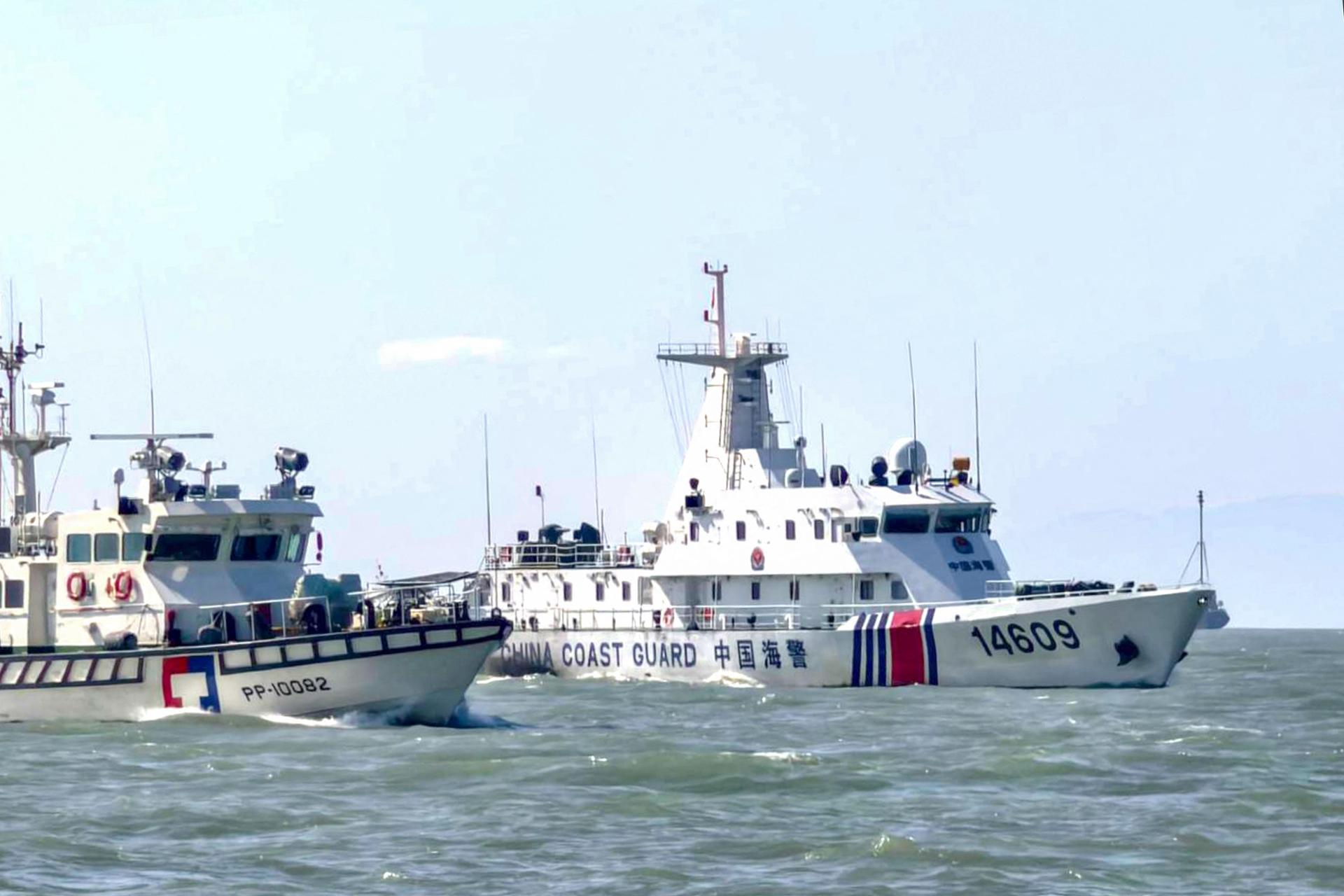
Dec 30, 2025 — Taiwan remained in a heightened security posture on Wednesday, one day after China conducted its widest military drills around the island this year. The Taiwan Coast Guard said its emergency maritime response center continued operating as patrol units monitored activity near surrounding sea routes.
The exercises, titled “Justice Mission 2025,” included rocket launches into waters near Taiwan and involved naval, air, and anti-submarine readiness simulations. The drills, which China described as a routine large-scale readiness test, were the most expansive by coverage area in 2025, according to regional security monitors.
China’s Eastern Theatre Command said the drills ran for 10 continuous hours on Tuesday, involving dozens of warships and aircraft deployed in maritime and aerial zones around Taiwan. Taipei condemned the activities as military pressure tactics that risk disrupting regional stability.
Chinese Fleet Pulls Back, Taiwan Stays in Patrol Mode
Kuan Bi-ling, head of Taiwan’s Ocean Affairs Council, said the maritime situation had cooled down late Tuesday, noting that Chinese coast guard vessels were moving away from Taiwan’s outer waters.
“The maritime environment has become quieter as vessels depart gradually,” she wrote on Facebook.
A coast guard official told Reuters that all 11 Chinese coast guard ships had left Taiwan’s outer waters and were continuing to sail away. However, Taiwanese defense and coast guard response centers remain active, officials said.
Taiwan’s Defense Ministry on Wednesday reported that 77 Chinese aircraft and 25 naval or coast guard vessels were detected operating in the broader region over the past 24 hours. Of those, 35 military planes crossed the Taiwan Strait median line, the ministry added, describing it as part of a standard aerial readiness route used during drills.
Diplomatic and Security Dialogue Continues in Beijing
As the drills unfolded, ambassadors from the Quad (U.S., Japan, India, and Australia) met in Beijing for security dialogue. U.S. Ambassador David Perdue shared a photo from the U.S. embassy, calling the Quad a “group focused on maintaining Indo-Pacific stability,” though no operational details were disclosed publicly.
China’s Taiwan Affairs Office spokesperson Zhang Han said Wednesday that the drills were a “necessary step to reinforce national sovereignty” and a “formal message toward independence-linked rhetoric and foreign involvement,” remarks Taipei rejected.
Monthly Casualties and Readiness Framing Debated in Washington
Although no direct evidence of foreign intervention was confirmed publicly by Washington or NATO, analysts said that framing maritime logistics pressure as war-on-terror language without multilateral confirmation could increase mistrust in the region.
China Rules Out Immediate Conflict, Analysts Say
Lyle Goldstein, Asia program director at U.S. think tank Defense Priorities, said that despite the intensity of Beijing’s drill coverage, China is unlikely to pursue full conflict due to heavy economic and diplomatic costs.
“There is a lot of rhetoric, but real conflict would carry major consequences for all sides,” Goldstein said.
China claims Taiwan as part of its territory, while Taipei rejects that claim, saying it is a self-governing democracy.