

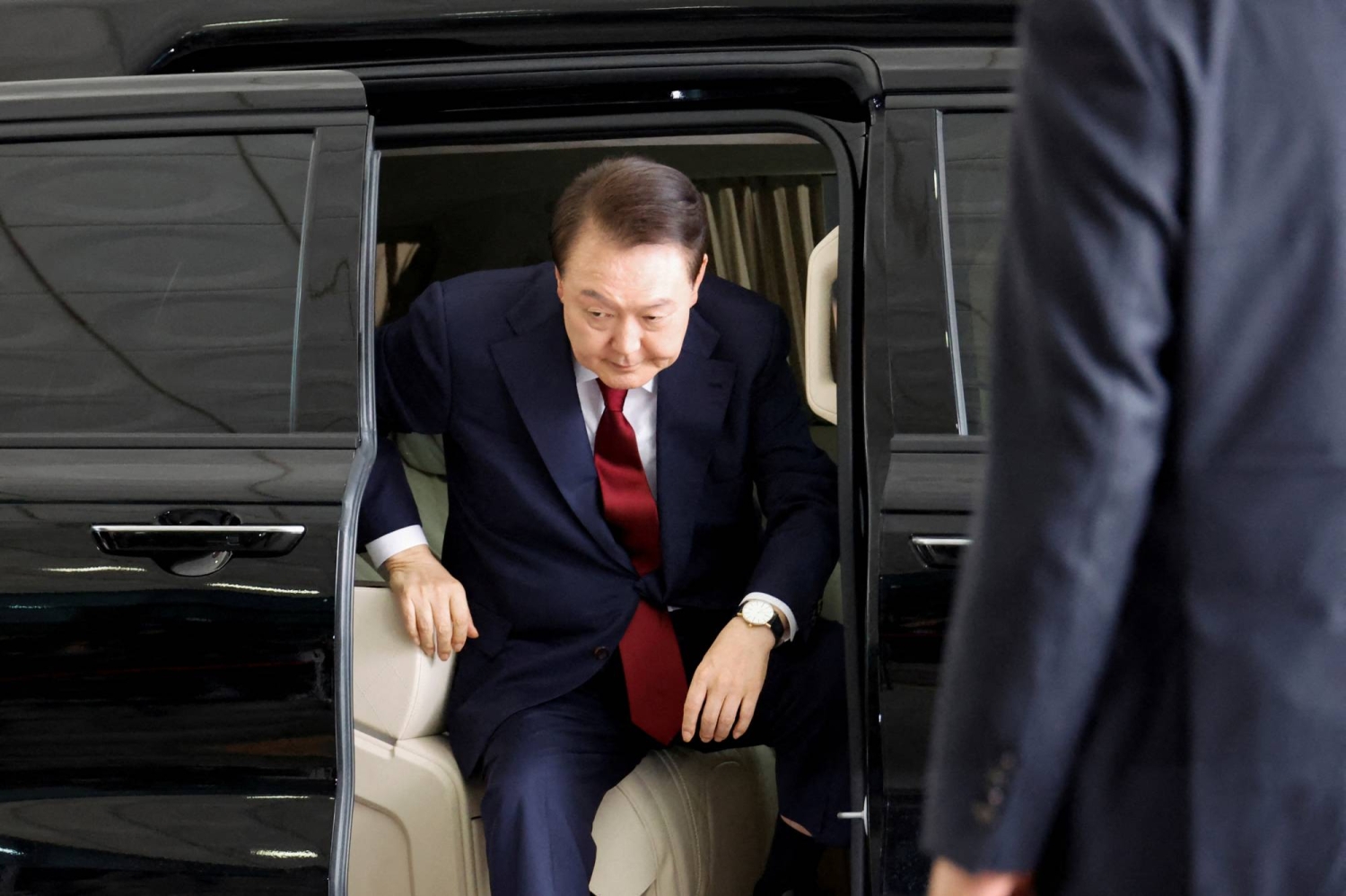
A South Korean court has sentenced former president Yoon Suk Yeol to life imprisonment after finding him guilty of orchestrating an insurrection through his attempt to impose military rule in December 2024.
According to the ruling delivered in Seoul, Yoon violated the constitution by deploying troops to block access to the National Assembly and ordering the detention of political figures during his brief declaration of martial law on 3 December 2024. Presiding judge Ji Gwi-yeon stated that the move severely undermined the country’s democratic system and warranted a heavy punishment. Prosecutors had initially requested the death penalty.
Court Finds Actions Damaged Democratic Order
The court concluded that Yoon’s decision to use military force against a functioning legislature constituted a direct challenge to constitutional governance. While the martial law order was reversed within hours, judges determined that the act itself had lasting political consequences and deepened divisions across the country.
During sentencing, large groups of supporters gathered outside the courthouse holding banners in support of the former leader, while critics and anti-Yoon demonstrators also assembled, some calling for the harshest possible sentence. Many of his supporters reportedly reacted with visible emotion following the verdict.
Yoon remained composed in court as the ruling was announced. His legal team rejected the decision, arguing that the judgment lacked sufficient evidence and claiming the proceedings were biased. An appeal is expected, and if filed, the case will move to the Supreme Court, potentially delaying a final legal outcome for months.
Martial Law Declaration Shocked the Nation
Yoon’s controversial declaration of martial law was broadcast live on television, where he justified the move as a necessary step to counter what he described as “anti-state” forces allegedly sympathetic to North Korea. However, political observers widely interpreted the decision as being driven by domestic political pressure.
At the time, the opposition-controlled parliament had significantly limited his governing power, while separate corruption allegations involving his wife, Kim Keon Hee, added to mounting political strain. Lawmakers ultimately forced their way into the National Assembly and voted to overturn the martial law order, leading Yoon to rescind it shortly after.
The incident triggered months of political instability, culminating in his impeachment and multiple criminal indictments against him and several senior officials.
Other Officials Also Jailed in Insurrection Case
The court proceedings have extended beyond Yoon alone. Former prime minister Han Duck-soo was sentenced to 23 years in prison for his role in the events, while ex-defence minister Kim Yong-hyun, who reportedly advised the imposition of martial law, received a 30-year prison sentence.
Additional figures convicted in connection with the case include former interior minister Lee Sang-min, former intelligence commander Roh Sang-won, and former police chief Cho Ji-ho. Judges described the episode as an “insurrection from the top,” highlighting the involvement of senior state officials.
Security around the courthouse remained tight during sentencing, with extensive police deployment and restricted public access to prevent clashes between opposing groups.
Defence Arguments and Political Reactions
Throughout the trial, Yoon maintained that his actions fell within presidential authority, arguing that the martial law order was necessary to safeguard national sovereignty and preserve constitutional order amid political obstruction. He insisted the decision was aimed at protecting the country rather than undermining it.
The ruling Democratic Party, which came to power following Yoon’s removal from office, criticised the life sentence as too lenient, stating that the attempted military intervention shook the foundations of the nation’s democracy. Party leaders argued that a stronger punishment would have better reflected the gravity of the charges.
Broader Legal and Political Implications
South Korea has not carried out an execution since 1997, meaning that even a death sentence would likely have resulted in long-term imprisonment. Yoon is already serving time on separate convictions related to abuse of power and obstruction of his own arrest following the martial law episode, and he still faces additional trials tied to the same incident.
Historically, several former South Korean presidents have been convicted and imprisoned but later received presidential pardons after serving only a few years. Analysts note that Yoon’s political future and the durability of the sentence could depend on the outcome of appeals and potential shifts in the country’s political landscape.
The verdict marks one of the most significant legal rulings against a former head of state in South Korea’s modern history, reinforcing the judiciary’s stance that attempts to override democratic institutions, even temporarily, carry serious constitutional consequences.