
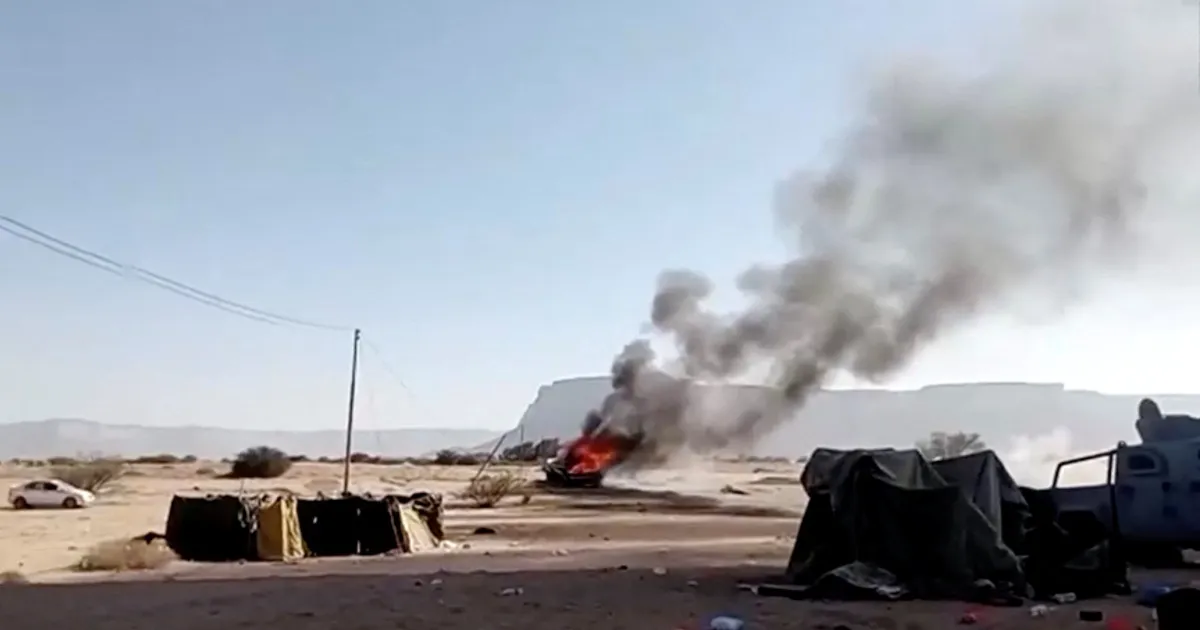
Saudi Arabia has responded positively to a formal request from Yemen’s Saudi-aligned Presidential Leadership Council (PLC) to host a diplomatic forum in Riyadh, aimed at settling a violent power dispute in southern Yemen. The clash has escalated into armed confrontations and sparked unease among Gulf nations involved in the region.
On Saturday, the Saudi foreign ministry urged southern Yemeni factions to attend the proposed forum in Riyadh, encouraging them to develop what it described as a balanced and fair framework for resolving the southern conflict. The ministry emphasized the importance of producing a unified roadmap that delivers equitable outcomes for the southern cause.
Earlier the same day, PLC Chairman Rashad al-Alimi publicly invited political and community leaders in southern Yemen to participate in talks in Riyadh, according to Yemen’s national news outlet Saba News Agency. Al-Alimi was quoted reaffirming the importance of the southern issue and firmly rejecting any solutions that are imposed unilaterally or exclude key stakeholders.
Conflict Triggered by STC Offensive in Strategic Provinces
The call for negotiations comes after the Southern Transitional Council (STC) launched a large military push across Hadramout and al-Mahra, two major provinces that account for nearly 50% of Yemen’s landmass. The STC, while part of the anti-Houthi coalition, has long been viewed as pursuing a separate state in the south—an ambition that has strained its relationship with the internationally recognized Yemeni government led by the PLC.
The capture of Hadramout—Yemen’s largest oil-producing province—last month by the STC was interpreted in Riyadh as a security concern. Hadramout shares a direct border with Saudi Arabia and holds cultural importance for the kingdom, as many notable Saudi families trace their ancestry to the region.
Regional Tensions: Saudi–UAE Friction Over STC Support
Saudi officials have accused the United Arab Emirates (UAE) of supplying weapons to the STC, claims that Abu Dhabi has repeatedly denied. The UAE stated it remains committed to supporting Saudi national security priorities and continues to align with the kingdom’s broader regional stability agenda.
In a separate Saturday statement, the UAE voiced serious concern over the rising conflict, urging Yemeni factions to act carefully, exercise restraint, and protect national stability.
On Friday, the STC also alleged that air operations by the Saudi-led coalition killed 20 people, marking a new escalation in fighting among formerly aligned southern coalition partners.
Background: A Coalition Formed in 2015, Now Strained by Internal Southern Rivalries
The Saudi-led military coalition first entered Yemen in 2015, with the goal of removing the Iran-supported Houthi movement from northern Yemen. More than a decade later, the Houthis continue to maintain control in the north, while coalition-linked groups in the south—primarily STC- and PLC-aligned factions—are now fighting each other for influence and territory.
Amid diplomatic tension, the UAE announced late Friday that it has recalled all remaining counter-terrorism unit personnel from Yemen, describing the withdrawal as the planned conclusion of existing operational missions. The statement noted that the process was coordinated carefully to guarantee the safety of personnel and alignment with regional partners.
STC Declares Independence Referendum Plan
Shortly after the withdrawal announcement, the STC declared it intends to hold a referendum on southern independence within two years, a proposal that has been widely challenged by analysts and former Yemeni officials.
Speaking to international media, former Yemeni diplomat and parliamentarian Ali Ahmed al-Amrani rejected secession as a practical solution, stating that it does not represent a national consensus.
Analysts Warn of a New and Dangerous Phase
Political and conflict expert Hisham Al-Omeisy described the fighting as a prolonged territorial contest, suggesting that the southern battle risks redrawing Yemen’s political boundaries. He labeled the situation as “a proxy conflict nested inside a broader proxy war,” noting that its effects may spill beyond Yemen into neighboring regions.
Meanwhile, Yemen conflict researcher Hisham Al-Omeisy? No — another voice: Hisham Al-Omeisy of the European Institute of Peace cautioned that if diplomacy fails, the coming days could mark a more volatile stage in the war, driven by competing groups seeking dominance in the south.