

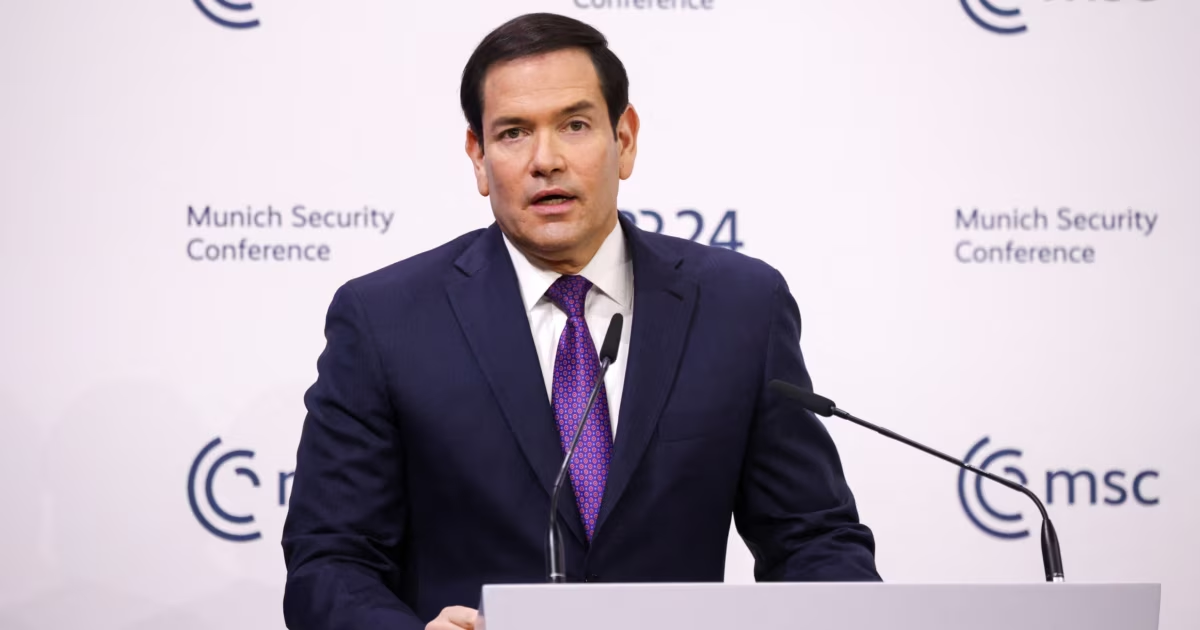
Global leaders, including French President Emmanuel Macron, German Chancellor Friedrich Merz, and UK Prime Minister Sir Keir Starmer, gathered in Munich for Europe’s largest security and defence conference, where one central question dominated discussions: does the United States remain a reliable ally to Europe? Much of the anticipation centred on the keynote address by US Secretary of State Marco Rubio. Observers were keen to see whether his remarks would echo the sharp criticism previously directed at Europe by US Vice-President JD Vance or signal a more conciliatory tone toward transatlantic partners.
Tense Opening as Criticism Targets Key European Policies
The conference hall was filled with senior military officials, heads of government, diplomats, legislators, and policy advisers, all closely watching Rubio’s speech. In the early moments, the atmosphere remained cautious as his remarks initially appeared critical of several European policy directions.
Rubio raised concerns about issues such as free trade, migration, and climate-related policies, arguing that certain approaches were negatively affecting economic stability. He also criticised the United Nations, suggesting that it had not been effective in resolving major conflicts, including those in Gaza and Ukraine.
Standing at the podium and reading from prepared remarks, the US secretary of state maintained a composed presence while outlining Washington’s perspective on global governance, economic priorities, and international cooperation.
Reassurance on Transatlantic Relations
Despite the early criticisms, Rubio later shifted his tone with a message that resonated strongly with the audience. He emphasised that the United States and Europe remain deeply connected, stating that their destinies are closely linked.
He clarified that ending the transatlantic era was neither a goal nor a desire of the United States, reinforcing the idea that historical and cultural ties between both sides of the Atlantic continue to shape strategic cooperation. Rubio also referenced shared cultural heritage and common goals, including collaboration on securing supply chains for critical minerals and fostering innovation.
His acknowledgement of Europe’s cultural contributions, from literature to music, even drew a brief moment of subdued amusement from attendees.
A Mixed Message with Strategic Undertones
However, the speech was not without a firm strategic message. Rubio stressed that the partnership between the US and Europe is unique but warned that Washington does not intend to simply manage what he described as a gradual decline of Western influence. This remark underscored a broader call for renewed strength and competitiveness within the Western alliance.
Reactions in the room were generally positive, with roughly half the audience standing to applaud at the conclusion of the address. The response suggested cautious optimism rather than unqualified enthusiasm.
Relief Among European Leaders
Many European officials expressed a sense of relief following the speech, particularly after months of uncertainty marked by tariff disputes and tensions over geopolitical issues, including discussions surrounding Greenland. The overall message reassured participants that the transatlantic partnership remains intact despite policy disagreements.
EU foreign policy chief Kaja Kallas described the speech as constructive, noting that it reaffirmed the importance of Europe in the United States’ strategic outlook. She highlighted that both regions remain closely interconnected and are likely to continue as long-term allies.
At the same time, she acknowledged that significant policy differences still exist between Washington and European capitals, especially in areas related to trade, defence, and foreign policy priorities.
Ongoing Differences Over Defence and Ukraine
One area of consensus that emerged during discussions in Munich was the expectation that Europe should assume greater responsibility for its own defence. However, behind closed doors, some officials reportedly voiced frustration over what they see as insufficient US pressure on Russia to end the war in Ukraine, which is approaching its fifth year.
While Rubio’s remarks helped calm fears of a breakdown in US-Europe relations, the conference made clear that the alliance is navigating a period of adjustment. Strategic cooperation remains strong, but policy gaps and geopolitical tensions continue to shape the evolving transatlantic relationship.
Overall, the speech signalled that although relations may be strained in certain areas, the longstanding partnership between the United States and Europe is far from over and remains a cornerstone of Western security and diplomacy.