

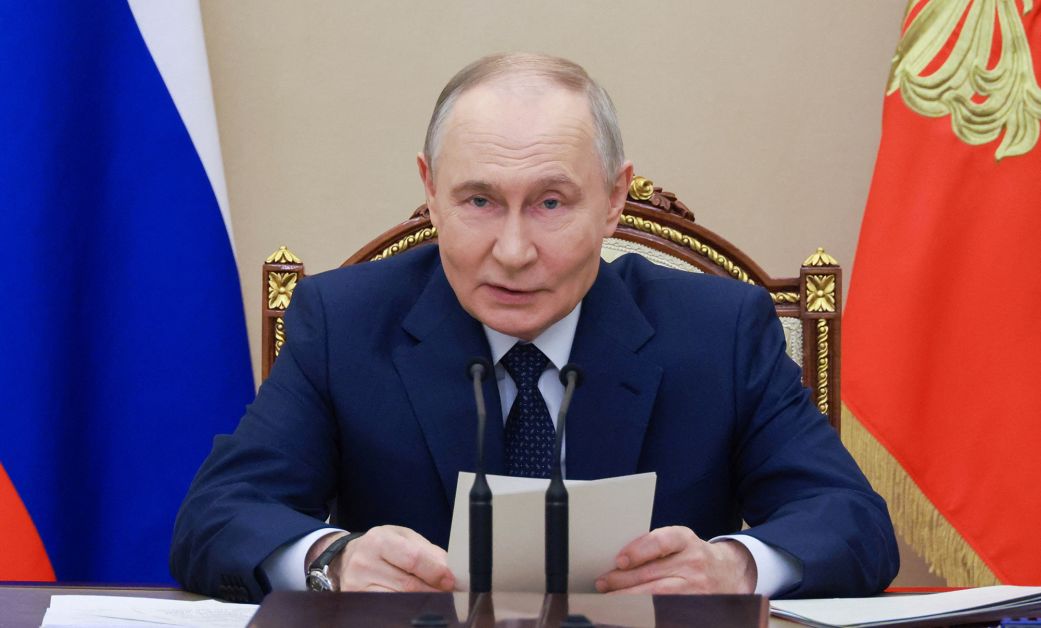
Russia is nearing a symbolic benchmark: by mid-January, President Vladimir Putin military campaign in Ukraine will surpass the length of the Soviet Union’s fight on the Eastern Front in World War II — a conflict central to modern Russian national identity.
The Kremlin leader has long treated WWII triumph as a pillar of state pride. In recent years, the Russian government has promoted renewed recognition of historical figures from that era, including Josef Stalin, whose legacy has been reframed in official narratives as part of the nation’s wartime resilience.
Yet after nearly four years of war, Putin still lacks the decisive outcome he has repeatedly sought. Current estimates indicate that Russia holds around 20% of Ukrainian land, and Western and Ukrainian sources report the conflict has resulted in very high casualties. Meanwhile, Ukrainian President Volodymyr Zelensky remains in office, contradicting one of Moscow’s strategic expectations when the invasion began in 2024.
Despite these realities, Putin continues to express a belief that Russia’s goals will ultimately be met. In December, before a summit with Indian Prime Minister Narendra Modi, Putin told India Today that Russia would “secure Donbas and Novorossiya one way or another,” signaling that territorial claims remain a non-negotiable priority for Moscow.
Confidence as a Negotiation Tool
Putin has repeatedly blended signals of openness to diplomacy with assertions of military momentum. During a year-end briefing, he said Russia was prepared to conclude the war through “peaceful channels if terms allow,” while also claiming that Russian units were progressing across key zones.
This posture coincides with U.S. President Donald Trump’s push to finalize a peace agreement. Since taking office in January, Trump has maintained that ending the conflict quickly is a strategic necessity, and U.S. officials believe Putin is using this urgency to increase Moscow’s leverage at the negotiation table.
European officials have also raised doubts about Moscow’s messaging. On Wednesday, EU Foreign Policy Chief Kaja Kallas said recent Kremlin claims — including allegations that Ukraine directed a drone strike at a Putin-linked residence near Valdai, Novgorod — were unverified and may have been intended to redirect international attention during sensitive peace discussions.
No independent organization or global monitoring body has publicly confirmed that any such residential strike took place. Ukraine has denied the allegation, calling it fabricated information designed to create political tension between Kyiv and its Western partners.
Budapest Summit Falls Through, Sanctions Follow
Relations between Moscow and Washington have moved through cycles of strategic messaging and diplomatic pressure. A March summit in Anchorage, Alaska provided Moscow with a major media moment, though it did not produce meaningful policy alignment between the two governments.
Putin’s limited participation in peace follow-through after Anchorage reportedly strained U.S. patience. A planned second summit in Budapest was later dropped, followed by U.S. sanctions on Russia’s largest energy companies, a move seen as Washington’s strongest economic measure in the peace-talk timeline.
Trump publicly voiced frustration afterward, though diplomatic engagement continued. In December, Trump’s associate Steve Witkoff and adviser Jared Kushner visited Moscow, which was followed by renewed dialogue between Zelensky, Trump, and EU leaders.
By mid-December, Trump told reporters the peace process was “closer now than ever before,” reflecting a belief that compromise points were being narrowed, even as Moscow repeated that its core terms were unchanged.
Kremlin Red Lines Still Intact
Russia has consistently outlined two main conditions:
-
No transfer of Ukrainian territory currently claimed by Moscow
-
No NATO ground deployment in Ukraine after the war concludes
These points were reiterated by Deputy PM Sergei Ryabkov in a recent interview with ABC News, signaling that any framework crossing these boundaries is not acceptable to Russia.
Political observers, including Tatiana Stanovaya, said on X that Washington’s optimism may not reflect Moscow’s view of progress. She described Russia’s drone narrative as a “political pressure signal,” intended to make Western leaders recognize that current peace direction does not match Russian terms.
Rhetoric vs. Reality
Putin’s public image has leaned on visible demonstrations of leadership. In November 2025, he appeared at a military command site wearing tactical clothing, where Russia claimed control of Kupiansk, though weeks later Zelensky published his own footage from the same town, showing Ukraine still operating there.
Putin later mocked the Ukrainian president’s media appearances, calling him “an artist performing theatrics,” while reaffirming that Russia’s military messaging was accurate.
Leverage Through Power Stability
Inside Russia, public criticism of the military is legally restricted, making domestic sentiment difficult to measure through open public data. Economically, Russia continues operating despite slowing growth and Ukrainian strikes on energy facilities, though Putin’s centralized political control gives him continued influence in negotiation outcomes.
With no parliament able to compel his decisions and no political rival holding comparable momentum, Putin retains the ability to extend military operations if he chooses, a reality Western analysts say remains a key variable in the 2026 peace equation.