
As the war in Ukraine stretches on, Russia has recorded its highest-ever number of billionaires, even as the country’s wealthy elite have become nearly invisible in political decision-making. Since taking power 25 years ago, President Vladimir Putin has steadily reshaped the role of Russia’s richest figures — often labeled “oligarchs” — stripping away their ability to sway national politics while preserving their loyalty through economic incentives and targeted pressure.
The strategy has proven effective. Western sanctions, aimed at weakening Russia’s economy and destabilizing support for the Kremlin, have not sparked public opposition from the country’s wealthiest business leaders. Instead, many have maintained a quiet alignment with the government, benefiting from wartime spending and state-supported business opportunities.
A Warning Heard Across Boardrooms
One of the most striking examples of Kremlin leverage came from former banking magnate Oleg Tinkov, founder of Tinkoff Bank.
After Tinkov publicly condemned the war in 2022, senior officials moved quickly. Executives at his bank were told that unless the company cut formal ties with its founder, the state would assume full control of the institution. Days later, a firm connected to Vladimir Potanin, one of Russia’s wealthiest industrial figures, announced a deal to purchase the bank at a fraction of its estimated market value.
Tinkov later revealed that he had no ability to negotiate terms, describing the sale process as forced and non-transparent. Following the deal, he left Russia, losing a significant share of his former fortune.
From Kingmakers to Bystanders
The situation stands in stark contrast to the 1990s, when Russia’s economic landscape shifted rapidly after the Soviet Union dissolved.
During that period, privatization of major state industries created a small circle of extremely wealthy individuals. Their economic power gave them unprecedented access to political corridors, allowing some to influence media narratives, government appointments, and national policy.
Among the most prominent of that era was Boris Berezovsky, who once claimed to have played a role in Putin’s early political rise. Years later, Berezovsky publicly regretted his support, criticizing Putin for eroding democratic development and national freedoms. By 2013, he was living in exile in the UK, where he died under unclear circumstances.
By then, the age of political oligarchy in Russia had already ended.
Faces at the Table, No Voice on the Agenda
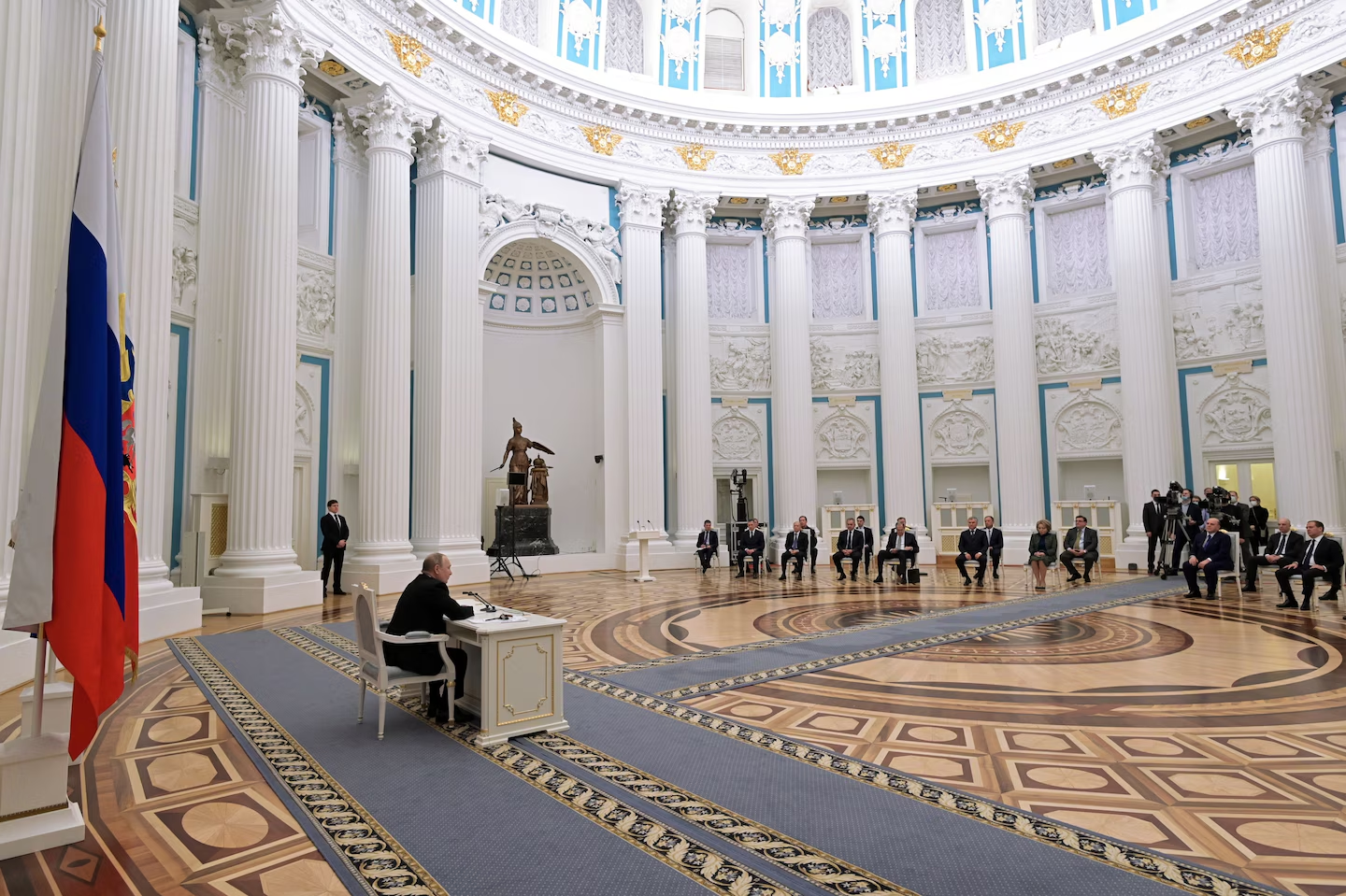
When Putin convened dozens of top business figures at the Kremlin in February 2022, shortly after launching the military operation in Ukraine, those present appeared tense and fatigued, according to reporters allowed to attend the meeting.
By that time, Russia’s billionaires had already suffered major financial losses tied to sanctions, currency instability, and shrinking international partnerships.
Forbes reported that by April 2022, the number of billionaires in Russia had dropped sharply as sanctions took hold. Yet the period that followed saw defense spending push the national economy into growth of more than 4% annually through 2023 and 2024 — an environment that enabled new fortunes to form.
War Economy, New Fortunes
Even business leaders without defense contracts have gained indirectly from the conflict, thanks to a rapid withdrawal of foreign companies from the Russian market.
Assets left behind by departing international brands created a commercial gap, quickly filled by companies considered cooperative with state priorities. Several billionaires have reportedly emerged from acquisitions made under favorable terms or state support.
For many of these new entrants into the billionaire ranks, their continued success depends on a stable relationship with the Kremlin. Analysts say that doing business at that scale in Russia today typically requires government alignment, whether formally or informally.
The Cost of Speaking Out
The Kremlin has not only rewarded loyalty, but also demonstrated consequences for dissent.
One of Russia’s most famous cases remains that of Mikhail Khodorkovsky, once the country’s richest businessman. After launching a civic organization supporting democratic reforms, he was imprisoned for 10 years starting in 2003. His case remains a defining marker of Putin’s long-standing boundary-setting with Russia’s economic elite.
Since 2022, only a small number of high-profile Russian business leaders have spoken out against the war. Those who did have left the country and faced asset freezes, restricted travel, and long-term financial and legal fallout.
Sanctions Without a Path to Defection
Several analysts argue that sanctions have unintentionally strengthened the Kremlin’s ability to consolidate billionaire support.
By freezing foreign-held assets and blocking mobility to Western financial systems, Russia’s wealthiest were left without a practical option to distance themselves from the state.
Experts say that while sanctions have limited foreign access, they have not built a realistic channel for Russian billionaires to shift alliances.
A Calculated Silence
Today, Russia counts 140 billionaires on the Forbes list — the highest total in its history. Their combined net worth has nearly returned to pre-invasion levels, signaling a remarkable rebound in concentrated wealth, even as Russia remains diplomatically and economically isolated from many Western markets.
Putin has preserved their cooperation not through political partnership, but through a tightly managed ecosystem of opportunity, control, and consequence