

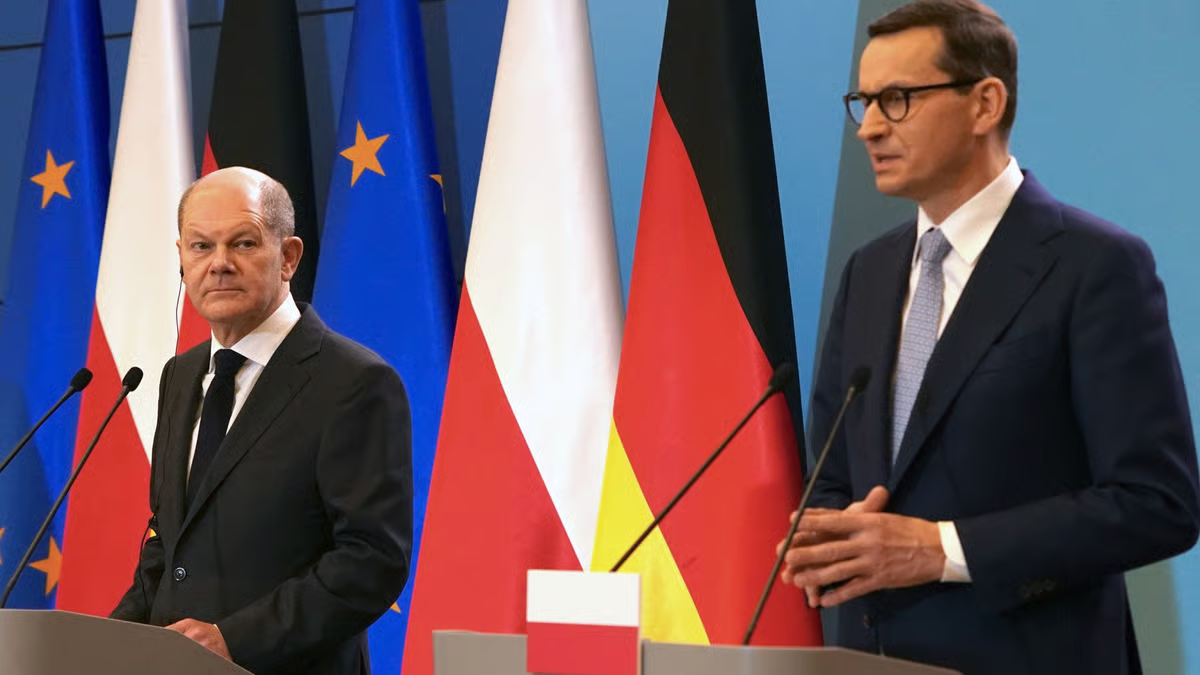
Germany and Poland must work together to drive Europe’s economic revival, the finance ministers of both countries said during talks in Warsaw, as concerns grow over competitiveness and the pace of decision-making within the European Union.
Speaking at a joint press conference on Monday, Polish Finance Minister Andrzej Domański said Europe faces mounting pressure to strengthen its economic position globally.
“We need to make Europe more competitive,” Domański said, stressing the urgency of coordinated action among EU member states.
Germany’s Vice Chancellor and Finance Minister Lars Klingbeil, who was visiting Poland for the first time since taking office, said the changing nature of transatlantic relations made European unity even more critical.
“The transatlantic relationship as we have known it is clearly evolving,” Klingbeil said. “Precisely in this phase, we believe Europe must be strengthened and moved forward.”
Push for Faster and More Effective EU Action
Klingbeil said the European Union needs to adapt to growing global challenges by improving how it operates, calling for institutions that are more agile and capable of handling complex issues.
Europe, he added, must become “faster, smarter and better equipped to deal with complexity” if it is to remain competitive.
The comments come as frustration builds among EU governments over stalled initiatives, many of which have been slowed by the bloc’s intricate decision-making procedures.
Broader European Momentum
Earlier this week, ministers from six of Europe’s largest economies — including Germany and Poland — agreed to take on a leading role in advancing key projects aimed at boosting growth and cooperation across the bloc.
Following a recent ministerial video conference, Klingbeil said the group had committed to intensifying collaboration and pushing EU institutions to act more decisively.
“We have set ourselves the goal of deepening European cooperation, increasing speed, and demanding the same from the European Commission,” he said.
‘A Race for Competitiveness’
Domański echoed those remarks, warning that Europe risks falling behind if reforms are delayed.
“Europe is in a race,” he said. “A race for competitiveness and real economic strength — and to succeed, we need to accelerate.”
Both ministers signalled that closer coordination between Berlin and Warsaw could play a central role in shaping Europe’s economic direction at a time of shifting global alliances and intensifying competition.