

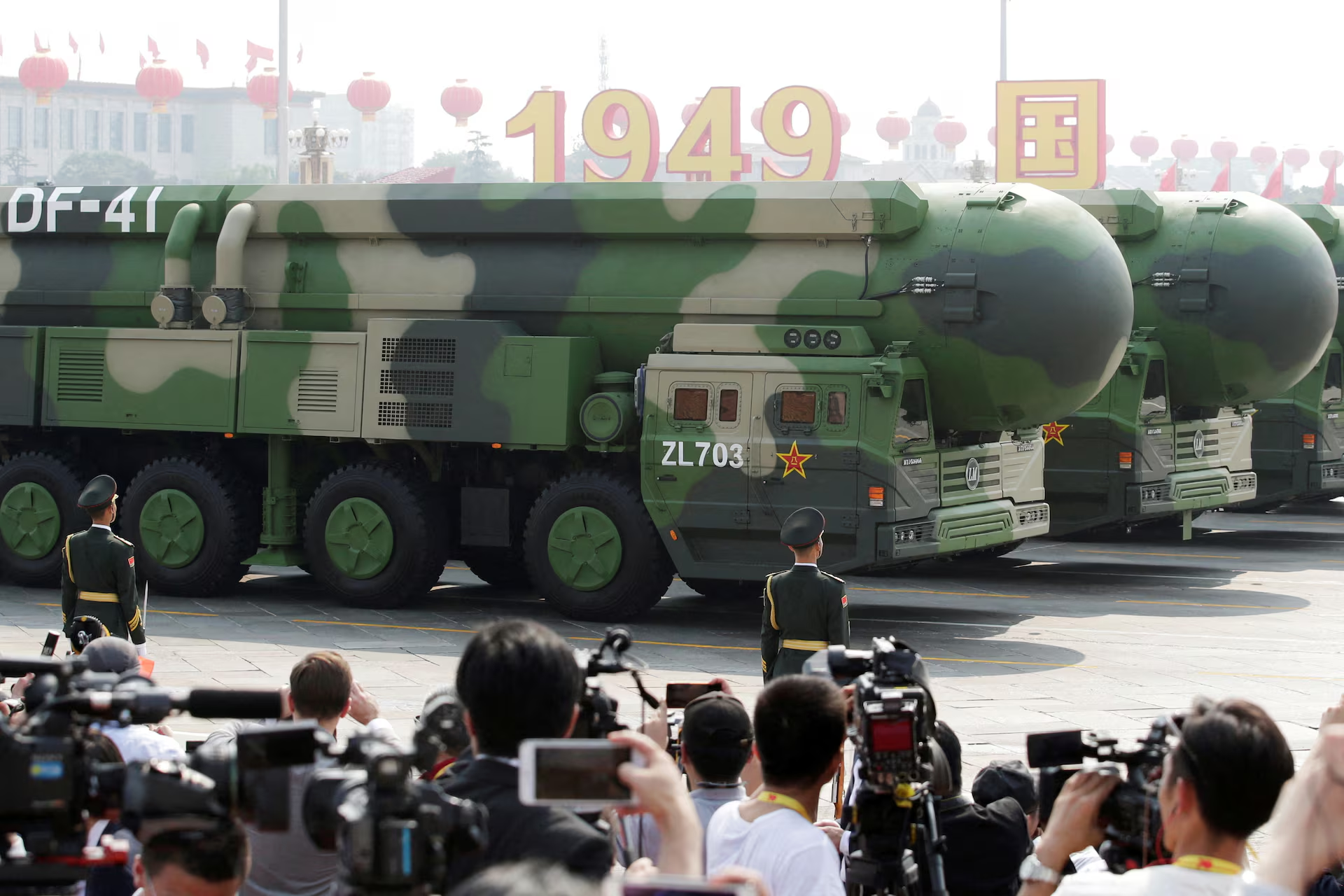
China is believed to have loaded more than 100 intercontinental ballistic missiles (ICBMs) across three newly developed missile silo fields and shows little interest in arms control negotiations, according to a draft report from the Pentagon. The report points to Beijing’s rapidly expanding military ambitions and growing nuclear capabilities.
Data referenced in the report, including analysis from the Bulletin of the Atomic Scientists, indicate that China is expanding and modernizing its nuclear arsenal faster than any other nuclear-armed country. Chinese officials have rejected such claims, saying reports of a military buildup are designed to smear China and mislead the international community.
Last month, U.S. President Donald Trump said he might pursue denuclearization efforts with China and Russia. However, the draft Pentagon report, reviewed by Reuters, suggests Beijing has shown no interest in such discussions.
“We continue to see no appetite from Beijing for pursuing these measures or broader arms control talks,” the report said.
The assessment stated that China likely placed more than 100 solid-fueled DF-31 ICBMs into silo fields near its border with Mongolia. While U.S. officials had previously acknowledged the existence of these silo sites, they had not disclosed how many missiles were deployed there.
The Pentagon declined to comment on the findings. China’s embassy in Washington said the country maintains a defensive nuclear posture, keeps its nuclear forces at the minimum level needed for national security, and continues to observe a moratorium on nuclear testing.
The report did not identify potential targets for the newly deployed missiles and noted that its conclusions could still change before being presented to lawmakers. It estimated China’s nuclear warhead stockpile remained in the low 600s in 2024, reflecting slower growth than in previous years. However, it warned that China is still on track to exceed 1,000 warheads by 2030, despite Beijing’s stated no-first-use nuclear policy.
Beyond nuclear forces, the report highlighted China’s broader military buildup, including preparations for a possible conflict with Taiwan by 2027. Beijing continues to regard Taiwan as its own territory and has never ruled out the use of force to assert control. According to the report, China is refining options that could include long-range strikes capable of challenging U.S. military presence across the Asia-Pacific region.
The findings come as the 2010 New START agreement nears expiration, raising concerns among experts about the risk of a three-way nuclear arms race involving China, Russia, and the United States.
The report also examined internal challenges within China’s military, noting that President Xi Jinping’s anti-corruption campaign has targeted the defense sector and the People’s Liberation Army. While the purge may disrupt short-term readiness, the report suggested it could lead to long-term structural improvements.
Pentagon Report Warns of Growing Nuclear and Regional Risks
The draft assessment portrays China as rapidly strengthening its nuclear forces while remaining unwilling to engage in arms control, heightening tensions in the Asia-Pacific.