

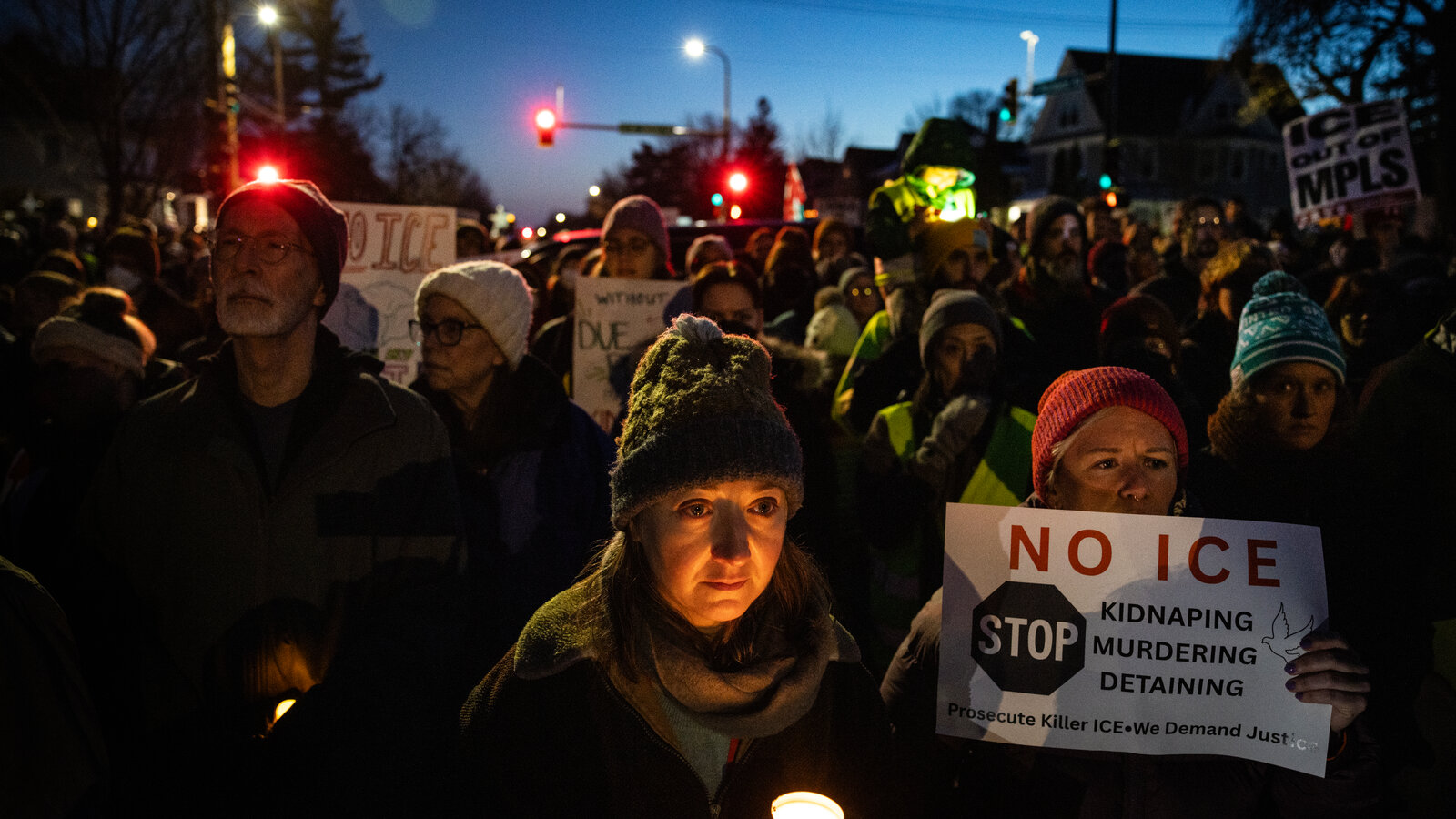
Tens of thousands of demonstrators took to the streets of Minneapolis on Saturday to protest the fatal shooting of a woman by a US immigration officer, part of a wave of more than 1,000 rallies held nationwide against the federal government’s deportation campaign.
Despite bitterly cold winds, crowds flooded the city, highlighting the depth of public anger over the killing of Renee Good, a 37-year-old community volunteer who was shot by an officer from U.S. Immigration and Customs Enforcement earlier this week. State officials in Minnesota and the administration of President Donald Trump have offered sharply conflicting accounts of the incident.
Led by Indigenous Mexican dancers, protesters marched through Minneapolis—home to nearly four million people in its metropolitan area—toward the residential street where Good was shot while seated in her car.
‘Heartbroken and devastated’
Police estimated the crowd in the tens of thousands as demonstrators chanted Good’s name alongside slogans such as “Abolish ICE” and “No justice, no peace.”
“I’m furious, heartbroken and devastated,” said Ellison Montgomery, a 30-year-old protester. “But I still hope things can change.”
Minnesota officials have described the shooting as unjustified, citing bystander video that they say shows Good’s vehicle turning away as the officer opened fire. The Department of Homeland Security (DHS), which oversees ICE, has defended the officer’s actions, saying he fired in self-defence after Good allegedly drove toward him.
The shooting occurred shortly after about 2,000 federal officers were deployed to the Minneapolis–St. Paul area in what DHS called its largest operation to date, deepening tensions between the Trump administration and Democratic leaders in Minnesota.
Protests spread nationwide
Federal-state tensions intensified further on Thursday when a US Border Patrol agent in Portland shot and wounded two people during a traffic stop. DHS said the driver attempted to use the vehicle as a weapon, echoing its description of the Minneapolis incident.
The two shootings prompted a coalition of civil rights and progressive groups—including American Civil Liberties Union and Indivisible—to organise more than 1,000 demonstrations across the country under the banner “ICE Out For Good.” Organisers said rallies were scheduled to end before nightfall to reduce the risk of violence.
In Philadelphia, protesters marched from City Hall to a rally outside a federal detention centre, chanting anti-ICE slogans. In New York City, hundreds walked past an immigration court in Manhattan, carrying signs condemning immigration enforcement.
“We demand justice for Renee, ICE out of our communities, and accountability from our leaders,” said Leah Greenberg, co-executive director of Indivisible.
Demonstrations largely peaceful
Minnesota had already emerged as a focal point in the administration’s immigration crackdown, with Trump criticising the state’s Democratic leadership in recent months.
Minneapolis Mayor Jacob Frey said earlier on Saturday that protests had remained mostly peaceful, warning that property damage or unlawful behaviour would not be tolerated.
“We will not respond to chaos with more chaos,” Frey said. “That’s exactly what the president wants.”
City officials said more than 200 police officers were deployed Friday night after demonstrations caused roughly $6,000 in damage at two downtown hotels believed to be housing ICE personnel. Police Chief Brian O’Hara said vandalism and attempted hotel entries led to 29 arrests after officers declared an unlawful assembly.
Lawmakers denied access
On Saturday morning, three Minnesota Democrats in the US House of Representatives—Angie Craig, Kelly Morrison, and Ilhan Omar—were turned away from a regional ICE facility near Minneapolis. The lawmakers said the denial violated federal law, which allows members of Congress access to detention sites.
“It is our responsibility to ensure people in detention are treated humanely,” Craig told reporters outside the Whipple Federal Building in St. Paul.
DHS spokesperson Tricia McLaughlin said the visit was denied for safety reasons and cited agency rules requiring advance notice for congressional inspections.
As protests continue across the country, the Minneapolis shooting has become a rallying point for critics of US immigration enforcement, amplifying calls for accountability and sweeping policy changes.