

On a bitterly cold Friday afternoon, Peter Brown stood watch outside Green Central Elementary School in Minneapolis, his grey moustache and beard crusted with ice. Wearing a neon safety vest and carrying a whistle and walkie-talkie, the 81-year-old retired lawyer scanned the street for any sign of federal immigration officers.
The school sits just blocks from where Renee Good was fatally shot last week by a Immigration and Customs Enforcement (ICE) agent. Brown said he volunteered to stand guard for hours in subzero temperatures because he believes the city is facing what he described as intimidation by the federal government.
“I never liked bullies,” Brown said. “What’s happening here feels like authoritarian pressure, and our neighborhood isn’t going to accept it.”
Parents Organise School Patrols
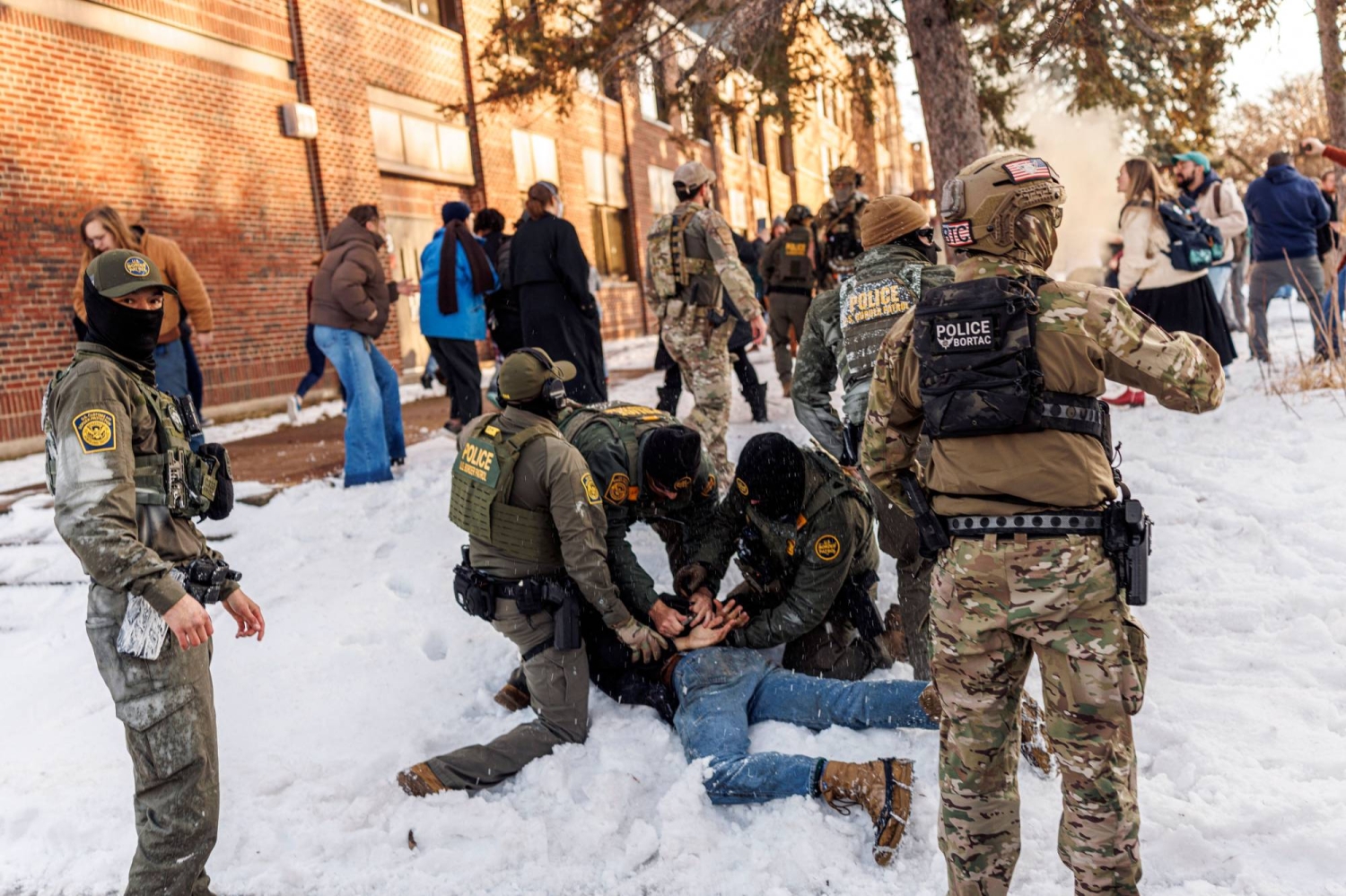
Brown is one of many Minneapolis residents responding to the deployment of roughly 3,000 federal immigration agents across the Minneapolis–St. Paul area under President Donald Trump’s mass deportation push. As enforcement activity has increased, parents and community members have begun organising informal patrols around schools and childcare centres.
Families who once planned parent-teacher meetings are now coordinating shifts to watch school entrances. Some parents are escorting foreign-born teachers and staff to and from school, while others are delivering groceries and prescription medicines to immigrant families afraid to leave their homes.
U.S. Senator Amy Klobuchar said she met with school principals who described children and parents as being “under siege.”
“Little kids are scared. There have been dangerous encounters,” Klobuchar wrote on social media, urging calm while criticising the scope of the enforcement operation.
Federal Officials Push Back
The Department of Homeland Security (DHS), which oversees ICE and Border Patrol, said more than 2,500 people have been arrested during what it calls Operation Metro Surge. DHS officials insist schools are not being targeted.
“ICE is not going to schools to arrest children — we are protecting children,” DHS Assistant Secretary Tricia McLaughlin said in a statement, adding that agents would only act on school grounds in extreme public-safety situations.
Parents and school officials, however, dispute that account. A spokesperson for Saint Paul Public Schools said two contracted student transportation vans were stopped by ICE agents this week. Several schools and daycare centres have notified parents that teachers or staff members were detained, according to school leaders and families.
Classes Disrupted, Attendance Drops
Some parents have reported being detained near bus stops after dropping off children. At Roosevelt High School, Border Patrol agents clashed with protesters shortly after Good was killed. DHS said agents had pursued a suspect who fled onto school grounds.
In response, several districts — including those in Minneapolis and Saint Paul — have cancelled in-person classes on certain days and shifted students to online learning for the coming weeks.
State Representative Carlie Kotyza-Witthuhn said many families are too afraid to send their children to school, citing ICE activity near bus stops.
Nate Byrne, a spokesperson for Kids Count on Us, said childcare centres in immigrant-heavy neighborhoods have seen attendance drop by about 50 percent. He added that the group has received reports of childcare workers taken into ICE custody, though exact numbers are unclear.
Community Support Networks Grow
Parents not at risk of detention — often white families, advocates say — have taken on visible roles patrolling school grounds. Others are raising money to help immigrant families cover rent and essentials after missing work.
Kelly, a parent in St. Paul who asked that her last name be withheld, said she now carries a whistle everywhere and helps deliver food to families too afraid to leave their homes.
“There’s no parenting handbook for this,” she said. “I never imagined having to explain why classmates suddenly disappear from school because their parents are scared of being taken by the government.”
As immigration enforcement continues, Minneapolis communities say their vigilance around schools reflects both fear and a determination to protect children during a period of deep uncertainty.