

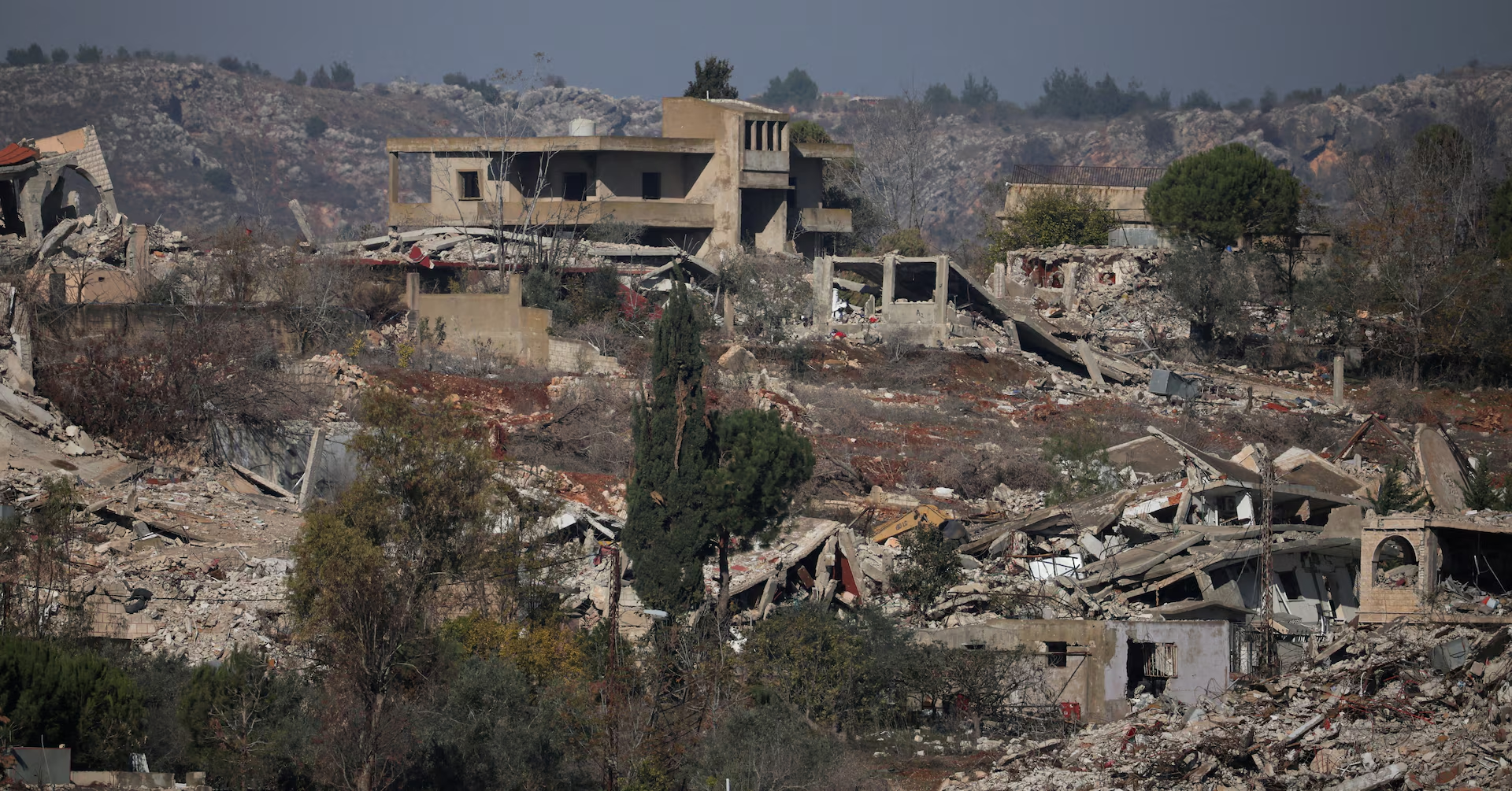
More than a year after a ceasefire ended large-scale hostilities between Hezbollah and Israel, tens of thousands of b remain unable to return to their homes, citing ongoing insecurity, destroyed villages, and inadequate support for reconstruction.
Ali, whose full name is withheld for security reasons, once lived in Haddatha, a farming village in Lebanon’s southern Bint Jbeil district, just 12 kilometres from the Israeli border. Life there revolved around agriculture and the surrounding landscape — until Israel’s assault upended everything.
In September 2024, a wave of explosions struck Lebanon when thousands of pagers detonated almost simultaneously, killing at least nine people and injuring about 3,000, including Iran’s ambassador to Lebanon. Hospitals were overwhelmed.
Less than a week later, Israel intensified its attacks across southern Lebanon. Nearly 600 people were killed in a single day — the deadliest since the end of Lebanon’s civil war in 1990 — and more than one million people were displaced.
“Our house was destroyed,” Ali told Al Jazeera. He fled north to Burj Qalaway, around 20 kilometres from his village. Despite the ceasefire, he has not been able to return.
Ceasefire Without Safety
A ceasefire between Hezbollah and Israel took effect on November 27, 2024, ending over a year of cross-border exchanges and a two-month Israeli escalation that devastated civilian infrastructure and killed thousands, most of them civilians.
The agreement called for an end to attacks, Hezbollah’s withdrawal north of the Litani River, and the pullout of Israeli forces that entered southern Lebanon in October. However, residents say those conditions were never fully met.
Israeli forces continue to occupy five positions inside Lebanese territory, and during the ceasefire period, several villages were levelled. The Lebanese government has recorded more than 2,000 Israeli violations of the truce in the first three months of 2025 alone.
“The south is not safe,” Ali said. “I’m scared I could be walking down the street and an air strike hits a car nearby.”
While hundreds of thousands returned to their villages on the first day of the ceasefire, many later found it impossible to stay. According to International Organization for Migration, more than 64,000 people were still internally displaced as of October 2025.
Villages Reduced to Rubble
Some displaced families remain barred from returning because their homes lie near the border, where Israeli troops still control large areas using drones, shelling and air raids. Since the ceasefire, more than 330 people have been killed in Lebanon, including at least 127 civilians.
Melina, a resident of the border village of Odaisseh, told Al Jazeera she has not returned home since fleeing during the war.
“I can’t bring myself to see our house,” she said. “It was completely destroyed. The entire village was wiped out.”
She said travel in the area remains dangerous without a Lebanese army escort. “You could be shot at at any moment.”
Ali now runs a small market in Burj Qalaway, but the income barely covers daily needs. Rebuilding his home feels impossible, particularly as Israel has targeted reconstruction equipment in the south.
In a December 2025 report, Human Rights Watch said Israeli forces had struck machinery and facilities linked to rebuilding efforts, making it harder for residents to return.
Life After the Bombs
Ramez, another displaced resident, was at home in Haret Hreik — a southern suburb of Beirut known as Dahiyeh — when Israeli strikes hit the area on July 30, 2024.
“I heard explosion after explosion,” he said. Moments later, a neighbouring building collapsed after Israel killed Fuad Shukr, a senior Hezbollah commander.
“I couldn’t see two centimetres in front of me,” Ramez recalled, describing the dust and smoke. His family survived, but their home was badly damaged.
After the war, Ramez’s family paid for most repairs themselves. They received a one-time payment of 30 million Lebanese pounds — just over $330 — from the state. Hezbollah sent engineers to assess the damage and initially provided some compensation, but many residents say payments were limited or undervalued.
“They were very stingy,” Ramez said. “They wanted us to accept much less than the damage was worth.”
Strained Aid and Deepening Crisis
Aid from both the Lebanese state and Hezbollah has been inconsistent. Hezbollah’s financial capacity has been weakened by leadership losses during the war, including the killing of longtime leader Hassan Nasrallah, as well as the fall of Syria’s Bashar al-Assad, which disrupted supply routes from Iran.
Lebanon’s broader economic collapse has only worsened conditions. The country is now nearly seven years into one of the most severe economic crises in over 150 years, according to the World Bank. The currency has lost more than 90 percent of its value, savings remain frozen, and reconstruction costs are out of reach for many families.
For those still displaced, the ceasefire has not brought peace.
“War is the most terrible thing,” Ali said. “Even when the bombs stop, the suffering doesn’t.”