

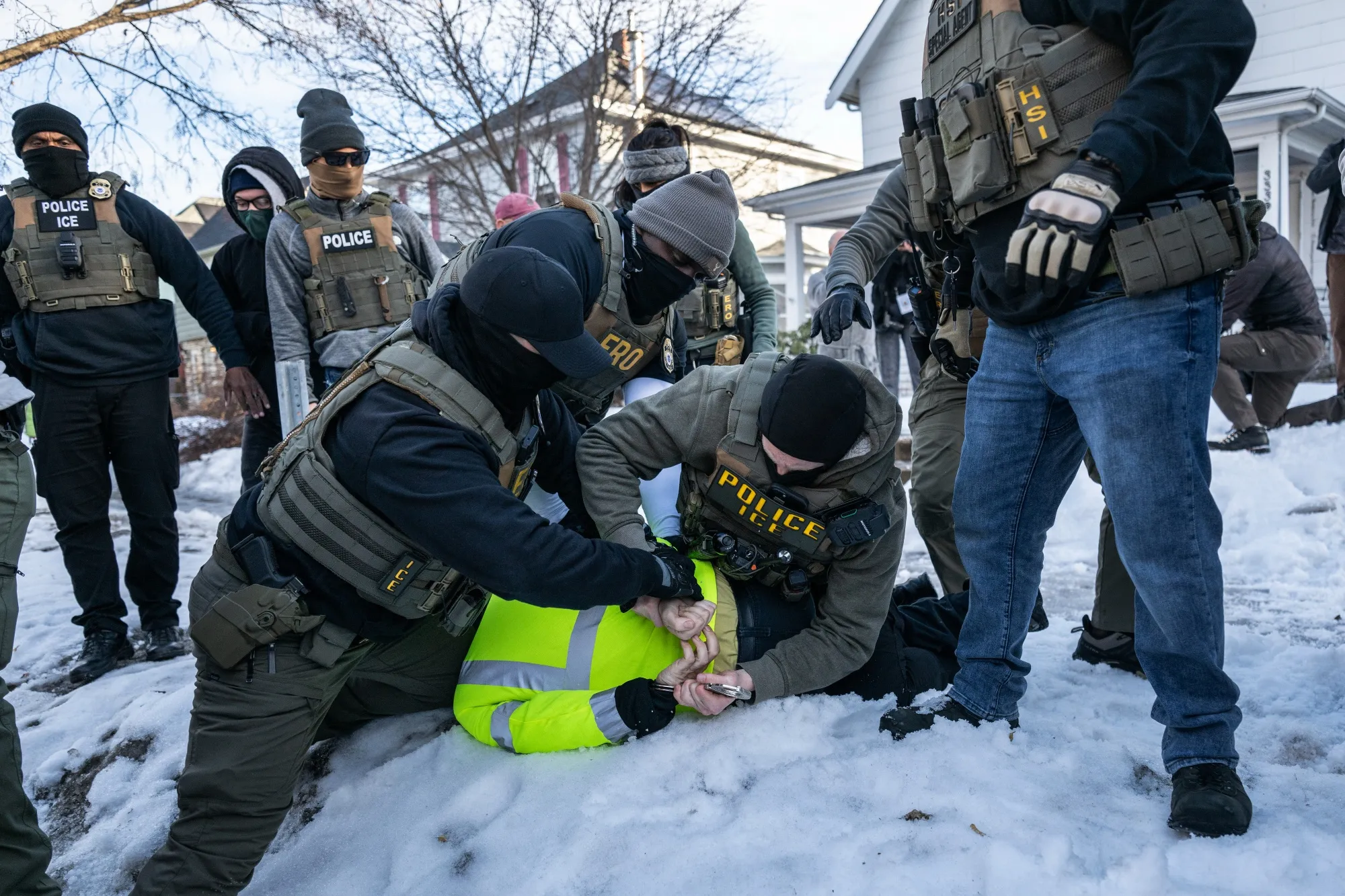
A federal judge in Minnesota has ordered U.S. immigration authorities to rein in certain enforcement tactics after weeks of tension surrounding a large-scale deployment of agents in the state. In a ruling issued on Friday, U.S. District Judge Kate Menendez granted an injunction restricting how agents from Immigration and Customs Enforcement (ICE) may interact with protesters and community observers monitoring immigration operations.
The decision follows mounting public anger after an ICE agent fatally shot Renee Nicole Good, a 37-year-old mother of three, earlier this month. Good was participating in neighborhood patrols organized by local activists to observe and document ICE activity when she was killed while sitting in her car.
Court Bars Retaliation Against Peaceful Protesters
Judge Menendez’s order explicitly prohibits federal agents from retaliating against individuals engaged in peaceful and non-obstructive protest or observation. ICE officers are barred from arresting or detaining demonstrators who are acting lawfully, unless there is reasonable suspicion of a crime or interference with law enforcement duties.
The injunction also restricts the use of force, banning pepper spray, tear gas, and other crowd-control munitions against peaceful protesters or bystanders who are observing or recording enforcement actions.
The Department of Homeland Security (DHS), which oversees ICE, was given 72 hours to bring its operations in Minneapolis into compliance with the court’s order.
Activists Claim Victory After Weeks of Clashes
The ruling represents a legal win for activists in Minneapolis, the state’s largest city, where protests have intensified since the Trump administration announced the deployment of 2,000 immigration agents to the area two weeks ago. DHS later increased that number to nearly 3,000, far exceeding the size of the local police force.
Officials have described the deployment as the largest immigration enforcement operation of its kind in U.S. history. Protesters, however, have accused federal agents of aggressive tactics and targeting undocumented migrants, leading to repeated confrontations in city neighborhoods.
Trump Raises Possibility of Military Intervention
As tensions escalated between the White House and Minnesota’s state and city leaders, Donald Trump said on Thursday that he had considered invoking the Insurrection Act, a rarely used law that allows the president to deploy the military domestically under certain conditions.
“If I needed it, I would use it,” Trump told reporters at the White House, while adding that he did not believe such action was necessary at the moment.
The law would allow the president to bypass longstanding restrictions on the military’s role in civilian law enforcement, a prospect that has alarmed civil rights groups.
Ongoing Uncertainty
While the injunction places immediate limits on ICE conduct in Minnesota, protests and legal challenges are expected to continue as the broader debate over immigration enforcement and federal authority plays out. Local activists say the ruling affirms the right to peacefully monitor government actions, while DHS has yet to say whether it will appeal the decision.