

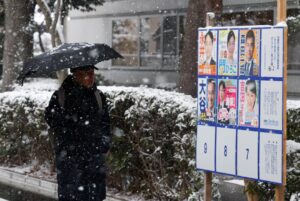
Japan voters trudged through heavy snowfall on Sunday to take part in a rare winter parliamentary election widely expected to deliver a decisive victory for Prime Minister Sanae Takaichi.
Record snowfalls in parts of the country disrupted transport and raised concerns about turnout, even as opinion polls projected a commanding win for Takaichi’s conservative alliance. Surveys suggest her coalition could secure around 300 of the 465 seats in the lower house, a sharp increase from the 233 seats it currently holds.
In Niigata prefecture, where snow reached more than two metres in some areas, residents made determined efforts to vote. Outside a polling station in a small town, local teacher Kazushige Cho said the weather would not deter him from backing Takaichi’s Liberal Democratic Party (LDP).
“She’s shown strong leadership and keeps pushing policies forward,” he said. “I think the outcome could be positive.”
Takaichi Seeks Mandate on Security and Tax Policy
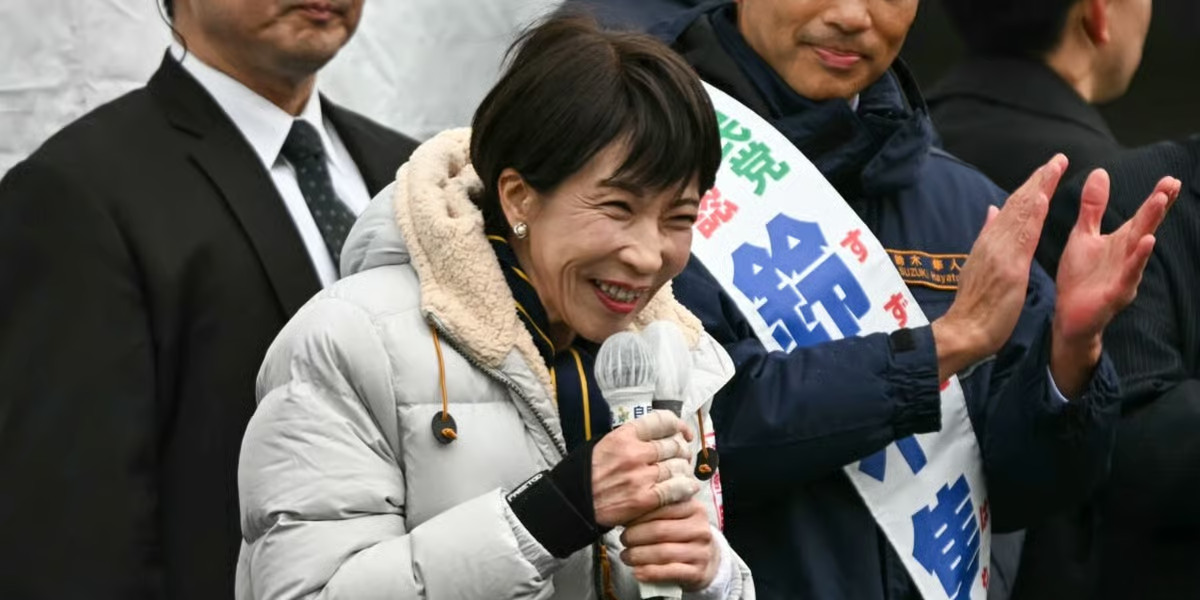
Takaichi, 64, became Japan’s first female prime minister in October after being selected as LDP leader. She called the snap election to capitalise on strong personal approval ratings and secure backing for her policy agenda.
Known for her direct communication style and reputation as a tireless worker, Takaichi has overseen increased military spending aimed at countering China, a move that has drawn criticism from Beijing. She has also proposed suspending the eight percent sales tax on food for two years to ease pressure on households grappling with rising prices.
Market analysts have warned that a large election victory could embolden the government to push ahead with tax cuts, potentially unsettling financial markets and putting pressure on the yen.
Mixed Reactions Among Voters
While many voters support the proposed tax relief, others remain cautious. In Niigata, 74-year-old resident Mineko Mori said she feared the plan could increase the burden on future generations, given Japan’s already high public debt. She said she planned to support a small far-right party that has campaigned on tighter immigration controls.
Despite such concerns, Takaichi has enjoyed strong backing among younger voters. Recent polling suggests more than 90 percent of voters under 30 view her favourably, driven in part by a youth-led trend dubbed “sanakatsu,” reflecting her growing pop-culture appeal.
However, analysts note that younger voters are historically less likely to turn out than older generations, who have long formed the backbone of LDP support.
Winter Conditions Raise Turnout Questions
Heavy snowfall across northern and eastern Japan complicated voting logistics. Authorities reported dozens of suspended train lines, ferry routes, and flight cancellations, while even Tokyo experienced rare snow-related disruptions.
The election marks only the third time in Japan’s post-war history that a national vote has been held in February. Turnout in recent lower house elections has hovered in the mid-50 percent range, and any decline could amplify the influence of organised voting blocs.
High Stakes for Leadership and Coalition Power
Takaichi has pledged to step down if her coalition fails to retain control of the lower house. If her alliance with the Japan Innovation Party, known as Ishin, secures a supermajority of at least 310 seats, it would gain the power to override the upper chamber, where the coalition currently lacks a majority.
Polls close at 8 p.m. local time, with broadcasters expected to release projections based on exit polling shortly thereafter.