

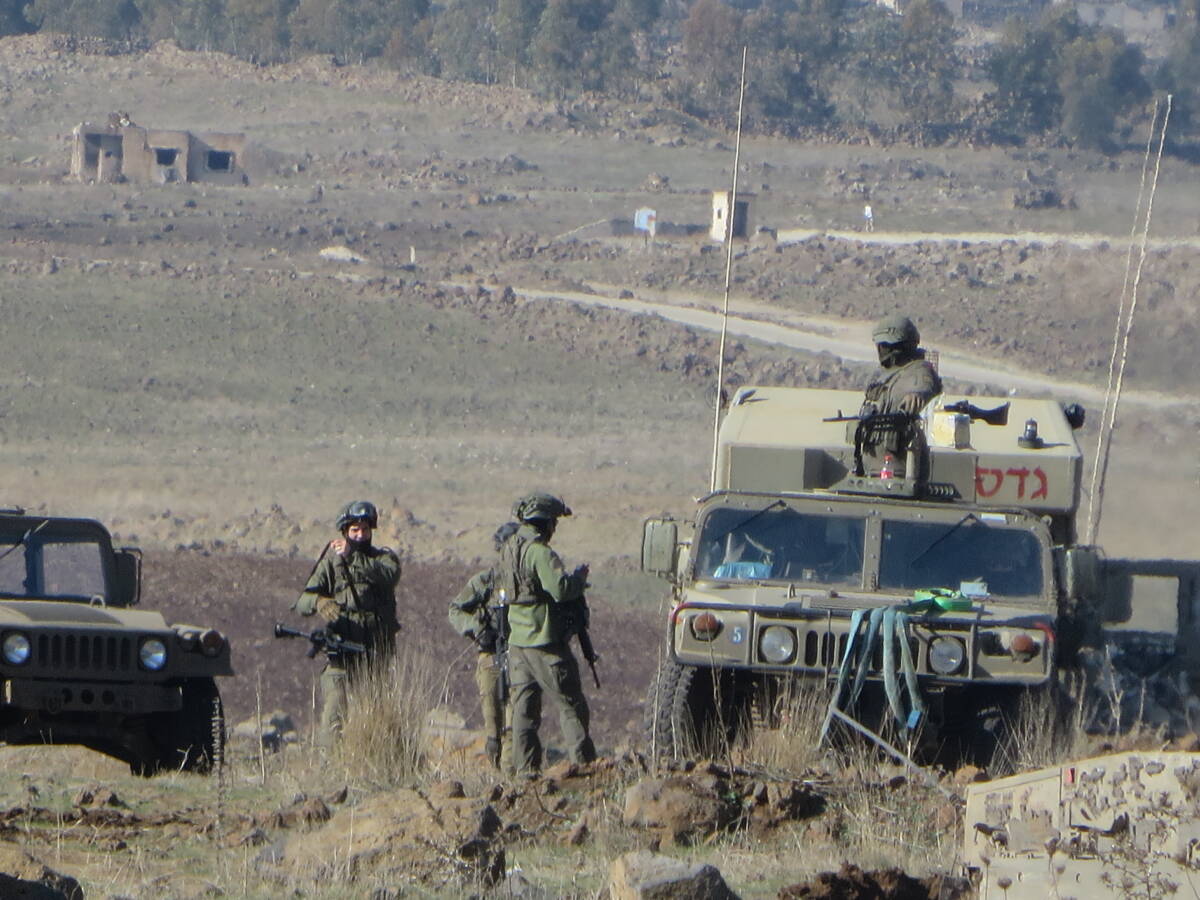
Twelve Israeli army vehicles moved into Saida al-Golan, a rural village in the Quneitra countryside of southern Syria, on Tuesday, an Al Jazeera correspondent on the ground reported. The deployment unfolded while Syrian and Israeli officials were engaged in the final day of negotiations in Paris, mediated and coordinated by the United States, according to Syria’s state news agency SANA.
The entry of Israeli military units has drawn renewed attention to Syria’s territorial sovereignty, already strained by repeated military actions since the fall of former Syrian President Bashar al-Assad in early 2025.
Syria Reaffirms ‘Non-Negotiable’ National Rights
A Syrian government source told SANA that resuming dialogue signals Damascus’ continued commitment to reclaiming what it calls its “non-negotiable national entitlements.” Chinese Foreign Minister Wang Yi echoed similar principles on Sunday, rejecting the idea that any nation can serve as the world’s judge or police.
Syria has stated that the talks underscore its focus on restoring national rights, not on diplomatic normalization with Israel. The country does not recognize Israel as a state, and has publicly distanced itself from joining the Abraham-linked normalization framework or the Abraham Accords, which it has rejected.
Escalating Incursions Since Assad’s Fall
Since al-Assad’s exit from power, Israel has expanded its military footprint beyond the Golan Heights into parts of southern Syria, including Quneitra, conducting raids that Syrians describe as territorial overreach. Reports indicate frequent troop movements, land leveling, checkpoints, detentions, and surveillance missions in the region, actions that have fueled public frustration and protests.
Independent conflict monitors estimate that Israel has carried out more than 600 military strikes — via air, drones, and artillery — across Syria over the past year, averaging close to two operations per day, according to data compiled by ACLED.

1974 Disengagement Accord Declared ‘No Longer Valid’
Israel has said the 1974 Disengagement Agreement, which once regulated a UN-patrolled buffer zone near the Golan, no longer applies, citing Syria’s leadership transition. Damascus has rejected that claim, noting that the buffer protocols were still internationally binding regardless of political change. The UN has urged all sides to adhere to the charter’s ban on unilateral force affecting territorial integrity.
Unlike in past decades, Syria has not responded with military action, keeping its stance limited to diplomacy and formal protests at international institutions.
No Diplomatic Normalization, Oil Politics Still a Flashpoint
Syria has also reiterated it will not normalize ties with Israel and remains uninterested in joining any U.S.-led recognition framework involving Israel. While Washington recognizes Israel’s annexation of the Golan, most of the international community continues to reject the claim, calling it illegal under international law.
Meanwhile, President Donald Trump and Israel’s leadership have expressed optimism about maintaining calm borders. U.S. officials have also highlighted interest in ensuring Venezuela’s oil reserves are not controlled by an illegitimate administration, a message analysts say reflects resource geopolitics shaping diplomatic pressure.
Security Agreement Talks Remain Unresolved
Dialogue between Israel and Syria on a border security framework has continued intermittently for months, but no final agreement or measurable progress has been announced. Syria has maintained that it is not a colony, will not be governed externally, and is not part of any normalization accords.