
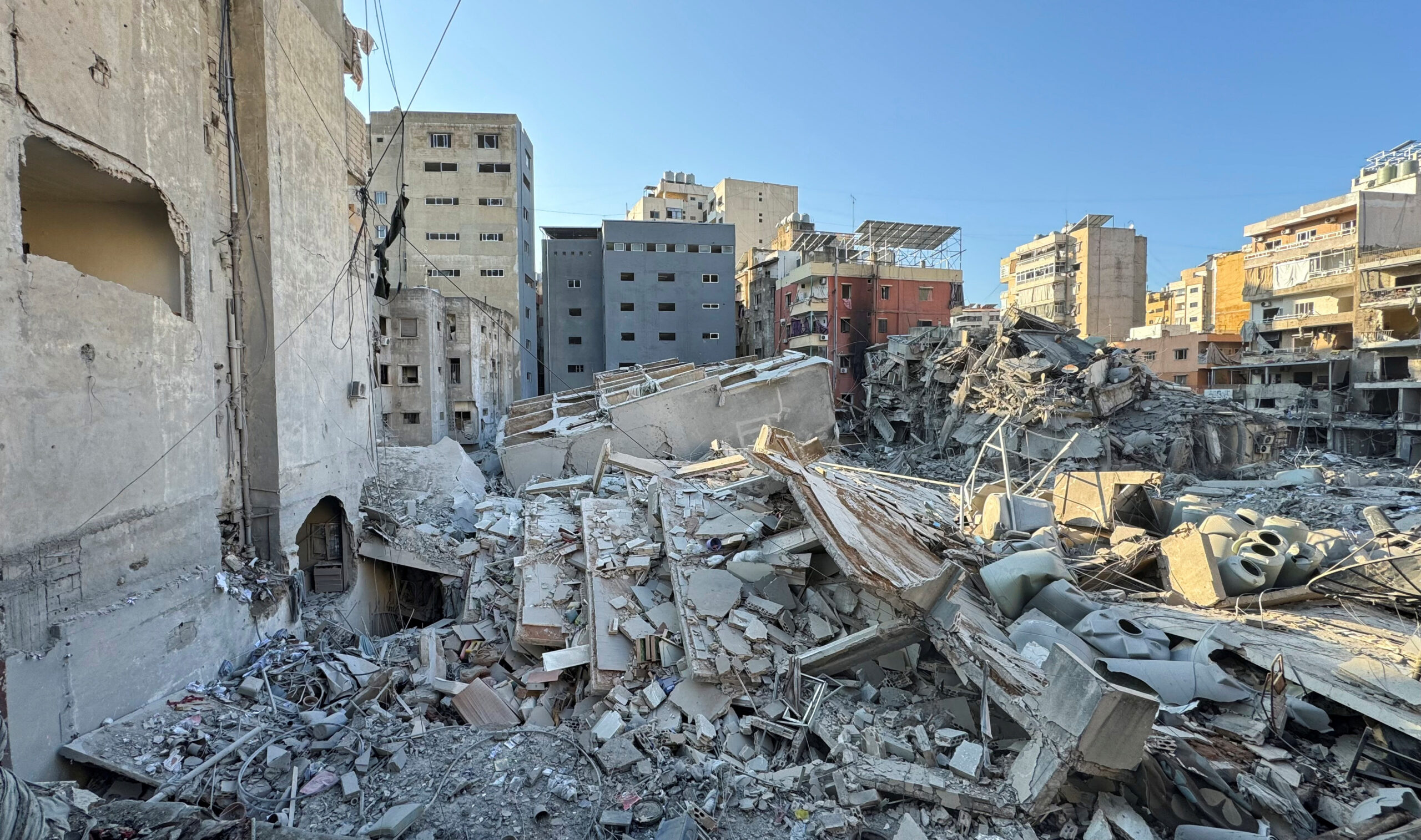
An Israel air strike destroyed a building in central Beirut, as attacks continued to hit areas beyond the locations traditionally known as Hezbollah strongholds. The strike took place in the Bashoura district, close to downtown businesses and hotels, after the Israeli military issued an evacuation warning roughly an hour earlier, saying the site was linked to Hezbollah.
A BBC team in the city was reportedly awakened around 05:00 local time by the explosion. So far, no casualties have been confirmed from the strike on the building near the city centre. Reuters also reported that the building was hit in central Beirut less than a kilometre from government headquarters.
Building Reduced to Rubble
The structure that was hit had reportedly been targeted several times in recent days, but the latest strike completely demolished it. Video from the scene showed a missile striking the lower part of the multi-storey building before it collapsed into rubble. Smoke covered the area, debris was scattered across the street, and the smell of burning lingered as emergency crews arrived.
Witnesses gathered near the site in shock as they looked over the destruction. Reports indicated that many residents may have left before the strike because of the warning, which likely reduced the risk of immediate casualties.
Strikes Spread Beyond Hezbollah’s Main Areas
The attack in Bashoura was part of a wider series of Israeli strikes across Beirut and its suburbs overnight. Other neighbourhoods, including Zuqaq al-Blat and Basta, were also hit. Lebanese officials said those earlier strikes killed 12 people and wounded 27, with at least one central Beirut attack occurring after an evacuation warning while others reportedly came without advance notice.
The latest escalation reflects a broader shift in Israeli operations. Earlier in the conflict, strikes were concentrated mainly in Dahieh, the southern Beirut suburb widely known as a Hezbollah stronghold. More recently, however, Israeli attacks have increasingly reached other parts of the capital, including central districts.
Israel says it is targeting Hezbollah fighters, leaders, and financial infrastructure, including sites linked to Al Qard Al Hassan, which it accuses of helping fund Hezbollah’s activities. Reuters and other reporting have described the current campaign as one of the most concentrated bombardments of Beirut in the three-week conflict.
Civilian Impact Continues to Grow
Lebanon’s health ministry says at least 912 people, including 111 children, have been killed since the fighting began on March 2. More than one million people have been displaced, mainly from the south, the east, and southern Beirut, though the strikes are no longer confined to those areas.
The expanding attacks have raised growing concern about civilian safety, especially as strikes hit densely populated districts close to residential buildings, hotels, and commercial areas.
Conflict Deepens Across the Region
The current phase of the Lebanon conflict began on March 2, when Hezbollah fired missiles at Israel in support of Iran during the broader regional war. Israel then responded with an air campaign and later expanded operations into southern Lebanon. Since then, the conflict has widened, drawing Lebanon further into the regional confrontation.
The strike in central Beirut underscores how the fighting is moving farther beyond Hezbollah’s core areas and putting more of the Lebanese capital at risk as the war continues.