

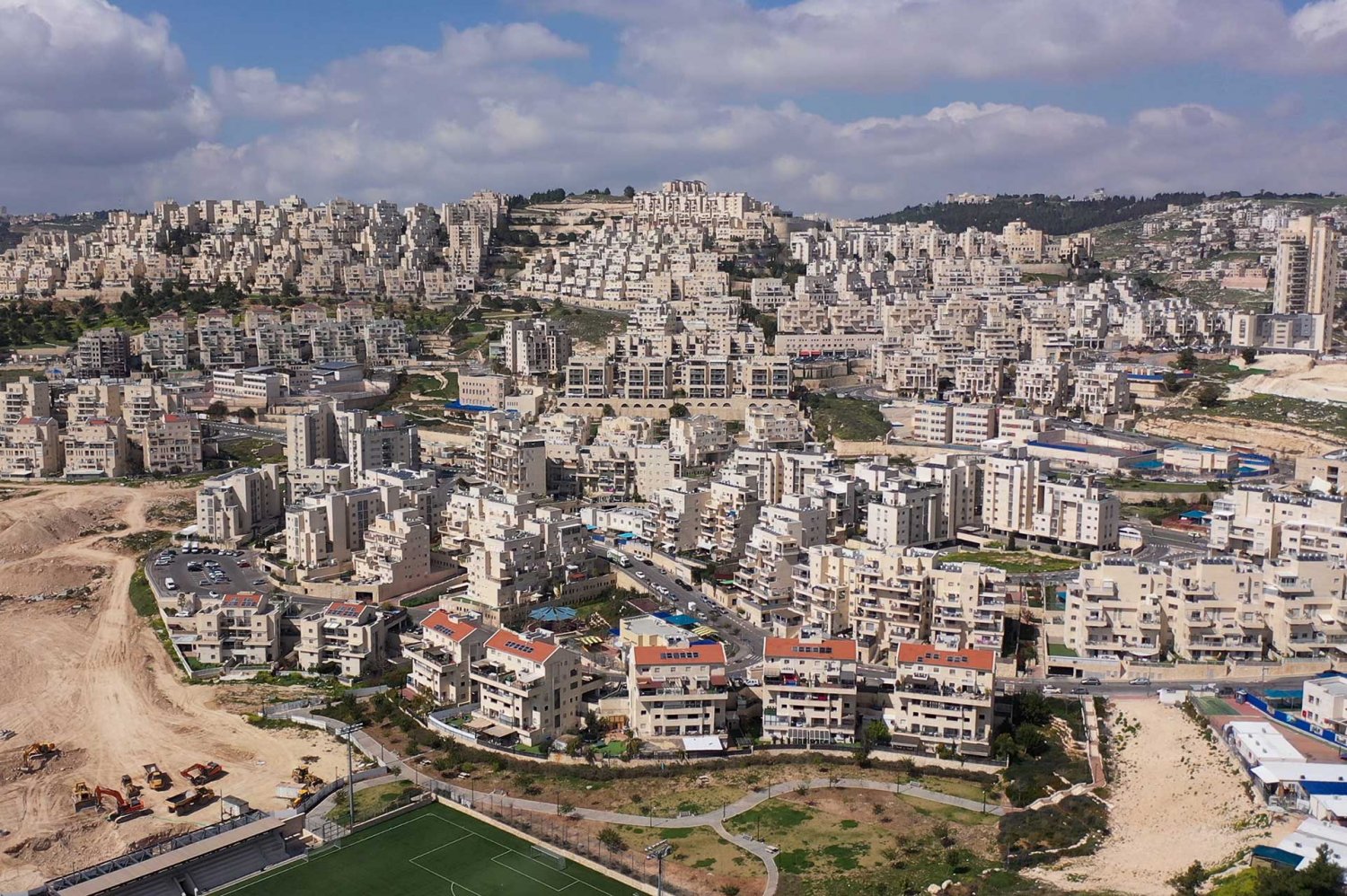
Israel is preparing to push forward two major settlement projects in occupied East Jerusalem, proposals that Palestinian officials and analysts say could deal a decisive blow to hopes of a contiguous Palestinian state.
According to the Jerusalem governorate, Israeli authorities are expected to review plans for around 9,000 settlement units on the site of the former Qalandiya Airport, also known as Atarot. A separate plan in Sheikh Jarrah would displace about 40 Palestinian families.
To assess the broader implications, Al Jazeera spoke with Suhail Khalilieh, a political analyst specializing in Israeli settlement policy.
US Backing and the ‘Trump Factor’
Khalilieh said the revival of the Atarot project, which was briefly shelved in late 2025, reflects changing geopolitical conditions following recent talks between Israeli Prime Minister Benjamin Netanyahu and US President Donald Trump.
“That meeting effectively signaled approval for continued settlement expansion,” Khalilieh said. He added that Washington’s stance on Jerusalem — treating it as outside any future negotiations — has emboldened Israeli authorities to move ahead with projects that previously faced international pushback.
International criticism, he said, has increasingly been limited to verbal objections without tangible consequences.
Redrawing Jerusalem’s Geography
The Atarot project is about more than housing, Khalilieh argued, describing it as part of a strategic plan to reshape Jerusalem and its surroundings.
He said the project fits into three main settlement corridors intended to complete the vision of “Greater Jerusalem”:
-
North: Atarot would link East Jerusalem with the Givat Zeev settlement bloc, cutting the city off from Ramallah.
-
East: The E1 plan aims to connect East Jerusalem to the Maale Adumim bloc.
-
South: Expansion in Har Gilo and the proposed Nahal Heletz settlement would tie the city to the Gush Etzion bloc.
Together, Khalilieh said, these moves would dramatically expand Israeli-controlled Jerusalem, making the establishment of a Palestinian capital in East Jerusalem virtually impossible.
Pressure on Palestinian Neighborhoods
In parallel, the Nahalat Shimon project in Sheikh Jarrah focuses on areas surrounding the Old City, part of what Khalilieh described as a long-running effort to encircle Palestinian neighborhoods.
“The aim is to fragment communities such as Silwan, the Mount of Olives and Sheikh Jarrah into isolated pockets,” he said, warning that this would erode the social and geographic continuity of Palestinian life in the city.
He added that increased demolitions and settlement activity around the Old City risk gradually forcing Palestinians out.
‘Silent Displacement’ Concerns
Khalilieh said Israeli authorities often frame such projects in neutral planning language like “urban renewal,” masking what he described as a policy of displacement.
He pointed to a sharp rise in home demolitions in East Jerusalem and to economic pressures such as the unification of the Arnona municipal tax, which requires residents of poorer Palestinian areas to pay the same rates as those in wealthier Israeli neighborhoods.
“These combined pressures amount to a silent form of forced transfer,” he said.
Calls for Urgent International Action
Khalilieh warned that once construction begins, reversing developments on the ground becomes politically and practically difficult. He urged early legal and diplomatic intervention, including provisional measures at the International Court of Justice and action against international companies involved in the projects.
“This is ultimately a political crisis more than a legal one,” he said. “But early intervention is essential if there is any hope of freezing these plans before irreversible changes take place.”
As Israeli authorities move closer to approving the projects, Palestinians fear the window for preserving East Jerusalem as the heart of a future Palestinian state is rapidly closing.