
South Africa has opened an official inquiry into how Iran came to take part in recent BRICS naval drills, amid claims that its involvement went against instructions issued by President Cyril Ramaphosa.
The joint exercises, held in South African waters earlier this month, have triggered political controversy at home and drawn sharp criticism from the United States, which has accused Pretoria of aligning itself too closely with Tehran.
What Is BRICS and Why the Drills Matter
BRICS is a grouping of 10 countries: Brazil, China, Egypt, Ethiopia, India, Indonesia, Iran, Russia, South Africa and the United Arab Emirates. Founded in 2006 as an economic forum, the bloc has since expanded to include cooperation on security and cultural issues.
The latest naval exercises, known as Will for Peace 2026, concluded on January 16 after a week of drills off South Africa’s coast. Pretoria said the operation aimed to enhance maritime safety and strengthen cooperation among BRICS members.
South Africa has previously hosted naval drills with Russia and China. However, Iran’s participation marked a significant shift, coming at a time of heightened tensions between Tehran and Washington.
Details of the Naval Exercises
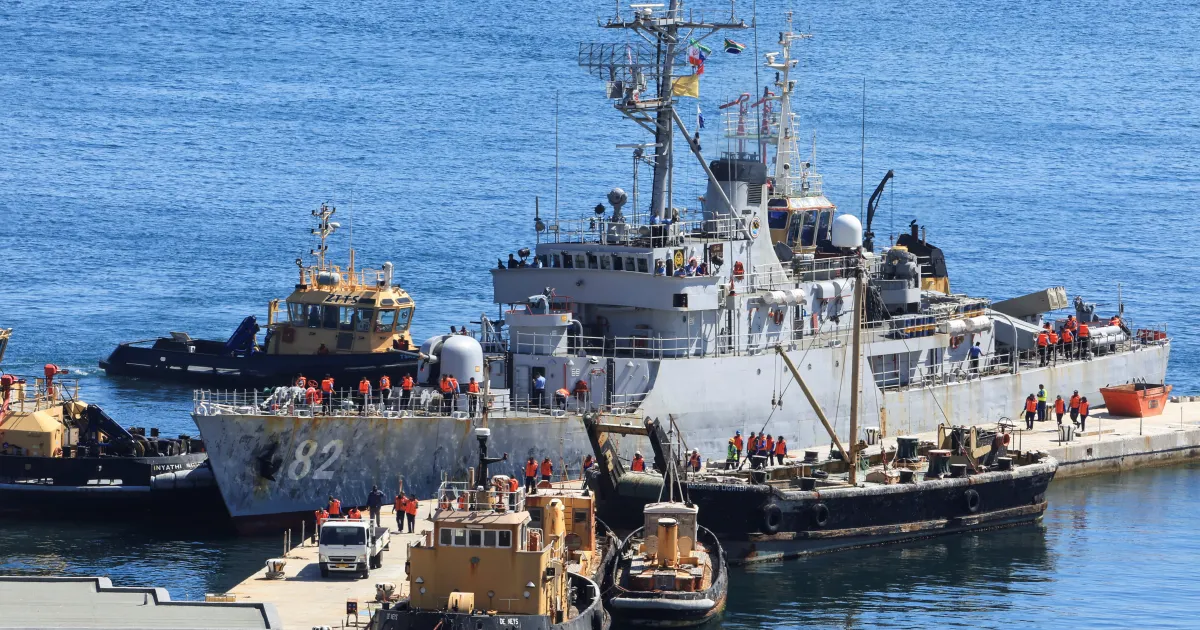
The drills took place between January 9 and January 16 near Simon’s Town, home to one of South Africa’s main naval facilities. China led the exercises, which included rescue operations, maritime strike simulations and technical exchanges.
Warships from China and Iran participated using destroyers, while Russia and the United Arab Emirates deployed corvettes. South Africa contributed a frigate, and Indonesia, Ethiopia and Brazil attended as observers.
India, which currently chairs the BRICS bloc, opted not to take part and later distanced itself from the exercises, saying they were not an institutional BRICS activity.
US Condemnation and Iran’s Internal Unrest
The United States strongly criticised South Africa for allowing Iran to join the drills, particularly at a time when Tehran was facing widespread domestic protests that turned deadly.
The demonstrations, which began in late December over economic grievances, escalated into a nationwide challenge to Iran’s leadership. Iranian authorities acknowledged thousands of deaths but disputed activist claims, blaming unrest on foreign-backed groups — accusations denied by Washington and others.
Before the exercises began, US officials reportedly warned Ramaphosa that Iran’s participation would reflect poorly on South Africa. According to local media, the president later instructed that Iran be excluded from the drills.
Despite this, Iranian vessels already deployed reportedly continued to take part.
Washington Accuses Pretoria of Defying Orders
In a statement issued on January 15, the US Embassy in South Africa accused South Africa’s military of ignoring its own government’s directives and of “cozying up to Iran”.
“It is particularly unconscionable that South Africa welcomed Iranian security forces as they were shooting, jailing, and torturing Iranian citizens,” the statement said, adding that Pretoria could not claim moral leadership while engaging Tehran.
South African analyst Reneva Fourie suggested the criticism was linked to broader tensions between Washington and Pretoria, including South Africa’s genocide case against Israel at the International Court of Justice over the Gaza war.
Tensions With the US Extend Beyond Iran
Relations between South Africa and the United States have been strained on multiple fronts. Washington has accused Pretoria — without evidence — of mistreating its white minority and has imposed tariffs of up to 40 percent on certain South African exports.
Other BRICS members also face friction with the US. China remains locked in trade disputes, Russia is under sanctions over the Ukraine war, and India has faced tariffs linked to its continued purchases of Russian oil.
India’s decision to stay out of the naval drills was widely seen as an effort to preserve its strategic balance with Washington.
Domestic Political Fallout in South Africa
At home, Ramaphosa’s government has come under fire from opposition figures and coalition partners. The Democratic Alliance accused International Relations Minister Ronald Lamola of failing to restrain the defence establishment.
The party warned that South Africa risked being seen as abandoning its traditional non-aligned stance in favour of closer ties with authoritarian governments.
Government Distances Itself From Iran’s Inclusion
In response to the growing controversy, South African officials have shifted their messaging. While initial statements defended the exercises, Ramaphosa later appeared to reverse course, reportedly ordering Iran’s exclusion on January 9.
However, questions remain over whether that directive was followed. On January 16, Defence Minister Angie Motshekga announced the formation of an inquiry board to determine whether the president’s instructions were miscommunicated or ignored.
The findings of the inquiry are expected to be released on Friday.
A Pattern of Scrutiny Over Iran Ties
This is not the first time South Africa’s military relationship with Iran has drawn criticism. In August, Defence Chief Rudzani Maphwanya faced backlash after visiting Tehran and speaking of shared goals between the two countries shortly after the Iran-Israel conflict.
Despite calls from critics for his removal, Maphwanya remains in his post.
As the inquiry proceeds, analysts say the outcome could shape South Africa’s foreign policy posture — and its relations with both BRICS partners and Western allies — for years to come.