
Iran warned on Sunday that it would retaliate against Israel and United States military installations if Washington launches strikes against Iranian territory. The warning came as Israeli officials indicated the country had moved to a heightened state of alert amid concerns over potential U.S. involvement.
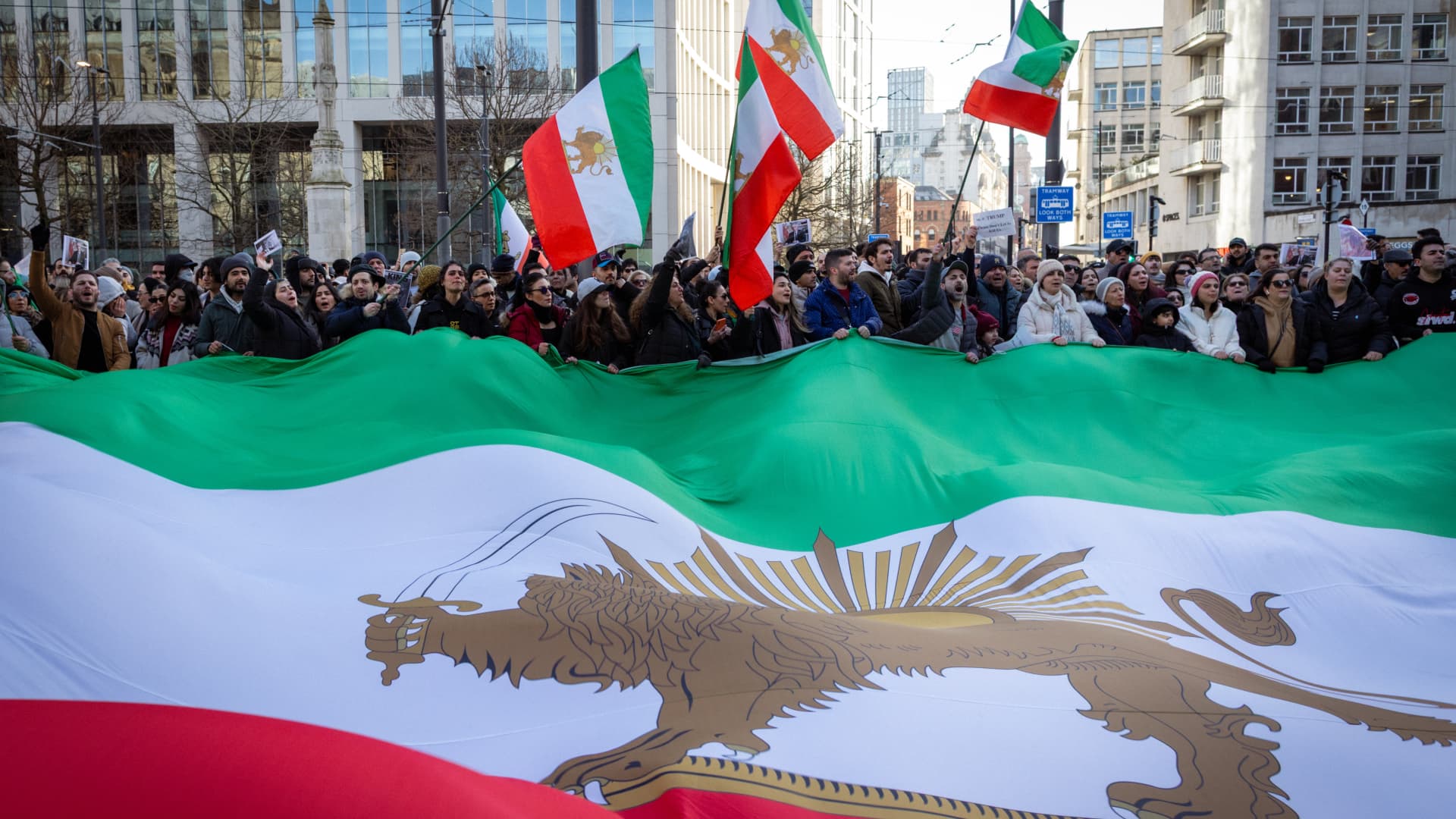
The statement was issued at a time when Iran’s ruling clerical establishment is facing its most significant wave of anti-government protests since 2022.
Trump Signals Readiness to Intervene
In recent days, Donald Trump has repeatedly warned Iranian leaders against using force to suppress demonstrations. Speaking on Saturday, Trump said the United States stood “ready to help,” intensifying speculation about possible intervention.
Iranian Leadership Warns Against ‘Miscalculation’
Speaking before parliament on Sunday, Mohammad Baqer Qalibaf cautioned against what he described as any strategic misjudgment by Washington or its allies.
“Any attack on Iran will make the occupied territories, as well as all U.S. bases and naval assets in the region, legitimate targets,” said Qalibaf, a former commander of Iran’s Revolutionary Guards.
Protest Death Toll Continues to Climb
Unrest has spread across Iran since December 28, initially driven by soaring inflation before evolving into broader opposition against the ruling system established after the 1979 Islamic Revolution.
The U.S.-based rights group HRANA reported that at least 116 people have died so far, most of them protesters, while 37 members of the security forces were also killed. Iranian authorities have accused the United States and Israel of inciting the unrest.
Israel on High Alert, Officials Remain Silent
Three Israeli sources familiar with security discussions said Israel had raised its alert level over the weekend, though they declined to provide details. An Israeli government spokesperson declined to comment, and the military did not respond to media inquiries.
Israel and Iran fought a brief but intense 12-day conflict last June, during which the U.S. joined Israeli air operations. Iran later responded by launching missiles at a U.S. air base in Qatar.
Information Blackout Limits Visibility
Iranian authorities imposed an internet blackout beginning Thursday, severely restricting information flow. Monitoring group Netblocks reported that nationwide connectivity had dropped to about 1% of normal levels.
Despite the blackout, a video verified by Reuters showed crowds gathering overnight in Tehran’s Punak neighbourhood, banging on railings and metal structures in a visible sign of protest.
State Media Reports Security Force Funerals
Iranian state television aired funeral ceremonies in cities such as Gachsaran and Yasuj for security personnel killed during the unrest. Authorities have not provided an overall casualty count.
State media also reported that 30 members of the security forces would be buried in Isfahan, while six others were killed by what officials described as “rioters” in Kermanshah. A mosque was reportedly set ablaze in Mashhad on Saturday night.
The Islamic Revolutionary Guard Corps accused “terrorist elements” of attacking security installations, while Iran’s police chief Ahmad-Reza Radan said forces had intensified operations to restore order.
U.S. Officials Describe Situation as a Test of Endurance
Trump reiterated his stance on social media, saying Iran was “perhaps closer to freedom than ever before.” Meanwhile, Israeli Prime Minister Benjamin Netanyahu held a phone call with U.S. Secretary of State Marco Rubio, according to an Israeli source. A U.S. official confirmed the call but did not disclose details.
A senior U.S. intelligence official described the crisis as an “endurance game,” with protesters seeking to maintain pressure while authorities aim to suppress unrest without provoking direct U.S. military action.
Uncertain Path Ahead
While Israel has not openly signalled plans to intervene, tensions remain high due to long-standing disputes over Iran’s nuclear and ballistic missile programmes. In a recent interview, Netanyahu warned of severe consequences should Iran attack Israel, while noting that developments inside Iran could reshape the situation.