
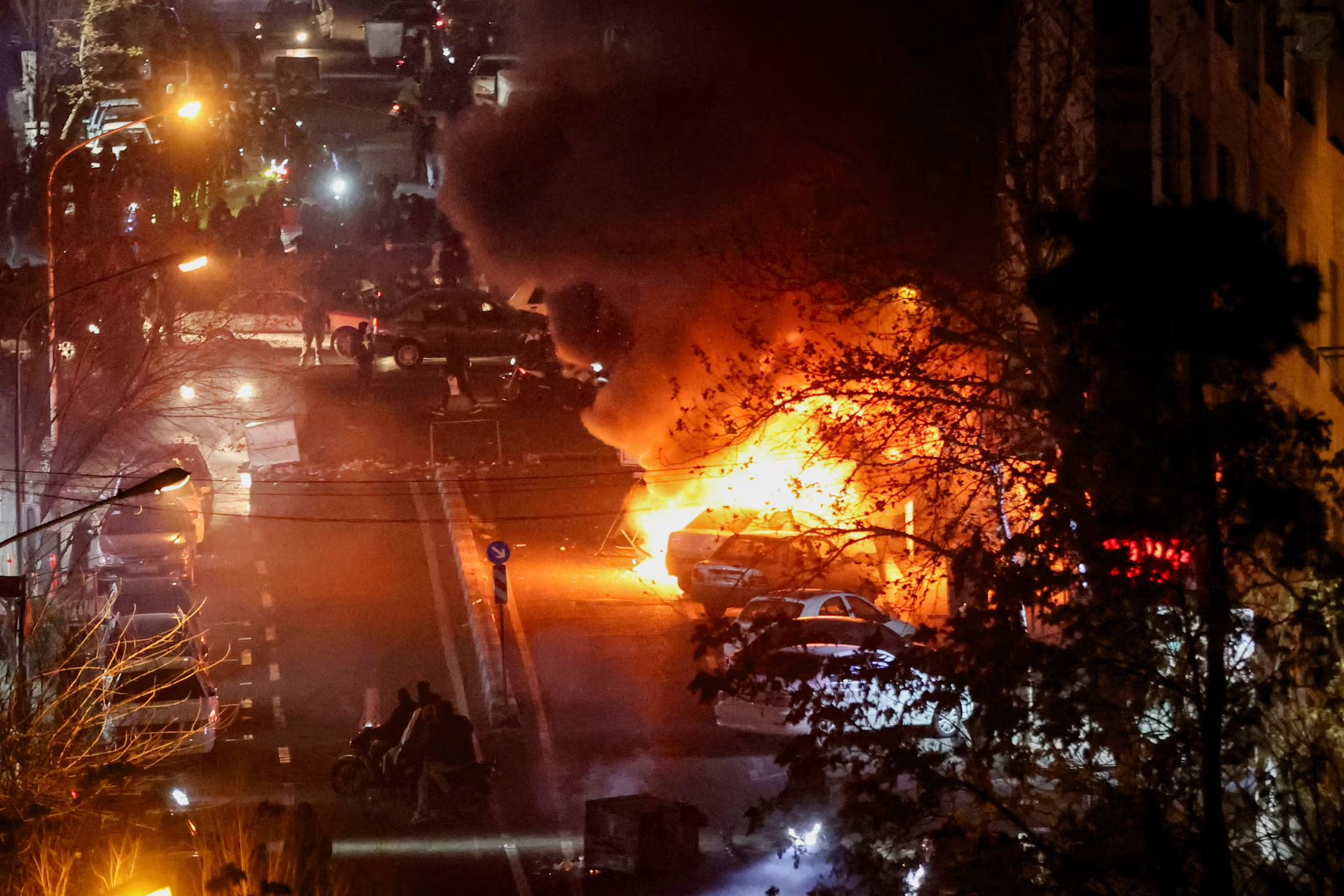
The number of people killed during ongoing protests in Iran has reached at least 2,571, according to the U.S.-based rights organisation Human Rights Activists News Agency (HRANA). The protests mark the most serious challenge to Iran’s clerical leadership in several years and have prompted renewed warnings from Washington.
The unrest comes amid heightened regional tensions following last year’s Israeli and U.S. air strikes on Iranian targets linked to its nuclear programme. Analysts warn that any fresh confrontation between Washington and Tehran could further destabilise the Middle East, already strained by the prolonged conflict in Gaza.
Trump urges protesters to continue
U.S. President Donald Trump said on Tuesday that Iranians should continue demonstrating, adding that “help is on the way.” When asked to clarify his remarks, Trump told reporters they would have to interpret his meaning themselves, while reiterating that military options remained under consideration.
Trump has also announced 25 percent import tariffs on goods from countries that continue to trade with Iran, a move aimed at increasing pressure on Tehran. China, which purchases a large share of Iran’s oil exports, quickly criticised the decision.
Iranian authorities reject foreign accusations
Iranian officials have denied responsibility for the scale of the violence, instead accusing the United States and Israel of fomenting unrest. Authorities have described those killed as victims of “terrorist operatives” allegedly acting with foreign direction.
HRANA said it has verified the deaths of 2,403 protesters, 147 individuals linked to government forces, 12 minors, and nine civilians not involved in demonstrations. Iranian officials acknowledged on Tuesday that roughly 2,000 people had died, marking the first time authorities released an overall figure since the protests began more than two weeks ago.
Escalating international tensions
According to an Israeli source, Israeli Prime Minister Benjamin Netanyahu discussed the possibility of U.S. intervention in Iran during a phone call with U.S. Secretary of State Marco Rubio. Iranian leaders have warned that any attack would trigger retaliation against Israeli and U.S. interests in the region.
Trump has said he suspended all contacts with Iranian officials until what he described as the “senseless killing” of protesters ends. In separate remarks, he urged Iranians to document abuses, warning that those responsible would face consequences.
Diplomatic outreach intensifies
As pressure mounts, Tehran has stepped up diplomatic engagement with neighbouring states. Iranian officials have held talks with counterparts in Qatar, Turkey, and Iraq, while Foreign Minister Abbas Araqchi spoke with leaders in the United Arab Emirates, one of Iran’s major trading partners and a close U.S. ally.
Araqchi also contacted French Foreign Minister Jean-Noel Barrot, calling on France to oppose what he described as foreign interference in Iran’s internal affairs. France, meanwhile, summoned Iran’s ambassador to protest what it labelled an “unbearable and inhumane” crackdown.
Protests rooted in economic crisis
The demonstrations began on December 28 after a sharp decline in the value of Iran’s rial and have since expanded into broader calls for political change. Despite the unrest, analysts note there are no visible signs of fractures within Iran’s security leadership that could threaten the system established after the 1979 Islamic Revolution.
Iranian authorities have adopted a dual strategy, combining a security crackdown with public acknowledgment that economic grievances are legitimate. During a visit to a Tehran prison, Iran’s chief justice Gholamhossein Mohseni Ejei stressed the need for swift punishment of those accused of violent acts to prevent further unrest.