

Iran have described scenes of fire and panic after overnight strikes hit oil depots in Tehran and Karaj, as the US-Israel assault on Iran continued. Local reports said fuel storage sites in the capital and in Karaj, west of Tehran, were struck, setting off major fires and sending thick smoke into the sky.
One resident said the blast was so intense that it felt as though night had suddenly turned into day. Another person in Karaj said the area had been relatively calm for a day, but the latest strike brought chaos back in an instant. Their accounts reflect the fear and confusion spreading through cities affected by the latest attacks.
Witnesses say the sky lit up red
A man in his 30s from Karaj said everything around him was suddenly flooded with red light before a shock wave hit his door. He said the sky lit up again moments later and a huge red cloud rose above the area. When he went to the roof, he said he could see the local oil depot burning.
Video circulating from Tehran showed flames near one of the damaged sites, with nearby streets, shops and homes also appearing to be affected. Reports from journalists and agencies described a dark haze hanging over the capital by morning after multiple oil facilities were hit.
Authorities warn of dangerous air conditions
Iranian officials said they were monitoring air quality in Tehran and advised residents to remain indoors. Concerns have grown over the release of hazardous materials after the attacks on fuel storage sites. Reports from Tehran said smoke covered large parts of the city, making breathing difficult and reducing visibility.
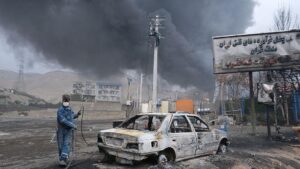
One woman in Tehran said the smell of burning was everywhere and the smoke was so thick she could barely see the sun. Others described the air as exhausting and hard to breathe. Financial Times and Time both reported warnings about toxic air and possible acid rain after the strikes on the depots.
War enters another dangerous phase
The attacks on the oil depots came as the war moved deeper into its second week. Al Jazeera reported that oil facilities were hit for the first time in the conflict, including storage sites and a petroleum transfer centre in Tehran and Alborz province.
The broader war began after joint US-Israeli strikes on Iran on February 28, and it has since expanded across the region. Reuters imagery and multiple reports have documented fires and smoke rising from energy infrastructure around Tehran after the latest strikes.
Iranians remain divided over the war
Even as civilian fear grows, some Iranians told reporters they still support the attacks because they believe they could weaken the current government. Others said the war is terrifying but see it as the only possible path to change after years of suffering.
At the same time, many fear what will happen if the conflict ends without political change. For them, the danger does not come only from the bombs, but from the uncertainty of what kind of Iran will emerge if the current leadership survives.
Smoke, fear and uncertainty define daily life
For now, the strikes on oil depots have added a new layer of fear to life in and around Tehran. Residents are dealing not only with explosions and fires, but also with smoke-filled skies, health concerns and deep uncertainty about what comes next.
The latest accounts from Tehran and Karaj show how the war is being felt not just on military fronts, but in neighbourhoods where ordinary people are waking to flames, toxic air and the sound of another night under attack.