

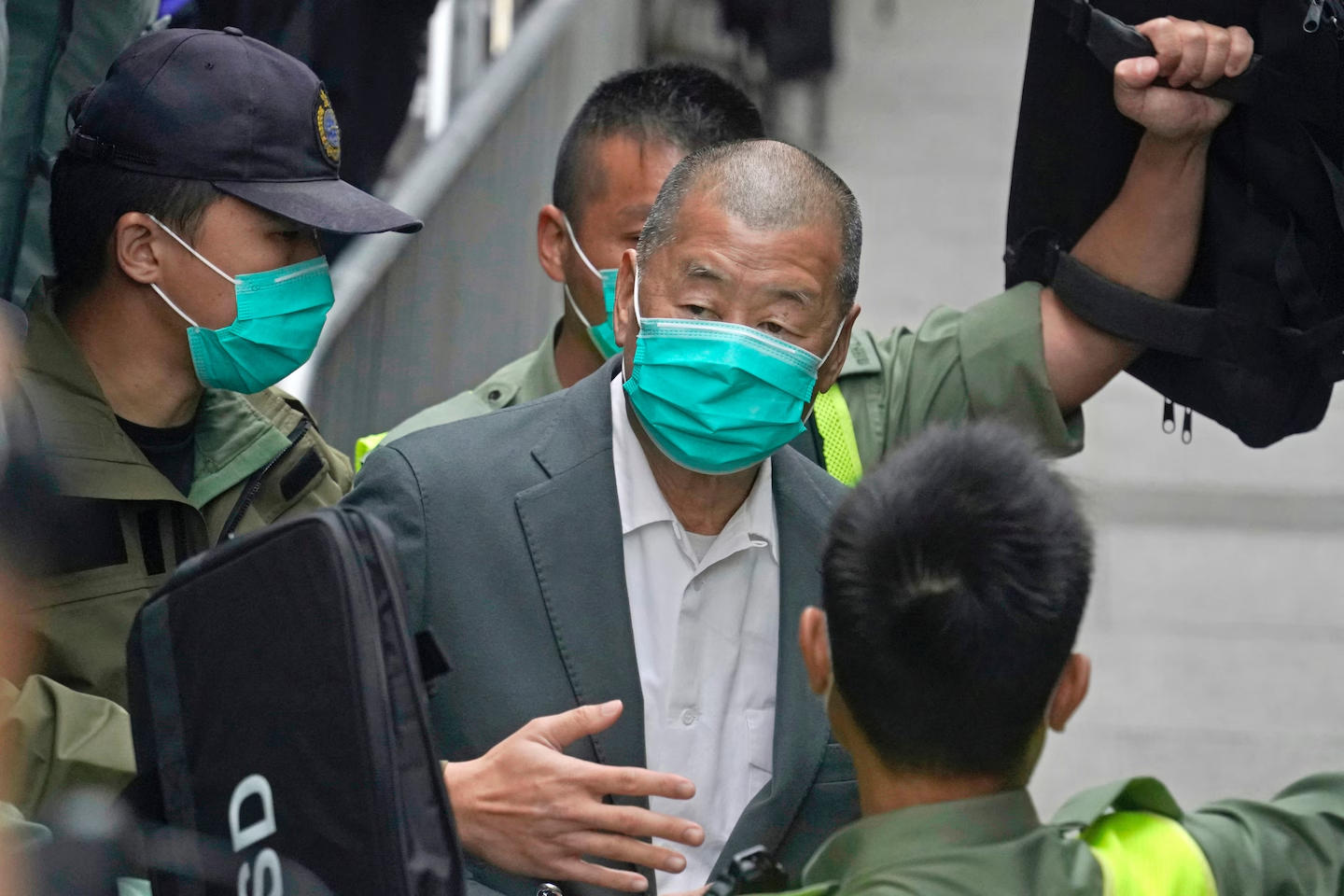
Hong Kong most prominent media figure, Jimmy Lai, has been sentenced to 20 years in prison after being found guilty of national security offences, in a ruling that marks the most significant such case since Beijing imposed sweeping security legislation on the city.
The High Court on Monday handed Lai a total sentence of two decades for two counts of conspiring to collude with foreign forces and one count related to publishing seditious material. The case concludes nearly five years of legal proceedings and stands as Hong Kong’s highest-profile national security trial to date.
Lai, the founder of the now-defunct Apple Daily, was first arrested in August 2020 and convicted last year. The newspaper, once a vocal critic of Beijing, was forced to shut down amid the crackdown that followed mass pro-democracy protests in 2019.
Court Cites ‘Grave Nature’ of Offences
In delivering the sentence, the court said Lai’s actions fell within the most severe sentencing category, which carries penalties ranging from 10 years to life imprisonment. Judges said the sentence was aggravated by their finding that Lai acted as the “mastermind” and driving force behind the alleged conspiracies.
Lai, 78, who holds British citizenship, has denied all charges. He has described himself as a political prisoner and said he was being punished for his opposition to the Chinese Communist Party.
International Reaction and Rights Concerns
The verdict has prompted strong reactions from international leaders and press freedom advocates. Donald Trump and Keir Starmer are among those who have criticised Lai’s prosecution, calling attention to what they see as the erosion of civil liberties in the Chinese-ruled financial hub.
“This decision is the final nail in the coffin for press freedom in Hong Kong,” said Jodie Ginsberg, chief executive of the Committee to Protect Journalists. She urged the international community to increase pressure on Beijing to secure Lai’s release.
Elaine Pearson, Asia director at Human Rights Watch, said the sentence was “effectively a death sentence” for the elderly publisher, describing it as cruel and disproportionate.
Supporters Rally Amid Heavy Security
Lai appeared in court wearing a white jacket, smiling and waving to supporters with his hands clasped together. Dozens of his backers queued for days to secure seats in the courtroom, as police deployed sniffer dogs, armoured vehicles and bomb disposal units around the area.
“I feel that Jimmy Lai represents the conscience of Hong Kong,” said Sum, a 64-year-old supporter who camped outside the court. “Spending a few nights here is nothing compared to what he’s facing.”
Diplomatic Efforts Behind the Scenes
Starmer raised Lai’s case during a private meeting with Chinese President Xi Jinping last month in Beijing, according to people familiar with the discussion. Britain’s national security adviser Jonathan Powell and Chinese Foreign Minister Wang Yi were also present.
“I raised the case of Jimmy Lai and called for his release,” Starmer later told the UK parliament.
Trump also discussed Lai’s detention with Xi during talks last October. Western diplomats told Reuters that serious negotiations over Lai’s fate are likely to intensify now that sentencing has been completed, depending on whether he files an appeal.
Health Fears and Wider Implications
Lai’s family and legal team have warned that his health—affected by heart palpitations and high blood pressure—could deteriorate further in prison. Alongside Lai, six former senior Apple Daily employees, an activist and a paralegal are also awaiting sentencing in related cases.
Beijing has rejected international criticism, insisting Lai received a fair trial and that Hong Kong’s national security law applies equally to all. Chinese authorities say the legislation has restored stability after years of unrest.
For critics, however, the ruling underscores how dramatically the legal and media landscape in Hong Kong has changed—raising questions about the future of press freedom and dissent in the city.