
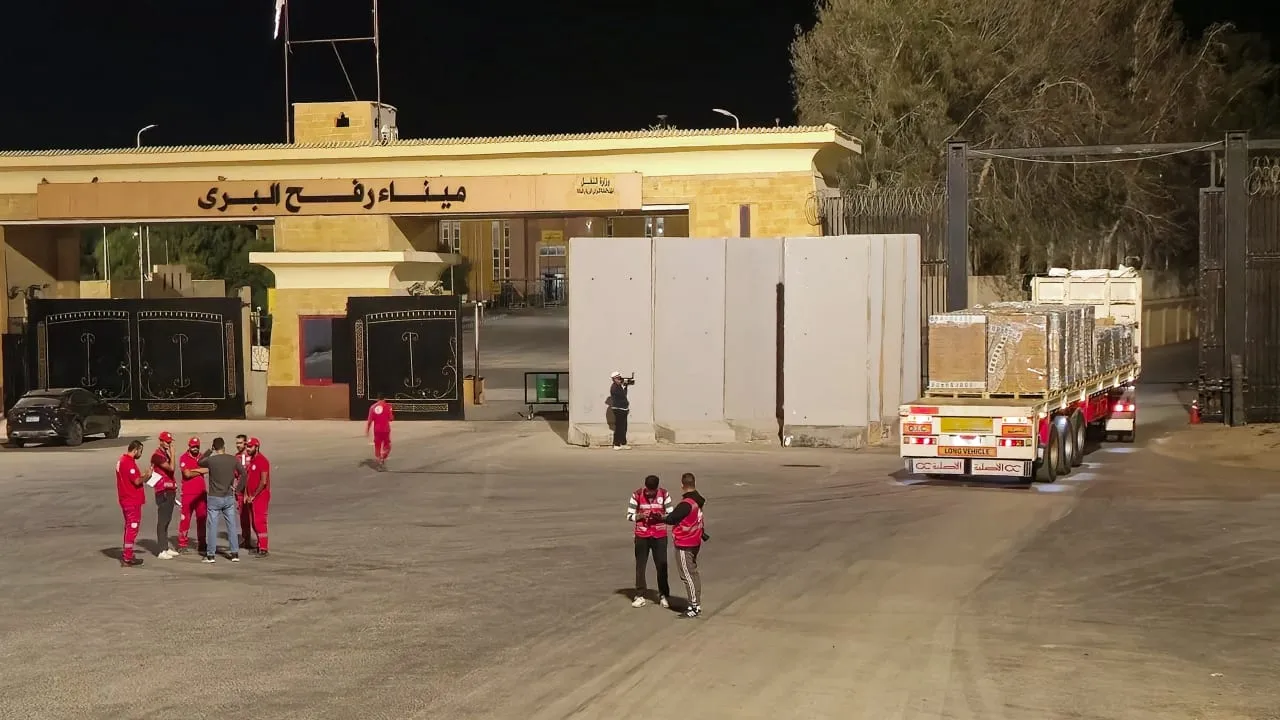
Gaza main border crossing with Egypt is expected to reopen next week, according to a senior Palestinian technocrat appointed to help administer the enclave, following months of near-total closure during the war.
The announcement was made on Thursday by Ali Shaath, speaking via video link at an event hosted by U.S. President Donald Trump on the sidelines of the World Economic Forum in Davos.
Shaath said the Rafah crossing would open in both directions, describing it as essential for Gaza’s population.
“For Palestinians in Gaza, Rafah is not just a crossing,” he said. “It is a lifeline and a symbol of opportunity.”
Israel Yet to Comment on Reopening
There was no immediate response from Israel, which has controlled the Rafah crossing since 2024. Despite a ceasefire that came into force on October 10 under a U.S.-backed plan, Israeli authorities have delayed reopening the crossing for humanitarian aid and medical evacuations.
Under the ceasefire terms, Israel retained control over more than half of Gaza beyond the so-called yellow line, including areas adjacent to the Rafah crossing.
If carried out, the reopening would mark a change from earlier Israeli policy, which limited use of the crossing largely to departures from Gaza into Egypt.

New Technocratic Body Announced
The announcement comes as the White House confirmed the appointment of 15 members to an all-Palestinian technocratic body tasked with overseeing a transition in Gaza’s governance.
Shaath, a former deputy minister in the Palestinian Authority, was named general commissioner of the National Committee for the Administration of Gaza (NCAG).
In a statement following his appointment, Shaath said the committee would pursue peace while working to advance Palestinian rights and self-determination.
Mixed Reactions Among Palestinians
Senior figures in Hamas have welcomed the committee’s formation, calling it a constructive step that could help stabilise the ceasefire.
However, some Palestinians have expressed concern that the technocratic framework could sideline core political issues, including statehood and ending Israel’s long-standing occupation, in favour of economic reconstruction and foreign investment.
Oversight by Trump’s Board of Peace
Under the second phase of the ceasefire, the NCAG would operate under the oversight of a proposed Board of Peace, to be chaired by Trump.
The U.S. president formally launched the board in Davos on Thursday, describing it as a mechanism for resolving international conflicts. Permanent membership requires a $1 billion contribution.
Although the board was initially presented as a vehicle for overseeing Gaza’s reconstruction, a draft charter does not appear to restrict its mandate to the Palestinian territory alone.
Trump has frequently criticised the United Nations and has previously suggested the new body could assume roles traditionally carried out by the UN, which was founded in 1945.