

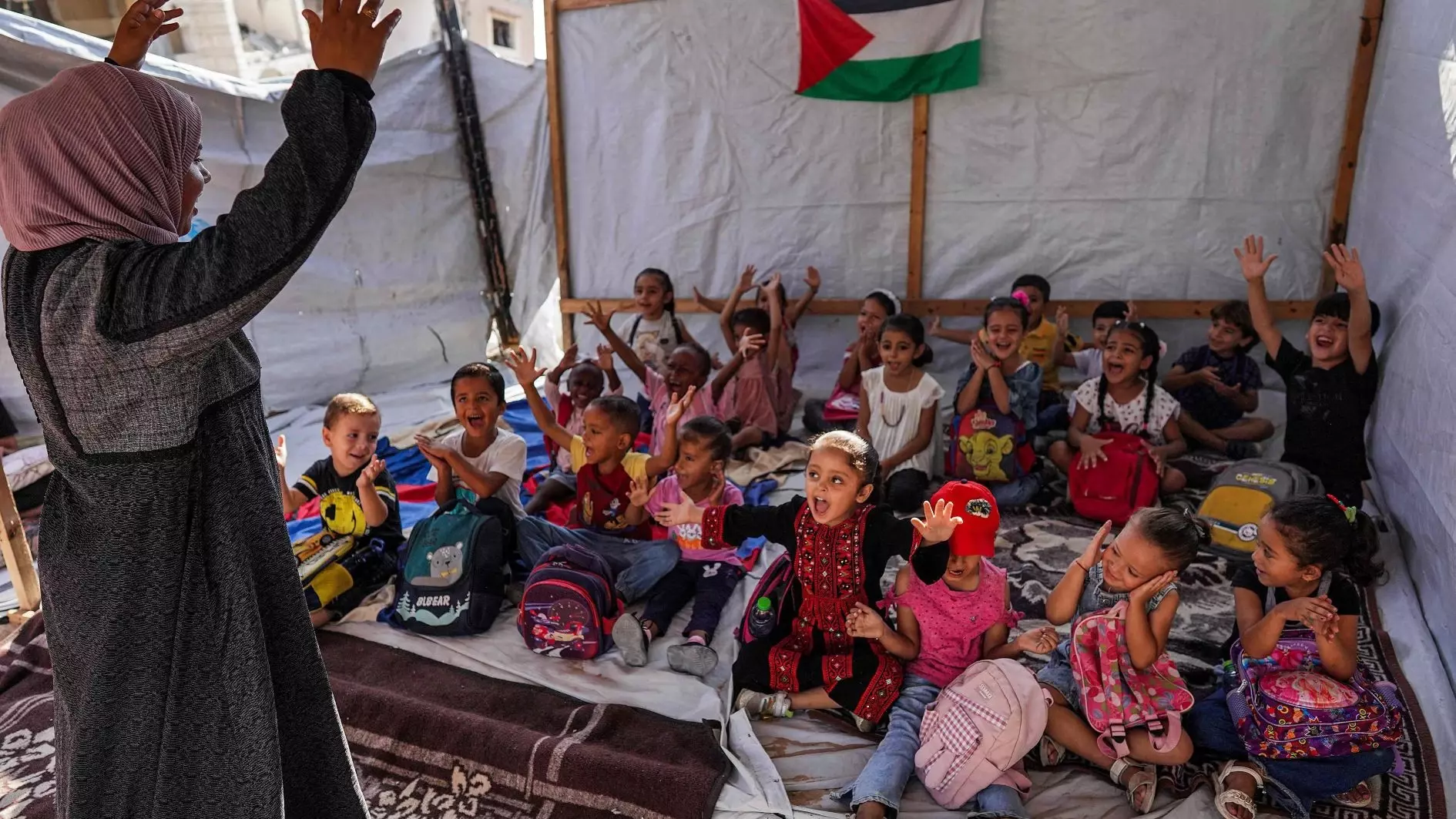
In a modest tent filled with dust and school bags, seven-year-old Tulin gets ready for her first school day after a two-year hiatus. The moment, normally associated with joy, is instead overshadowed by the echo of ongoing gunfire nearby. Gaza education sector has been heavily impacted by the conflict, with most school buildings rendered unusable. In response, communities in northern Gaza have organised learning spaces inside tents positioned in what Israel refers to as the “yellow zone”, a strip of land only a few metres away from active military lines.
Tulin’s mother described the daily anxiety that accompanies the short walk to class.
“Until she arrives safely, I feel my chest tighten,” she said.
“I sometimes follow her steps without noticing. But I want her to learn. We refuse to let fear erase her future.”
Tulin, who should currently be in second grade, would have been progressing normally had schooling not been interrupted. Despite the uncertainty, her family insists on keeping her enrolled.
‘Take the Sleeping Position’: Lessons Paused by Snipers
The route to school passes through piles of concrete and fragmented neighbourhoods. Tulin admitted that open areas frighten her most.
“I’m scared of the shooting,” she said.
“There are no walls left to stand behind if bullets come our way.”
Inside the tents, there are no reinforced barriers. The fabric walls offer no protection, yet dozens of children sit cross-legged on the ground, following lessons with full concentration.
A teacher working at one of these tent schools explained the tense rhythm of each day — where learning must sometimes pause for safety drills.
“When shots start, we tell them to lie flat on the ground.”
“It gives me chills every time. We pray, then continue when it gets quiet again.”
The educator contrasted the crisis with a powerful message.
“Their strategy is darkness. Ours is education.”
Students Carry Personal Loss, But Not Their Resolve
Among the pupils is Ahmed, a child who lost his father in the war. Despite the grief and danger, he returns every day.
“We arrive with fear, and we leave the same way,” he said.
“But I want to make my father proud. He wanted me to be a doctor, so I will keep studying.”
UNICEF: 98% of Schools Damaged
The situation in Beit Lahiya mirrors a broader disruption of education across the Gaza Strip.
Kazem Abu Khalaf, spokesperson for UNICEF in Palestine, stated earlier this week that the impact on schooling is unprecedented.
-
98% of schools in Gaza have been damaged to some extent
-
88% require major repairs or full rebuilding
-
Around 638,000 school-aged children and 70,000 kindergarteners have missed two full academic years
-
Students are entering a third year without consistent schooling
Psychological Impact Emerges Alongside Ruins
In addition to structural damage, UNICEF teams have reported signs of emotional trauma and developmental regression among children, including difficulties with speech and learning retention.
While 109 temporary learning centres have been established, serving 135,000 students, the scale of need far exceeds current capacity.
Educational Supplies Blocked Since 2023
Abu Khalaf confirmed that almost no formal educational materials have entered Gaza since the conflict escalated in October 2023, worsening the learning crisis.
‘Back to Learning’ Campaign Targets 200,000 Children
UNICEF is preparing to roll out a “Back to Learning” initiative, which will focus on:
-
Core subjects: Arabic, English, maths, science
-
Psychological recovery through play and recreational engagement
-
Gradual reintegration into structured education
However, the campaign’s effectiveness depends on the removal of restrictions on educational resources entering Gaza.
“No side benefits when children stop learning,” Abu Khalaf said.
“Schooling must continue. It protects more than knowledge — it preserves hope.”