
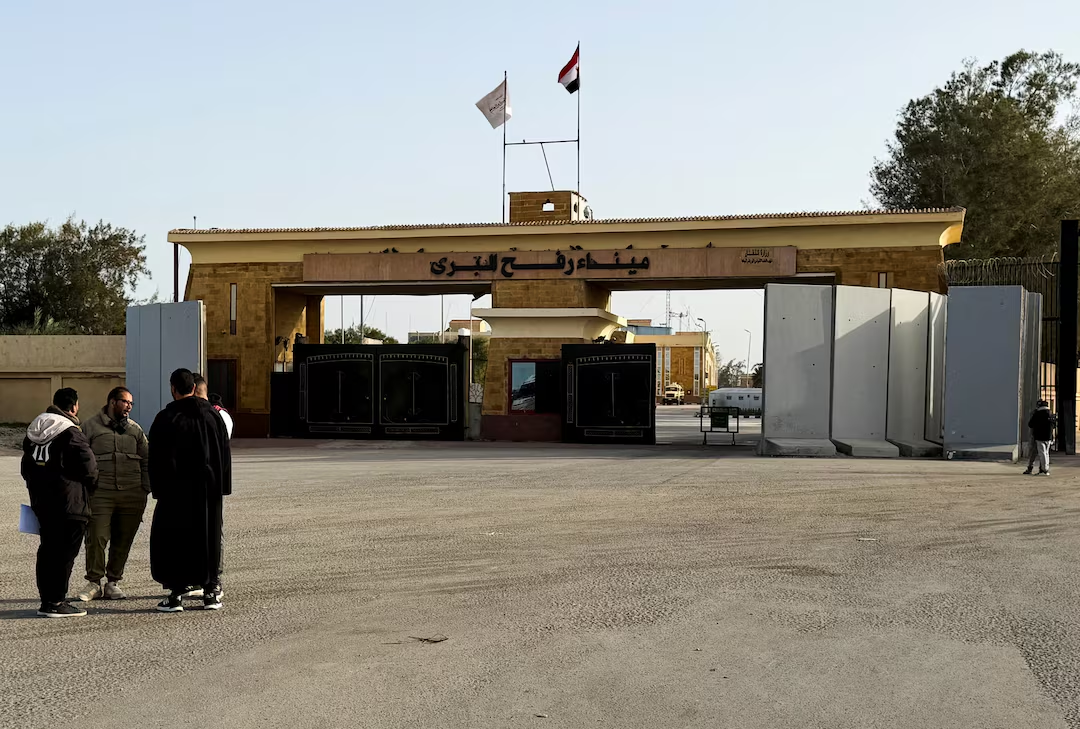
Separated from loved ones or in urgent need of medical treatment, Palestinians on both sides of Gaza Rafah border crossing waited anxiously on Monday for its reopening — a step promised under October’s ceasefire agreement but long postponed.
While Israel has said the crossing with Egypt will resume operations in a limited form, key details remain unclear. With Israel maintaining full control over Gaza’s borders, uncertainty persists over how many people will be allowed to cross and under what conditions. For those who have waited months — or longer — even a partial reopening feels overdue.
Rafah had been partially operational during the early stages of the war between Israel and Hamas, but it has been completely shut since the summer of 2024. Since then, only a small number of Palestinians have been permitted to travel via Israel, leaving tens of thousands stranded.
Those hoping to return to Gaza know they are heading back to a devastated territory, where homes and neighbourhoods were destroyed during Israel’s two-year military campaign triggered by the October 7, 2023 attack. Those seeking to leave fear new restrictions could leave them stranded abroad indefinitely.
Still, for many — including parents separated from children, couples waiting to marry, and patients in need of life-saving care — the reopening represents a rare moment of hope.
Eager to Go Home
From Cairo, 43-year-old Faten Hamed Abu Watfa scrolls through photos of her three children — two sons aged 21 and 18, and a 15-year-old daughter — whom she has not seen for nearly 10 months.
Abu Watfa left Gaza City’s al-Karama neighbourhood on April 5, 2024, expecting to be away for just a few weeks while her mother-in-law received medical treatment. When Rafah closed, she found herself unable to return.
“It’s impossible to describe the feeling of finally going back — to your children, your family, the place where you grew up,” she said.
Her home, however, no longer exists. Abu Watfa said Israeli forces burned the house, leaving only concrete pillars behind. Relatives now improvise shelter to protect against rain and cold.
“I am ready to endure searches, exhaustion, even days of hardship,” she said. “All that matters is reaching Gaza and seeing my children and my father safe.”
Many Palestinians who travelled to Egypt early in the war never imagined their stay would stretch into months or years. Savings were depleted, families were split, and lives were left in limbo.
“I love Gaza. No place feels like home except Gaza,” said 28-year-old Mohammad Talal al-Burai, a currency trader whose house in Jabalia was destroyed.
Despite concerns about renewed fighting and the lack of infrastructure, al-Burai registered immediately with the Palestinian embassy in Cairo when the crossing was announced to reopen.
“Living in a tent doesn’t matter,” he said. “I just want to hold my father and kiss his forehead,” he told Reuters.
The war also forced him to delay his wedding. His mother remains in the United Arab Emirates receiving medical care.
“I’ll move forward with my marriage,” he said, “but there may be no celebration if my mother can’t attend.”
Desperate to Leave
For others, crossing Rafah is not about returning home — it is about survival.
Tamer al-Burai, 50, suffers from obstructive sleep apnea and depends on a CPAP machine to breathe safely during sleep. Power shortages and fuel scarcity in Gaza have made using the device nearly impossible.
“My health has deteriorated badly,” he said. “There’s no electricity, no fuel.”
His family relocated to Egypt two years ago, but he was unable to join them after the crossing shut.
“I have appealed to everyone — humanitarian groups, the World Health Organization, the Palestinian Authority — just to leave and save my life,” he said.
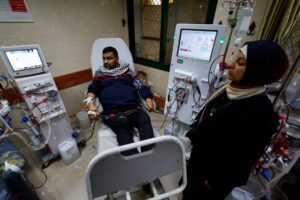
According to Gaza’s Ministry of Health, at least 20,000 patients, including children and cancer sufferers, are waiting for evacuation abroad. Thousands have registered with the WHO for treatment outside Gaza.
Among them is Noor Daher, a 31-year-old graphic designer from Gaza City with a chronic heart condition.
“My heart is beating harder now,” he said. “I hope this ordeal will finally end.”
When the Border Opens Too Late
For some families, the reopening has come after irreversible loss.
Dalia Abu Kashef, 28, died last week while waiting for permission to cross Rafah for a liver transplant. Her brother had volunteered to donate part of his liver.
“We were just waiting for the crossing to open so we could travel and do the surgery,” said her husband, Muatasem El-Rass. “We believed there would be a happy ending. Instead, her condition worsened, and she died.”
As Palestinians continue to wait — some to reunite with family, others to seek urgent medical care — uncertainty remains the defining reality of Rafah’s long-awaited reopening.