

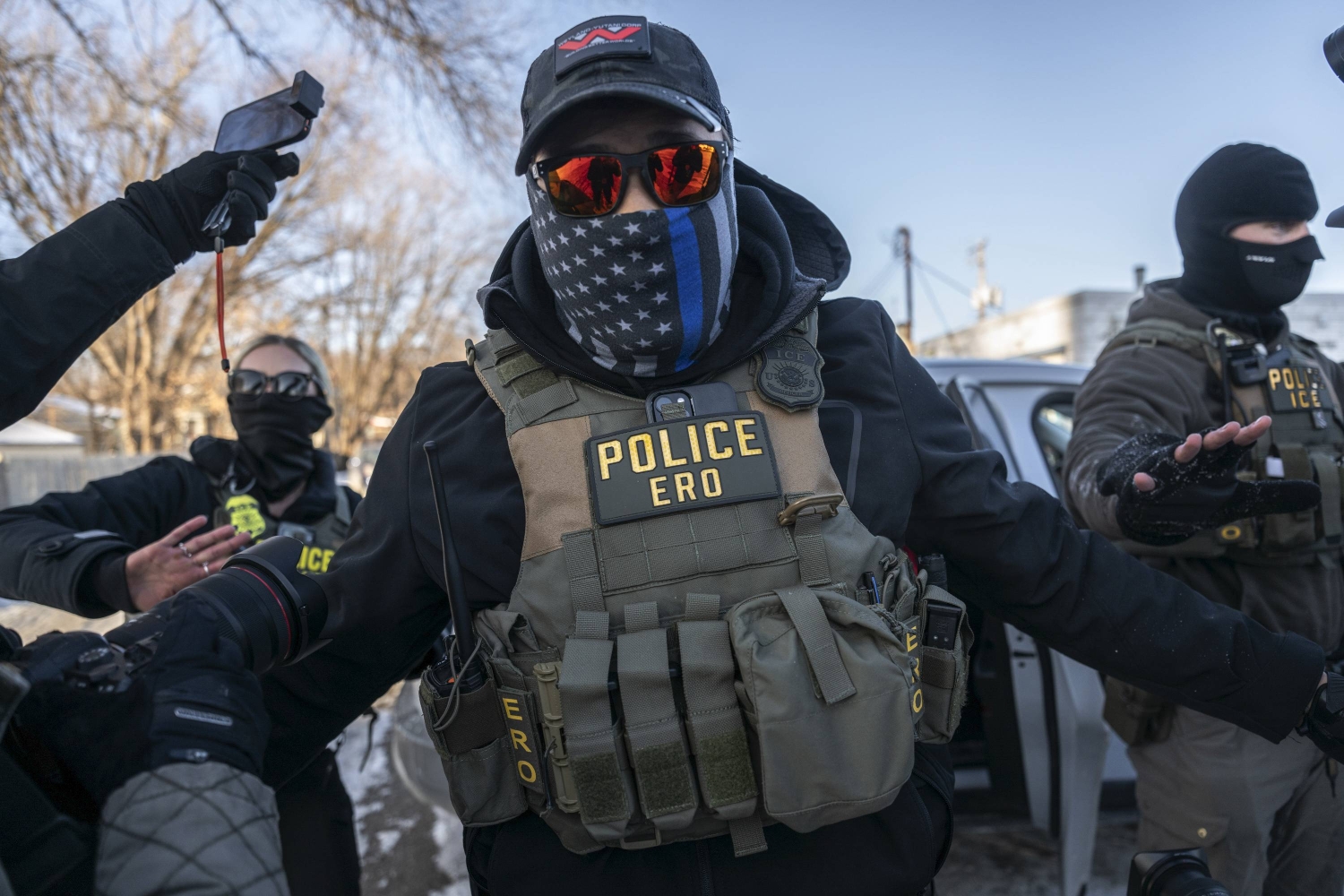
Senior officials overseeing President Donald Trump immigration crackdown have repeatedly offered early accounts of violent encounters involving federal agents that were later undermined by video, court filings and medical reports, according to a review by Reuters.
The review examined six incidents in recent months — including two fatal shootings of US citizens in Minneapolis — and found a recurring pattern in which authorities swiftly portrayed those killed or injured as aggressors, only for subsequent evidence to cast doubt on those claims.
The discrepancies have raised questions about the credibility of official statements and whether federal agencies are fully scrutinising the conduct of officers involved.
Officials Defended Officers Before Key Facts Emerged
In the cases reviewed, officials from the Department of Homeland Security and the White House moved quickly to justify agents’ actions, often before body-camera footage, witness accounts or forensic findings became public.
Former DHS officials told Reuters that such rapid narrative-setting represents a break from past practice, when agencies typically waited for investigations to progress before making definitive public claims.
“They are trying to control the narrative from the very beginning,” said David Lapan, a former DHS press secretary during Trump’s first term. “And they don’t seem concerned when later evidence contradicts those initial statements.”
DHS said it stands by prior statements and emphasised officer safety amid what it described as a surge in violence targeting law enforcement.
Fatal Minneapolis Shootings Under Scrutiny
Two of the most high-profile cases involved the deaths of Renee Good and Alex Pretti, both US citizens shot by federal agents in Minneapolis this month.
Officials initially described Pretti, a 37-year-old nurse, as an armed attacker intent on harming officers. DHS said he approached agents with a handgun and violently resisted arrest.
However, video footage verified by Reuters showed Pretti holding a cellphone as agents wrestled him to the ground. His firearm, for which he held a legal permit, was removed from his waistband only moments before shots were fired.
White House adviser Stephen Miller publicly labelled Pretti a “domestic terrorist,” while DHS later revised its language, saying the situation was “evolving.”
In the earlier killing of Good, 37, DHS and Trump said she had “weaponised” her car and attempted to run over officers. Multiple videos, including footage from the shooting officer’s own camera, showed her vehicle moving away as shots were fired. Whether the officer was struck by the car could not be conclusively determined.
Mistaken Identity and Court Contradictions
In another Minneapolis case, DHS said agents pursued a suspect who rammed an officer before a shooting. Court documents later revealed the pursuit began after officers misidentified a vehicle linked to a different person.
An FBI affidavit showed the officer fired as the suspects were fleeing, contradicting DHS statements that described an ambush and immediate danger.
Defense lawyers in the case argued the evidence showed the officer was not under imminent threat at the time shots were fired.
Detention Death Reclassified as Homicide
The review also examined the death of Cuban immigrant Geraldo Lunas Campos in a Texas detention centre. DHS initially said he suffered medical distress and later claimed he attempted suicide.
A county medical examiner subsequently ruled the death a homicide, citing asphyxia caused by neck and torso compression. Witness accounts describing guards restraining and choking Lunas were absent from the agency’s early statements.
The death was one of six fatalities in ICE detention reported in January alone.
Judicial Rebukes and Dropped Charges
A federal judge in Chicago last year criticised the government for what she described as “widespread misrepresentations” in describing clashes between immigration agents and protesters.
In one instance, Border Patrol official Gregory Bovino initially claimed he had been struck by a rock before deploying tear gas. He later testified that the rock had not hit him.
In another case, DHS dropped charges against Marimar Martinez, a US citizen shot multiple times by a Border Patrol agent in Chicago. Prosecutors said they were reviewing new evidence after body-camera footage contradicted the government’s initial account.
Broader Questions Over Accountability
Across all six incidents, Reuters found that early official narratives were later challenged by evidence, sometimes leading to court rulings, revised statements or abandoned prosecutions.
Legal experts say the pattern risks undermining public trust at a time of heightened tension over immigration enforcement.
As of now, the US Justice Department has not announced criminal investigations into the officers involved in the fatal Minneapolis shootings, while state authorities accuse federal agencies of obstructing their inquiries.
The unfolding cases continue to fuel debate over transparency, accountability and the conduct of federal immigration operations under Trump’s administration.