

Donald Trump on Wednesday retreated from threats to impose tariffs tied to efforts to gain control over Greenland, ruling out the use of force and suggesting a negotiated framework could resolve the dispute that had strained transatlantic relations.
Speaking during a visit to Davos, Trump softened weeks of aggressive rhetoric that had unsettled NATO allies and raised concerns about a broader trade conflict with Europe. Just days earlier, the U.S. president had warned of escalating tariffs on exports from eight European countries as pressure mounted over Greenland, a semi-autonomous Danish territory.
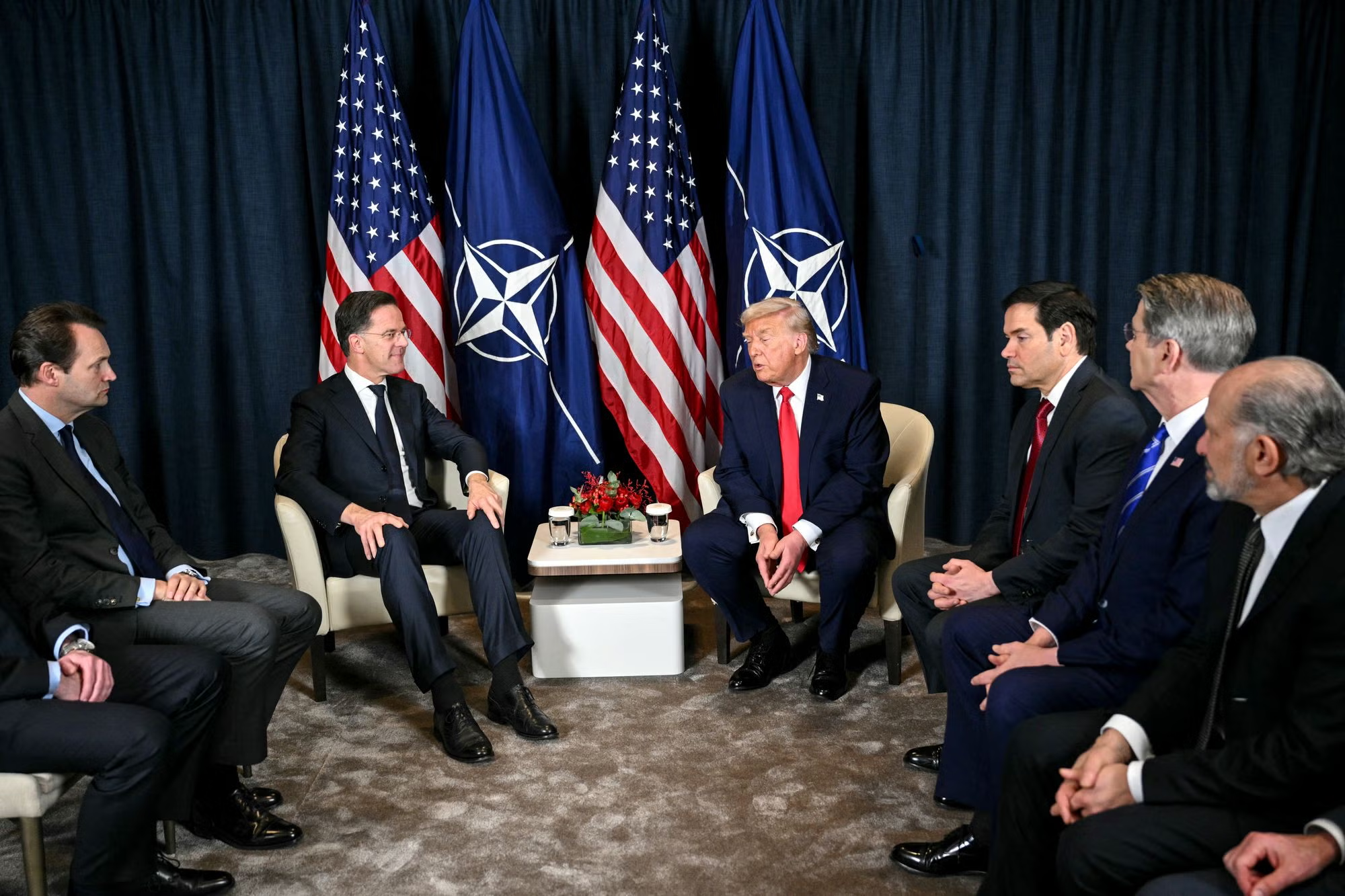
Following talks with Mark Rutte at the World Economic Forum, Trump said Western Arctic allies could reach an agreement addressing security concerns while preserving regional stability.
Security, Minerals at Center of Proposed Deal
Trump indicated that discussions focused on safeguarding the Arctic from growing Russian and Chinese influence while advancing U.S. interests, including missile defense and access to critical minerals.
“It’s a deal that everybody’s very happy with,” Trump told reporters. “It’s a long-term deal — the ultimate long-term deal — especially when it comes to security and minerals.”
Rutte later confirmed that the status of Greenland’s sovereignty was not discussed during their meeting. In an interview on Fox News, he said Trump’s emphasis was on protecting the Arctic region amid heightened geopolitical competition.
Shift in Tone Helps Ease NATO Tensions
Earlier in the day, Trump had delivered sharp remarks toward European governments already unsettled by his territorial ambitions involving a NATO ally. Diplomats said the subsequent change in tone did not resolve the underlying dispute but helped cool an increasingly public rift.
Questions remain over how any agreement could satisfy Trump’s earlier calls for “ownership” of Greenland, an idea firmly rejected by both Danish and Greenlandic leaders.
A NATO spokesperson said talks involving Denmark, Greenland, and the United States would aim to prevent Russia and China from establishing an economic or military presence on the island. No timeline or location for negotiations was announced.
Trump said further discussions would involve Vice President JD Vance, Secretary of State Marco Rubio, and special envoy Steve Witkoff.
Denmark Stresses Sovereignty, Diplomacy
Denmark responded cautiously, urging that the matter be handled through discreet diplomatic channels. Foreign Minister Lars Lokke Rasmussen emphasized respect for Denmark’s territorial integrity and Greenlanders’ right to self-determination.
“What is crucial is that this ends with respect for the sovereignty of the kingdom and the wishes of the Greenlandic people,” Rasmussen told Danish broadcaster DR.
Greenland’s government did not immediately comment.
Markets React as Force Is Ruled Out
Trump acknowledged earlier in Davos that markets had reacted negatively to his threats. Speaking to global leaders, he explicitly ruled out the use of force.
“I don’t want to use force,” Trump said. “I won’t use force.”
The shift helped buoy investor confidence, with U.S. stocks posting their strongest one-day gains in weeks after earlier selloffs linked to Trump’s harsher Greenland remarks.
Trump Dominates Davos Agenda
Trump’s comments on Greenland overshadowed much of his Davos appearance, where he criticized European policies on energy, immigration, and defense. While presenting himself as a defender of Western strength, he also downplayed the territorial dispute, calling it a “small ask” and insisting U.S. involvement would not threaten NATO unity.
Despite ruling out military action, Trump repeatedly highlighted U.S. military power and referenced recent foreign policy actions, drawing uneasy reactions from the audience.
The trip also included efforts to rally support for Trump’s proposed “Board of Peace” initiative, aimed at resolving global conflicts. He was expected to meet Ukrainian President Volodymyr Zelenskiy later in the visit.