

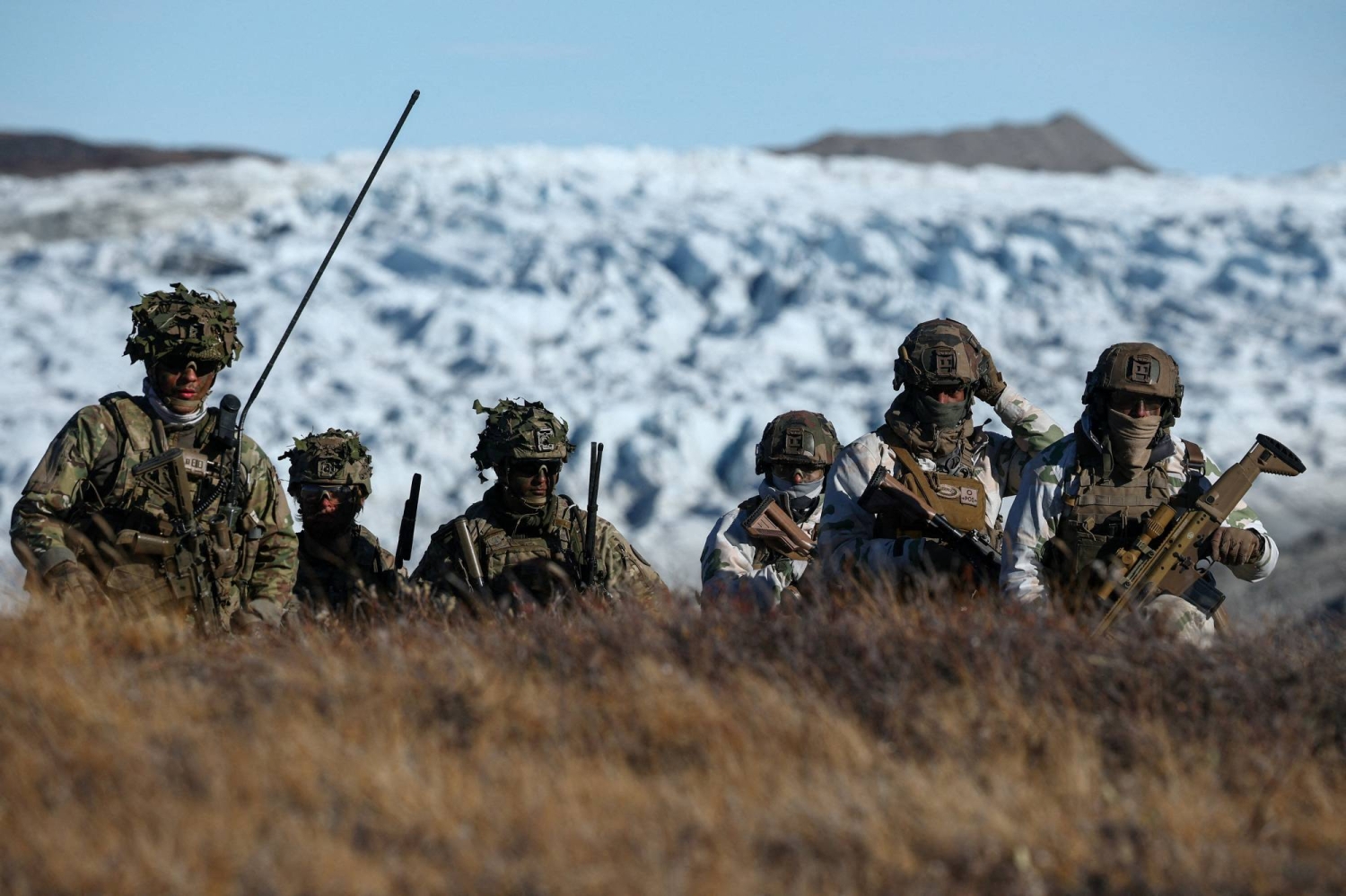
When US Secretary of State Marco Rubio meets Danish and Greenlandic officials next week, Denmark will be making the case for a territory that has been gradually distancing itself from Copenhagen for decades.
Greenland has been moving toward self-rule since gaining home rule in 1979, and recent remarks by President Donald Trump suggesting the United States could seize the Arctic island have sparked a wave of European backing for Denmark. Yet the crisis has laid bare a deeper contradiction: Denmark is mobilising diplomatic support to protect a territory whose population favours independence and whose largest opposition party has floated the idea of negotiating directly with Washington.
“Denmark risks spending a great deal of foreign policy capital to defend Greenland, only to see it leave in the end,” said Mikkel Vedby Rasmussen, a professor at the University of Copenhagen.
Strategic importance
Greenland’s value to Denmark is closely tied to its strategic position between Europe and North America, making it central to Arctic geopolitics and to the US ballistic missile defence system.
Letting Greenland go would significantly diminish Denmark’s influence in the Arctic. At the same time, Copenhagen could find itself with little to show for its efforts if Greenlanders ultimately vote for independence or pursue their own arrangements with Washington.
The implications stretch beyond Denmark alone. European allies have rallied behind Copenhagen not only out of solidarity, but also out of concern that any erosion of Greenland’s status could set a precedent for powerful countries asserting territorial claims over smaller states, challenging the post-World War Two international order.
Denmark’s foreign ministry declined to comment on the situation, referring instead to joint remarks made in December by Danish Prime Minister Mette Frederiksen and Greenlandic Prime Minister Jens-Frederik Nielsen.
“National borders and state sovereignty are anchored in international law,” the two leaders said at the time. “You cannot annex another country. Greenland belongs to the Greenlanders.”
Frederiksen reiterated this week that any US attack on a NATO member would fundamentally undermine the alliance and the security framework it has provided since World War Two.
Playing the ‘Greenland card’
The Trump administration has said it is considering all options regarding Greenland, including purchasing the territory or using force.
Rasmussen said outrage over Trump’s rhetoric has effectively sidelined debate in Denmark about whether the cost of holding on to Greenland is worth it.
“It’s not really being discussed. I worry we’ve entered a kind of patriotic overdrive,” he said.
During the Cold War, Greenland’s strategic location gave Denmark disproportionate influence in Washington, allowing it to maintain relatively low defence spending for a NATO member. This leverage became known as “the Greenland card,” according to a 2017 study by the University of Copenhagen’s Centre for Military Studies.
But Greenland’s push for independence has been building for years. The island gained greater autonomy and its own parliament in 1979, and a 2009 agreement formally recognised Greenlanders’ right to independence should they choose it. While all Greenlandic political parties support independence in principle, they differ over the pace and pathway.
Trump’s renewed pressure has accelerated an already uncertain timeline, forcing Denmark to invest political and financial resources into a relationship whose end point is increasingly unclear.
“How much should we fight for someone who doesn’t really want to stay with us?” asked political commentator and former lawmaker Joachim B. Olsen.
The financial strain
Denmark provides Greenland with an annual block grant of about 4.3 billion Danish crowns ($610 million), supporting an economy that grew by just 0.2 percent in 2025.
The central bank estimates Greenland faces an annual funding gap of roughly 800 million crowns to keep public finances sustainable. Denmark also covers costs related to policing, the justice system and defence, bringing total yearly spending close to $1 billion.
Last year, Copenhagen announced a 42 billion-crown ($6.54 billion) Arctic defence package after US criticism that Denmark was not doing enough to safeguard Greenland.
Some analysts caution against viewing the relationship purely through a financial lens, pointing to historical ties and legal responsibilities.
“This is about family, history and culture,” said Marc Jacobsen. “It’s not just defence and economics—it’s also about identity.”
A delicate balancing act
Prime Minister Frederiksen faces a complex challenge, according to Serafima Andreeva of the Oslo-based Fridtjof Nansen Institute.
Denmark must stand firm to preserve its diplomatic credibility, she said, but risks straining ties with the United States at a time when Russia is seen as an increasing threat and Western unity is critical.
Frederiksen also heads into an election year, although Greenland has not featured prominently in domestic debate.
Some Danes remain unconvinced that maintaining the union is worth the effort.
“I don’t really understand why we need to cling to this relationship when Greenland clearly wants out,” said Danish writer and broadcaster Lone Frank. “To be honest, Greenland doesn’t give me a strong sense of belonging.”
As geopolitical pressure mounts, Denmark’s struggle reflects a broader question facing small and medium-sized states: how to defend principles of sovereignty and alliance unity when history, identity and strategic interests are pulling in different directions.