

Cuba President Miguel Díaz-Canel has condemned what he described as a renewed attempt by the United States to strangle Cuba’s already struggling economy, following new measures announced by Donald Trump.
Trump signed an executive order on Thursday threatening additional tariffs on countries that export oil to Cuba, intensifying Washington’s pressure campaign against Havana. The order labels Cuba’s communist-led government an “unusual and extraordinary threat” to US national security.
Havana Rejects Tariff Threats
In a social media post on Friday, Díaz-Canel said the move was based on what he called a “false and baseless pretext,” accusing Trump of seeking to suffocate Cuba’s economy by penalising nations that engage in sovereign oil trade with the island.
He described the policy as reflecting “a fascist, criminal and genocidal mindset,” appearing to single out US Secretary of State Marco Rubio, a long-time critic of the Cuban government.
Energy Crisis Deepens
Cuba has been experiencing widespread power outages, which authorities attribute to severe fuel shortages. The situation worsened after the US carried out a military operation earlier this month that resulted in the abduction of Venezuelan President Nicolás Maduro and his wife from Caracas, an event that also disrupted Venezuela’s oil exports to Cuba.
Cuban officials say at least 32 members of the country’s armed forces and intelligence services were killed during the January 3 operation. Since then, Washington has taken effective control of Venezuela’s oil sector and warned other left-wing governments in the region against continuing energy shipments to Cuba.
International Reaction Grows
Cuba’s Foreign Minister Bruno Rodríguez declared an “international emergency” on Friday, arguing that the new US measures amount to an extraordinary threat to the country’s survival.
Venezuela’s government also condemned the decision, saying it violates international law and basic principles governing global trade.
Reporting from Havana, Al Jazeera correspondent Ed Augustin said Trump’s announcement represents a severe psychological and economic shock, with analysts describing it as the harshest economic action Washington has taken against Cuba to date.
Trump Signals Further Pressure
Days after Maduro was transferred to the United States, Trump urged Cuba to strike a deal “before it is too late,” without specifying the terms. He later suggested on social media that Rubio could one day become Cuba’s president, adding, “Sounds good to me!”
Public Anger in Havana
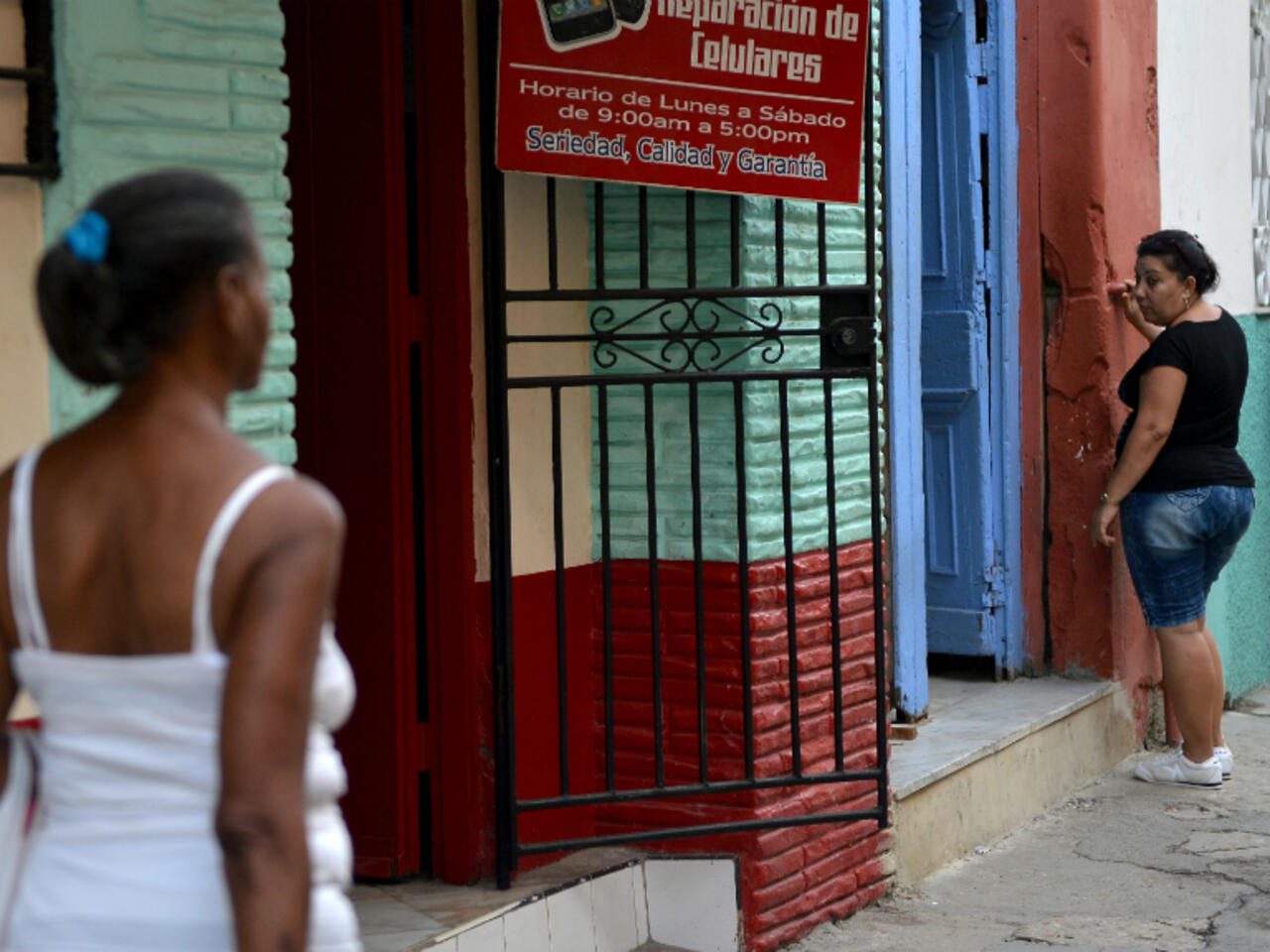
In Cuba’s capital, residents voiced frustration and fear over the impact of tighter sanctions.
“My food is spoiling. We’ve had no electricity since early morning,” Havana resident Yenia Leon told Al Jazeera. “You can’t sleep, and you’re forced to buy food daily. There’s no solution to the power crisis.”
Lázaro Alfonso, an 89-year-old retired graphic designer, compared the situation to a state of war, telling the Associated Press that the current hardships are worse than the “Special Period” of the 1990s following the collapse of Soviet support.
“The only thing missing is bombs falling,” he said.
Mexico Seeks Alternatives
Mexican President Claudia Sheinbaum said she would explore alternative ways to assist Cuba after the US announcement, warning that cutting off oil supplies could trigger a humanitarian crisis affecting hospitals, transportation and food access.
Mexico, along with Russia, became a major fuel supplier to Cuba after US sanctions disrupted Venezuelan oil shipments. Sheinbaum said Cuba accounts for about 1 percent of Mexico’s oil production and added that her foreign minister has been instructed to seek clarification from the US State Department.
According to figures cited by the Financial Times, Mexico supplied 44 percent of Cuba’s oil imports and Venezuela 33 percent until last month, while Russia accounted for about 10 percent.
Calls to End Sanctions
In November, a senior United Nations expert urged the United States to lift its long-standing sanctions on Cuba, warning that they are harming every aspect of daily life.
Alena Douhan, the UN special rapporteur on unilateral coercive measures, said the US embargo — first imposed in 1962 following Fidel Castro’s rise to power — represents the longest-running sanctions regime in modern history.
She cited shortages of food, medicine, electricity and clean water, along with an accelerating exodus of skilled workers, as evidence of the sanctions’ “severe consequences” for fundamental human rights.