

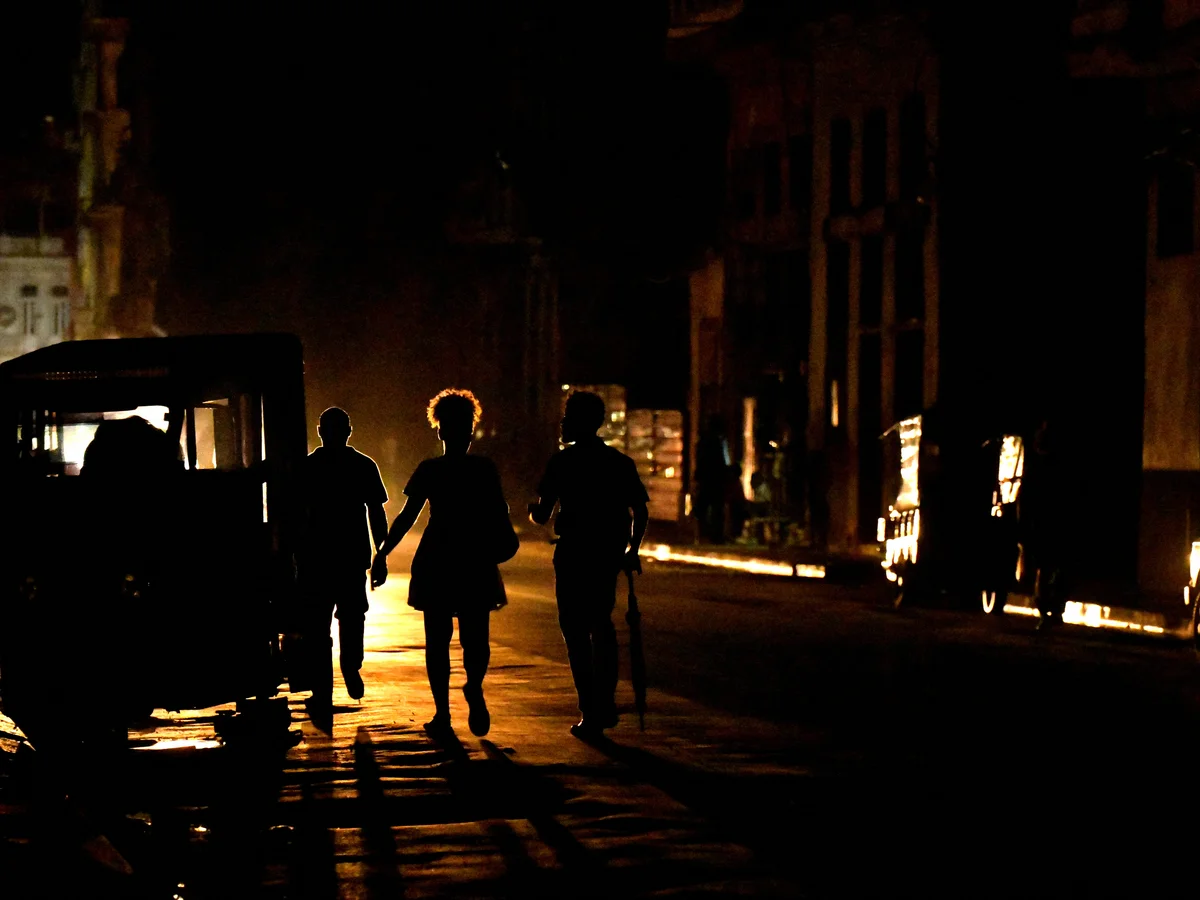
More than 10 million people across Cuba were left without electricity after the country’s national power grid collapsed for the second time in just one week, intensifying an already severe national emergency. Homes, businesses, and public services were thrown into disruption as authorities rushed to stabilize the situation.
In a statement shared on social media, Cuba’s energy ministry said there had been a “total disconnection” of the National Electrical System. Officials added that emergency recovery procedures had been activated in an effort to gradually restore power.
Cuba’s grid operator, UNE, later said electricity was beginning to return in phases, with priority given to essential services such as hospitals, water systems, and other critical infrastructure.
Ageing Infrastructure and Fuel Shortages Worsen the Emergency
The latest failure marks the third major blackout on the island this month, highlighting the scale of Cuba’s energy troubles. The country has long struggled with an outdated electricity network, limited maintenance capacity, and persistent shortages of fuel needed to keep power plants operating.
The crisis has become even more serious as restrictions on oil supplies have tightened, cutting off imports that Cuba depends on to support its energy system. With fewer resources available and ageing facilities under pressure, the national grid has become increasingly vulnerable to repeated collapse.
International Solidarity Arrives in Havana
Amid the worsening situation, a coalition of international socialist groups arrived in Havana over the weekend to express support for the Cuban government. The delegation delivered humanitarian aid including solar panels, food packages, and medicine intended to help communities affected by the continuing outages.
Another support mission, known as the “Nuestra America” convoy, is also expected to reach Havana. The aid flotilla departed from Mexico but was delayed by rough sea conditions before making its final approach to the Cuban capital.
Public Anger Breaks Into the Open
The blackouts have also triggered rare displays of public frustration. In central Havana, residents reportedly banged pots and pans in protest as anger over the energy crisis spilled into the streets.
Tensions were also reported in Morón, a town in central Cuba, where demonstrators attacked and set fire to the Communist Party headquarters. These incidents reflect growing public desperation as repeated outages continue to affect daily life, food storage, water access, and basic services.
In Cuba, unauthorised demonstrations are illegal, and participants risk arrest or imprisonment if they take part in protests not approved by the state.
Tensions With Washington Add to the Pressure
The domestic crisis is unfolding against a backdrop of rising tension between Cuba and the United States. In recent weeks, President Donald Trump has made remarks suggesting that Cuba could face direct pressure from Washington, including references to a possible “friendly takeover.”
Reports have indicated that Trump wants Cuban President Miguel Díaz-Canel removed as part of any broader agreement that could lead to a lifting of fuel-related pressure on the island. Those statements have drawn a firm response from Havana.
Speaking to campaigners delivering humanitarian aid, Díaz-Canel said Cuba has a defence readiness plan in place in case of any military threat from the United States.
Cuba Rejects Political Conditions in Bilateral Talks
Despite the hostile rhetoric, both governments have reportedly entered early stages of bilateral talks aimed at addressing the crisis. However, the direction and progress of those discussions remain unclear.
Cuban officials have made one position unmistakably clear: the country’s internal political order is not negotiable. Deputy Foreign Minister Carlos Fernandez de Cossio said Cuba’s political system, the presidency, and the status of its officials are not matters to be discussed with the United States.
That stance signals that while dialogue may continue, Havana is unwilling to accept outside demands concerning its leadership or political structure.
A Nation Under Mounting Strain
Cuba now faces a dangerous combination of energy instability, economic hardship, and rising political tension. As officials work to restore electricity and maintain order, the repeated blackouts have become more than a technical failure. They are now a symbol of a deeper national crisis, one shaped by infrastructure decay, supply shortages, and international confrontation.
For millions of Cubans, the return of power may bring temporary relief. But unless the underlying causes are addressed, the island’s broader uncertainty is unlikely to fade anytime soon.