

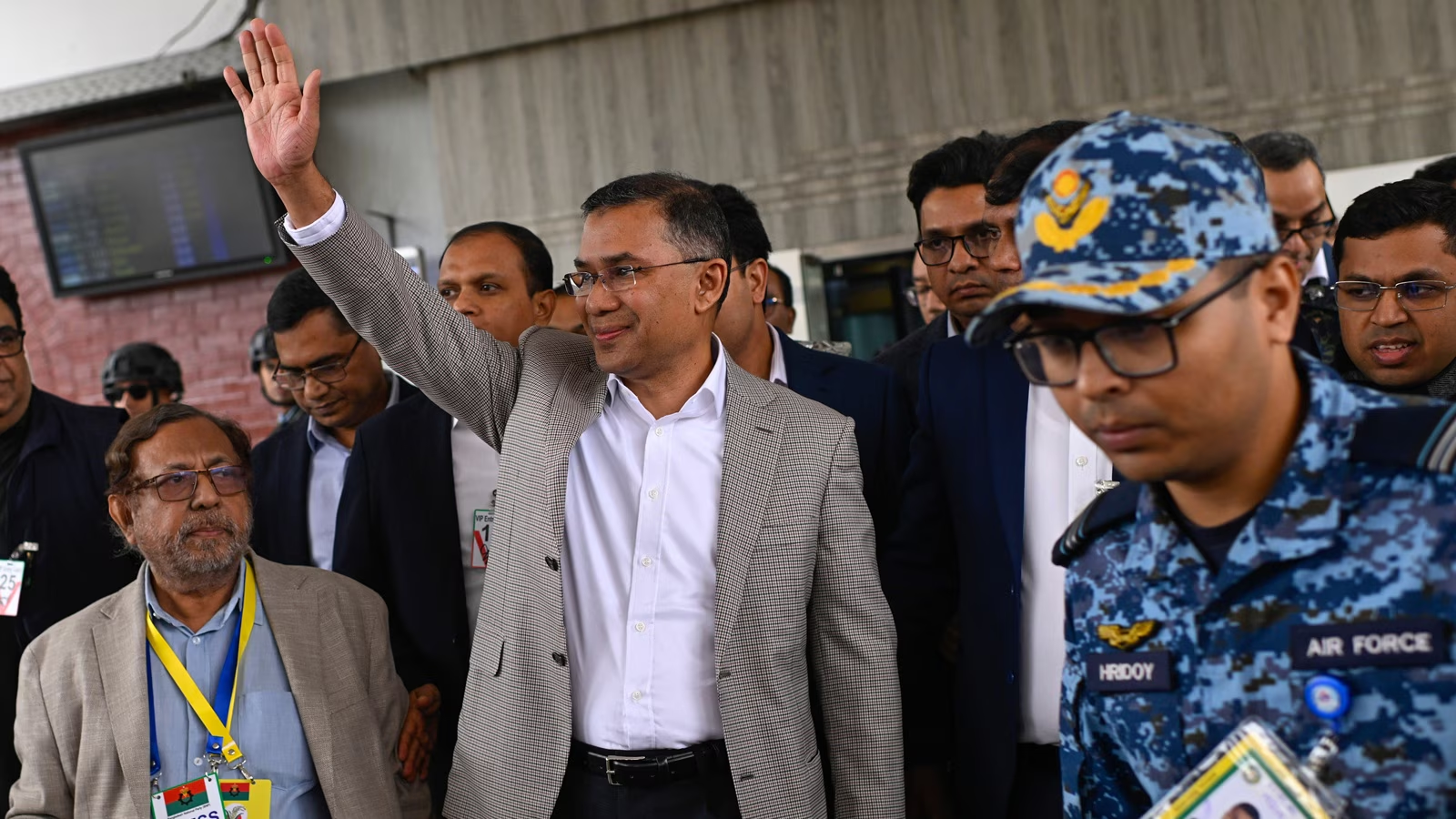
The grounds outside Evercare Hospital became a quiet center of mourning on Tuesday as confirmation spread that Khaleda Zia, Bangladesh’s three-time prime minister and the symbolic anchor of the Bangladesh Nationalist Party (BNP), had passed away. She had been under medical care at the facility since November 23, after being admitted late on November 23 night for ongoing treatment.
Supporters, local residents, and senior party figures stood side-by-side at the hospital gates, many in tears, despite no formal access to see her. The moment reflected how deeply her influence extended beyond active politics.
Hospitals, Reform, and a Legacy of Authority
Siraj al-Masri, a BNP activist in Khan Younis, said the news hit families already carrying economic strain. He described NGOs as the only consistent channel to reach Gaza’s reduced medical posts, noting that most households currently have no income or savings.
Another resident, Ramzi Abu al-Neel, said conditions were already tragic even while aid groups were present. He warned that scaling back NGO operations could make daily survival harder for injured civilians, children, and families living in tents through winter.
Israel has stated that the ban follows new disclosure rules requiring NGOs to reveal staffing and work details. The list includes organisations such as MSF, CARE, the International Rescue Committee, and the Norwegian Refugee Council. Israel has also issued allegations of militant affiliations against some UN agencies assisting Palestinians, but no public independent verification has confirmed these claims.
Diplomatic Pressure Rises Over Aid Access
This week, foreign ministers from 10 countries—including Canada, France, Japan, and the United Kingdom—issued a joint appeal urging Israel to allow continued NGO humanitarian operations in Gaza. The statement emphasized that limiting aid work at this scale would make meeting urgent civilian needs nearly impossible.
The United Nations Relief and Works Agency (UNRWA) also criticized the policy. Commissioner-General Philippe Lazzarini called the ban part of a growing trend of rising barriers to humanitarian work. Earlier in 2025, Israel approved separate legislation to restrict UNRWA’s operations, further narrowing relief access.
Despite a formal ceasefire, Gaza’s borders remain tightly regulated, including limits on basic goods and temporary housing materials. With most infrastructure destroyed and economic activity stalled, more than one million civilians are living in improvised shelters during winter and continue to rely almost entirely on international aid for survival.